Luxury Villa Design Ideas: 10 Elegant Homes That Redefine Modern Living
Explore 10 luxury villa design ideas, from Mediterranean and coastal architecture to modern interiors, Moroccan courtyards, tropical gardens and complete estate planning.
Apartments & Villas · Casa Eloria
Luxury Villa Design Ideas: 10 Elegant Homes That Redefine Modern Living
Discover how exceptional villas combine architecture, landscape, natural materials and thoughtful interiors to create homes that feel private, timeless and genuinely luxurious.
A luxury villa is more than an impressive façade. The most successful homes create a complete experience: a calm arrival, a strong relationship with the landscape, comfortable spaces for everyday life and carefully framed views from every important room. Whether you are designing a new property, renovating an existing home or simply collecting inspiration, these ten villa concepts show how refined details can transform a house into a memorable retreat.
This guide focuses on the decisions that make a villa feel expensive without making it cold: proportion, light, texture, privacy, circulation and the connection between indoor and outdoor spaces.
What makes a villa look truly luxurious?
Luxury in residential design is not defined by the number of decorative objects in a room. It is usually felt through restraint and quality. A generous entrance, clean sightlines, consistent materials and well-planned lighting often create a stronger impression than excessive ornament. The best villa designs also feel comfortable at different times of day: bright and open in the morning, shaded in the afternoon and atmospheric after sunset.
Before choosing a style, consider the site itself. Climate, orientation, privacy, views, prevailing winds and access from the street should influence the design from the beginning. A beautiful façade that ignores the sun or the landscape may photograph well but perform poorly as a home.
Balanced volumes and generous ceiling heights make spaces feel calm rather than crowded.
Stone, wood, plaster and metal should feel authentic and consistent from room to room.
Arrival, movement, views and privacy are as important as the furniture itself.
1. Mediterranean villas: relaxed elegance with timeless appeal
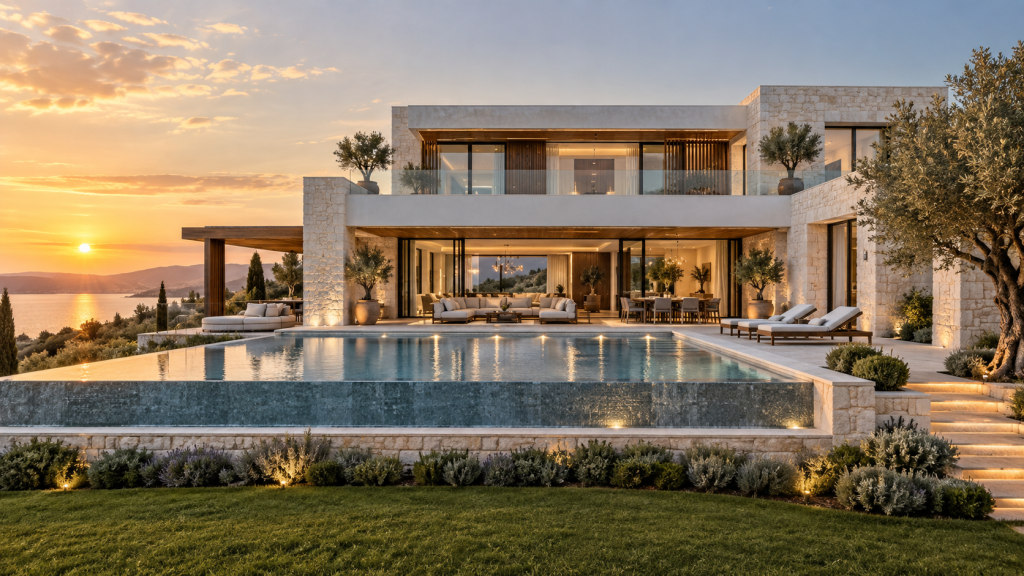
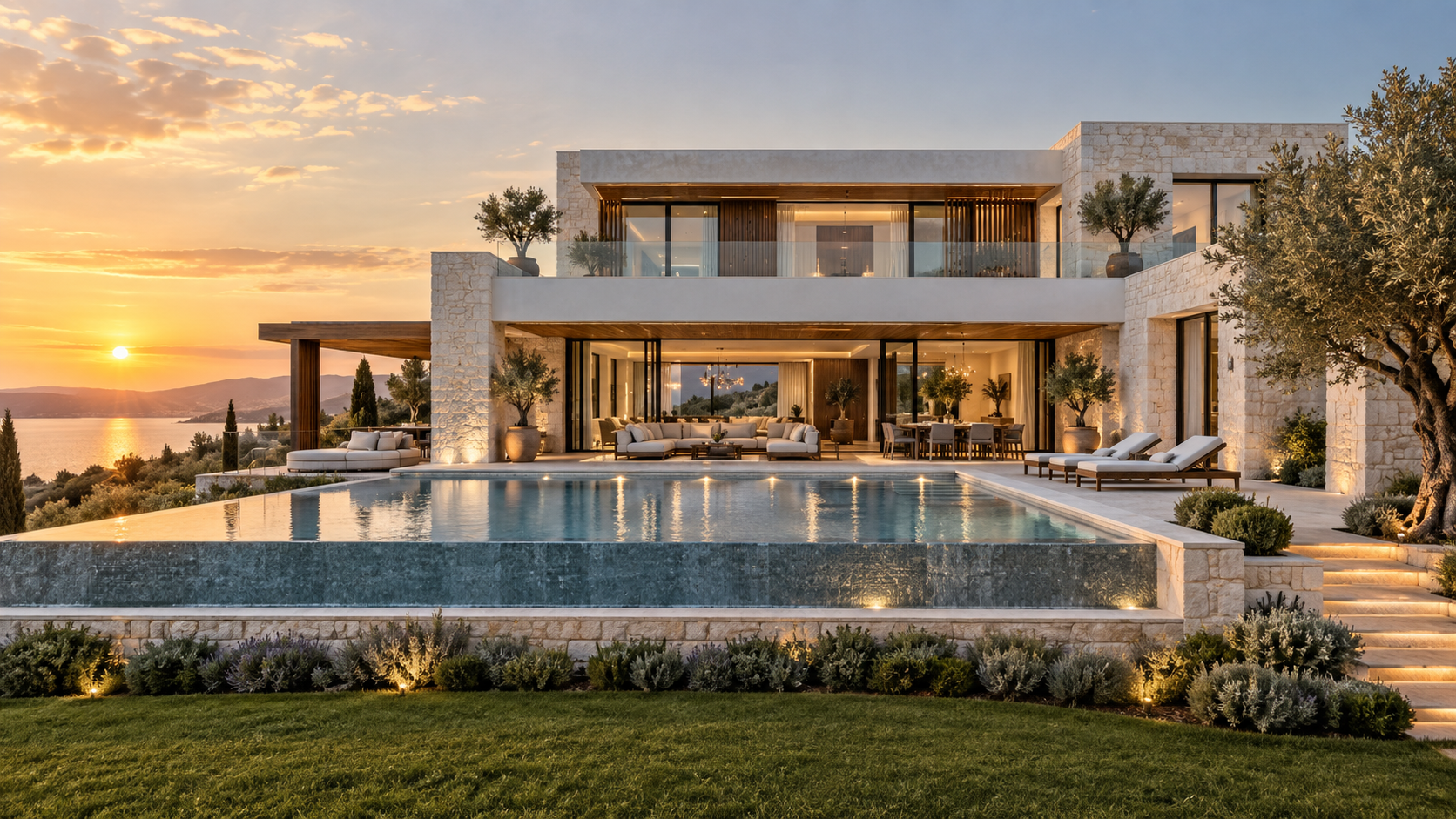
Mediterranean architecture remains one of the most enduring choices for a luxury villa because it balances warmth with simplicity. White or sand-colored walls reflect sunlight, while natural stone, timber and terracotta introduce visual depth. Arched openings can be used sparingly to soften a modern plan, especially around courtyards, covered terraces or garden transitions.
The essential idea is to make outdoor living feel like an extension of the interior. A shaded dining terrace, comfortable lounge, water feature and carefully planted garden can turn the space around the house into a series of usable rooms. Use a restrained palette so the architecture remains calm: ivory walls, pale stone, olive green, natural wood and small touches of aged metal.
Design details to borrow
- Use deep roof overhangs or pergolas to control harsh sunlight.
- Choose textured plaster instead of a perfectly flat finish for a more natural appearance.
- Frame the main view with a pool, olive trees or a low planted border.
- Repeat one or two materials across the entrance, terrace and interior floor.
2. Contemporary black-and-stone villas: bold architecture with warmth
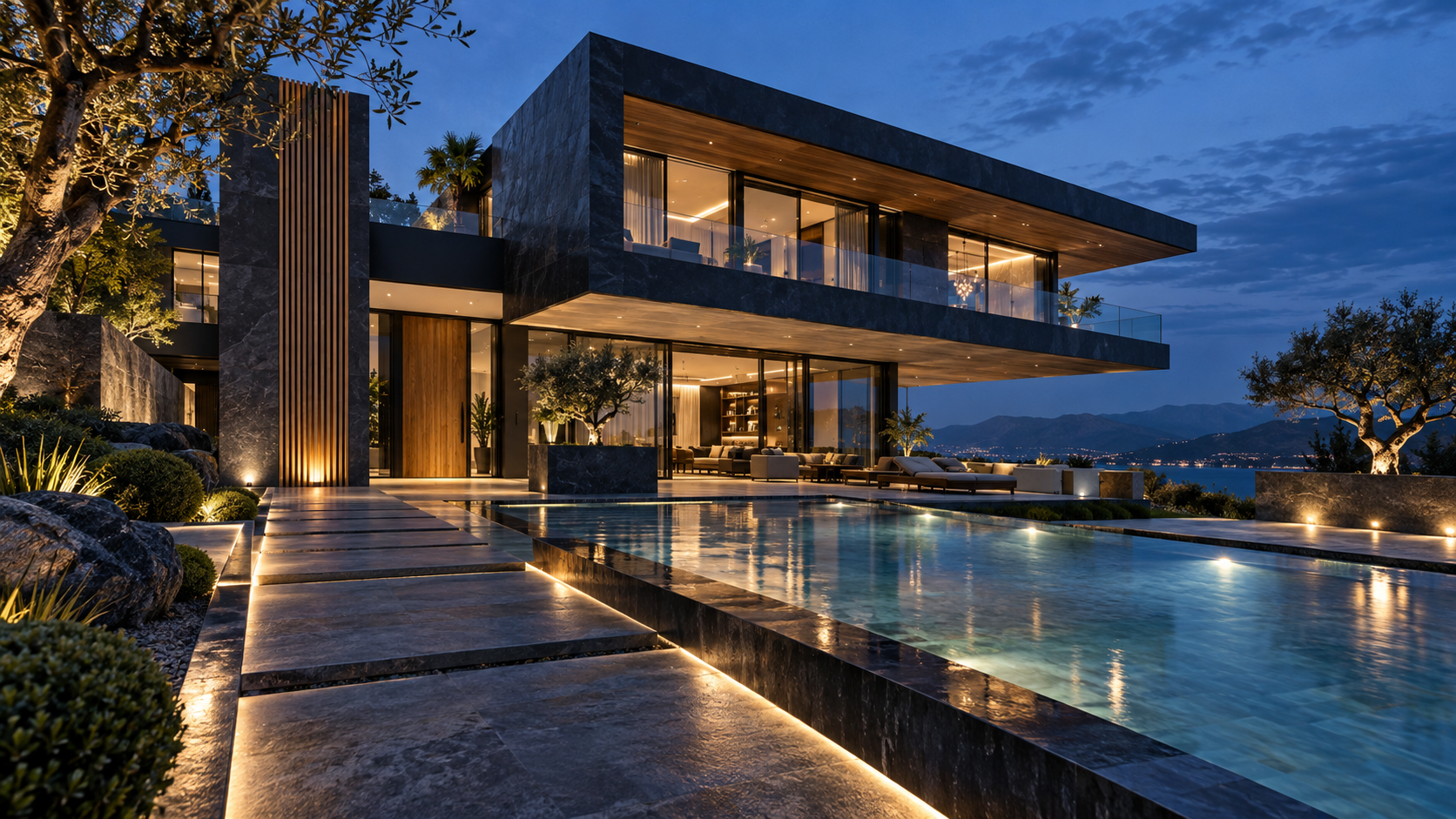
Dark façades can give a villa a dramatic and sophisticated identity, particularly when charcoal stone or dark metal is combined with warm timber and soft landscape planting. The key is contrast. A completely black exterior may feel heavy, but a composition of dark volumes, clear glass, pale paving and warm interior light can feel exceptionally refined.
Large windows should be positioned with intention rather than used everywhere. Use them to capture a garden, a pool, a sunset or a distant view, while keeping private bedrooms and bathrooms more protected. At night, discreet linear lighting can reveal the architecture without turning the villa into a brightly lit display.
3. Desert villas: shade, texture and a strong relationship with the land
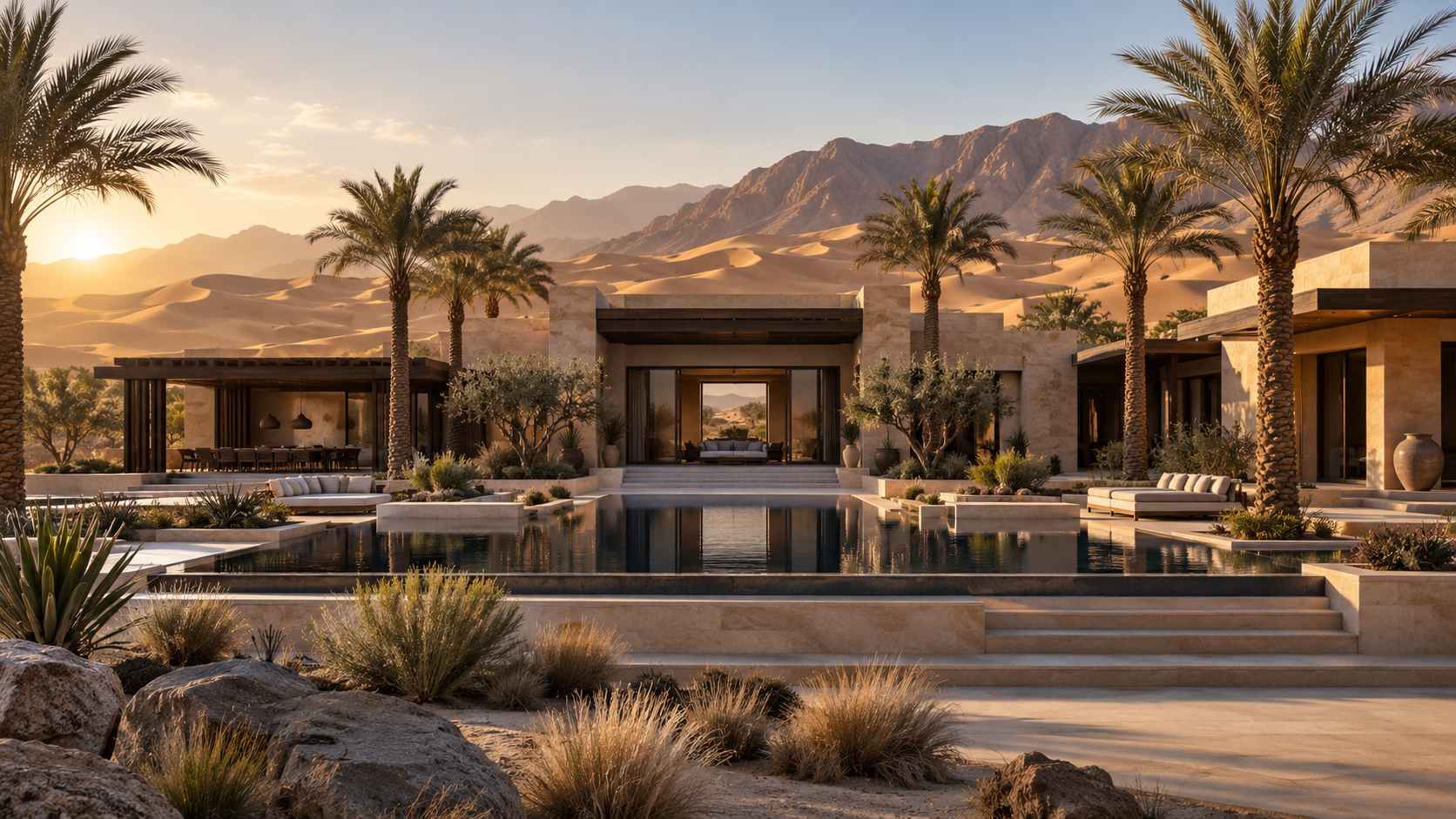
Desert architecture rewards a practical approach. The most elegant properties use thick-looking walls, shaded courtyards, deep openings and carefully selected materials to respond to heat and intense light. Sandstone, lime plaster, concrete and dark wood create a natural palette that sits comfortably within the landscape.
Water is especially powerful in a dry setting, but it should be placed thoughtfully. A narrow reflecting pool or compact plunge pool can create cooling visual relief without overwhelming the architecture. Planting should be structural rather than excessive: palms, sculptural shrubs, grasses and drought-tolerant species can define paths and outdoor rooms while respecting the environment.
4. Tropical garden villas: resort comfort at home
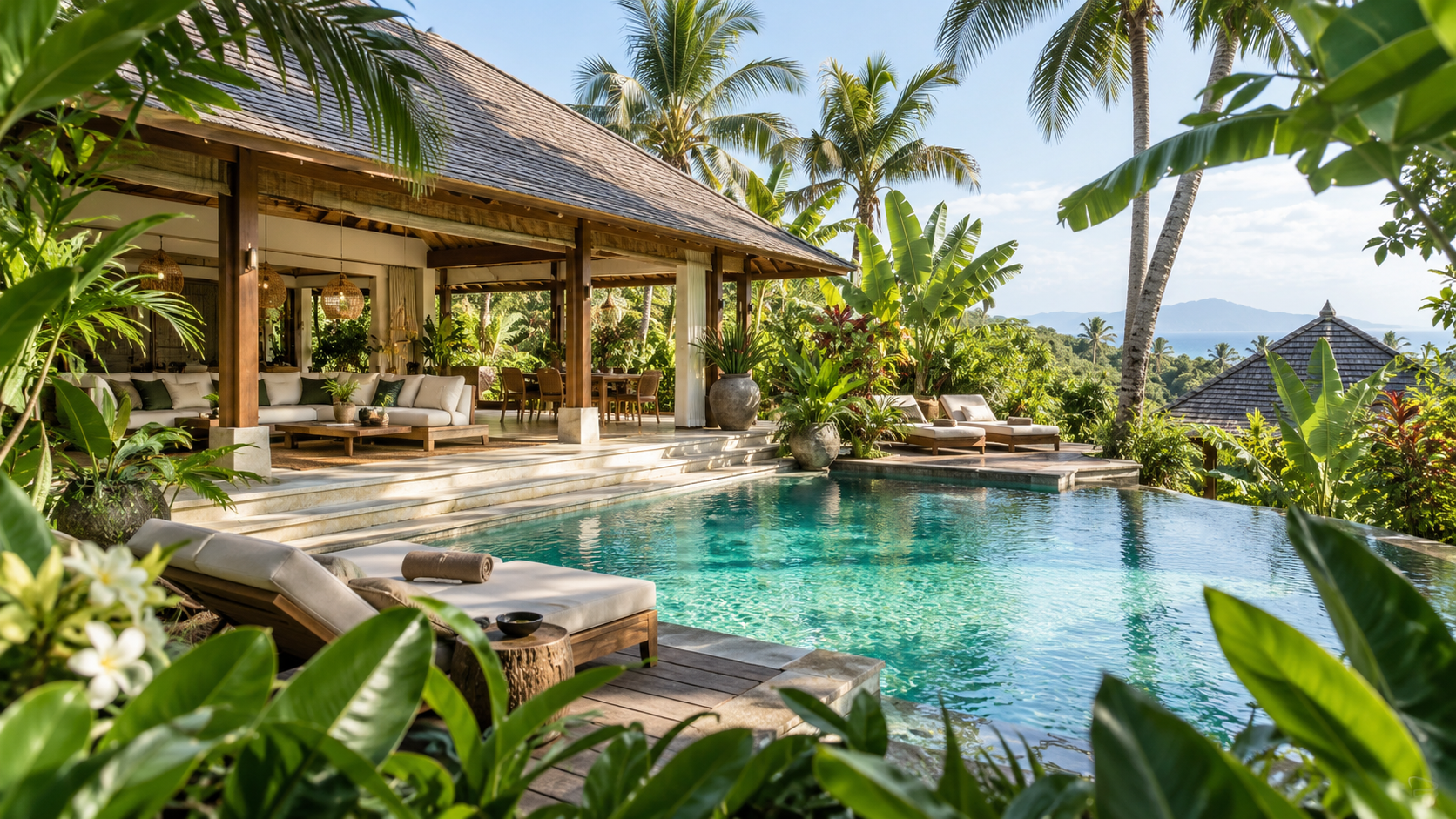
A tropical villa should feel connected to nature from the moment you enter. Instead of treating the garden as a backdrop, design the house around it. Sliding glass walls, covered walkways, open-air lounges and shaded courtyards allow the boundary between inside and outside to become flexible.
Natural timber, pale stone, woven textures and large-leaf planting create a relaxed luxury atmosphere. The most important practical detail is protection from sun and rain. Covered terraces, ventilated roofs and outdoor areas with drainage help the villa remain comfortable in real daily use, not just in photographs.
How to keep the look luxurious
Limit the number of finishes and repeat them consistently. One timber tone, one main stone and a controlled range of neutral fabrics will look more elevated than a collection of unrelated tropical patterns. Let the plants provide movement and color while the architecture stays quiet.
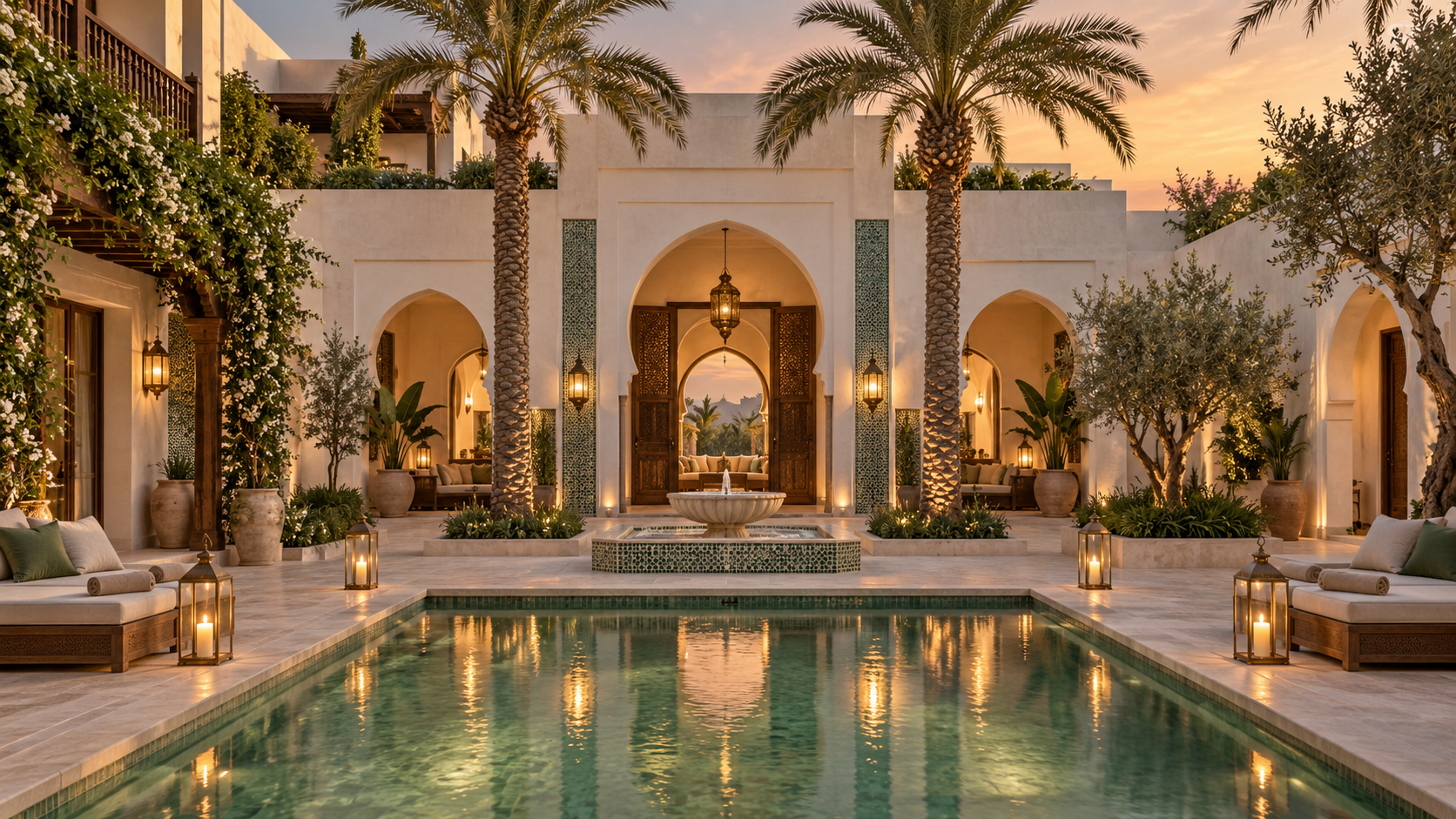
5. Coastal villas: let the view become the main decoration
When a property has an ocean or mountain view, the architecture should support it rather than compete with it. Low horizontal forms, wide terraces and transparent balustrades keep the horizon visible. Interior furniture should be arranged so that the view is enjoyed from the main seating area, the dining table and the bedroom—not only from a balcony.
Coastal materials need to look beautiful while tolerating strong sunlight, salt air and wind. Travertine, porcelain stoneware, treated timber, powder-coated metal and UV-resistant fabrics are practical choices. A restrained palette of chalk white, warm beige, pale grey and blue-grey accents allows the landscape to remain the focus.
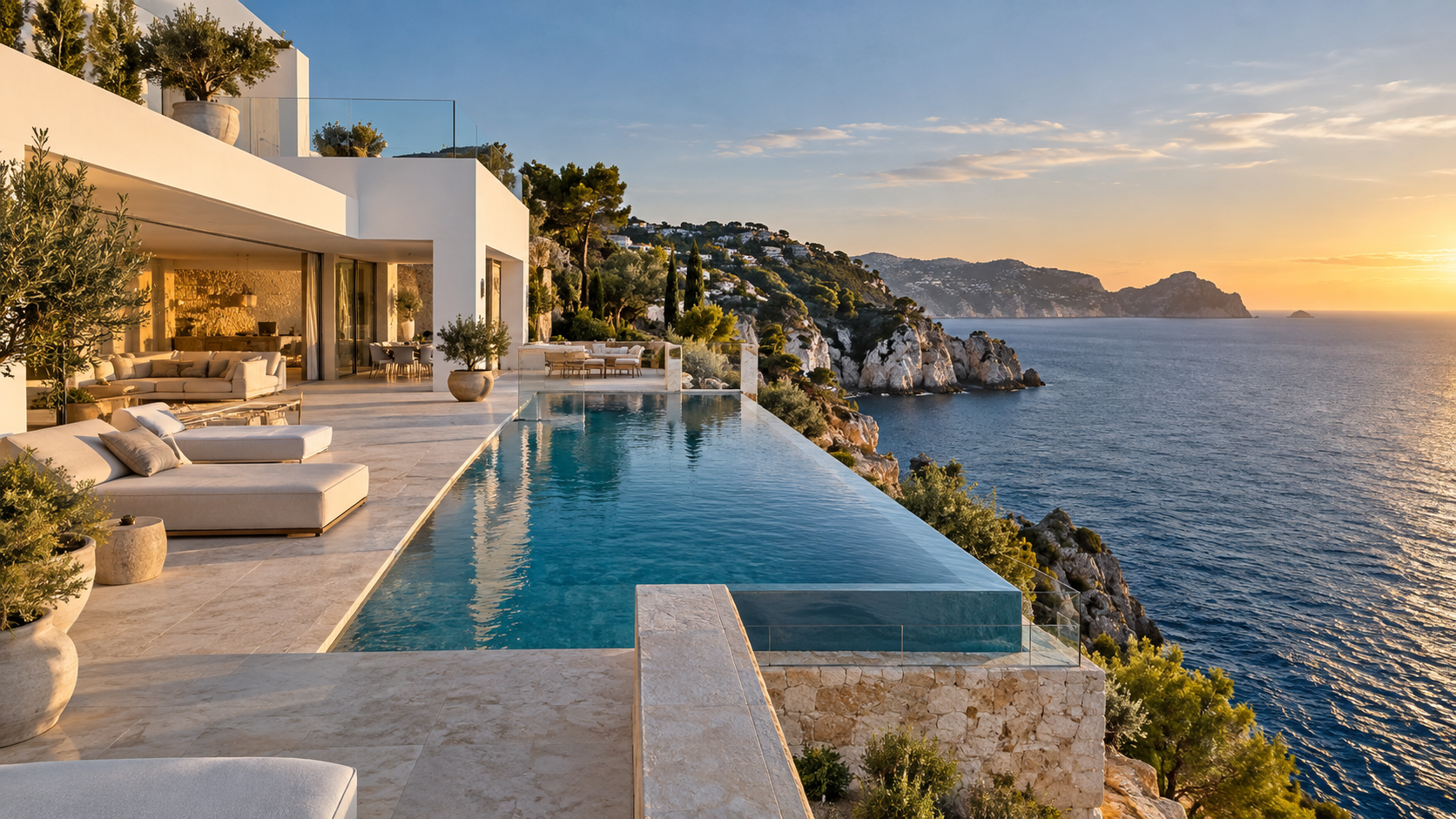
6. Moroccan-modern villas: heritage expressed through restraint
Moroccan-inspired design can feel contemporary when its most recognizable elements are used with discipline. A single arch, a handcrafted zellige detail, a textured tadelakt wall or a carved timber screen may be enough to give a space a strong sense of place. The goal is not to fill every surface with pattern; it is to create moments of craftsmanship within a calm architectural framework.
Courtyards are particularly effective because they improve privacy, daylight and ventilation at the same time. Add a fountain or shallow basin as a sensory focal point, then keep the surrounding furniture simple. Brass, walnut, terracotta and deep green can provide warmth without turning the villa into a themed interior.
7. Luxury living rooms: comfort first, spectacle second
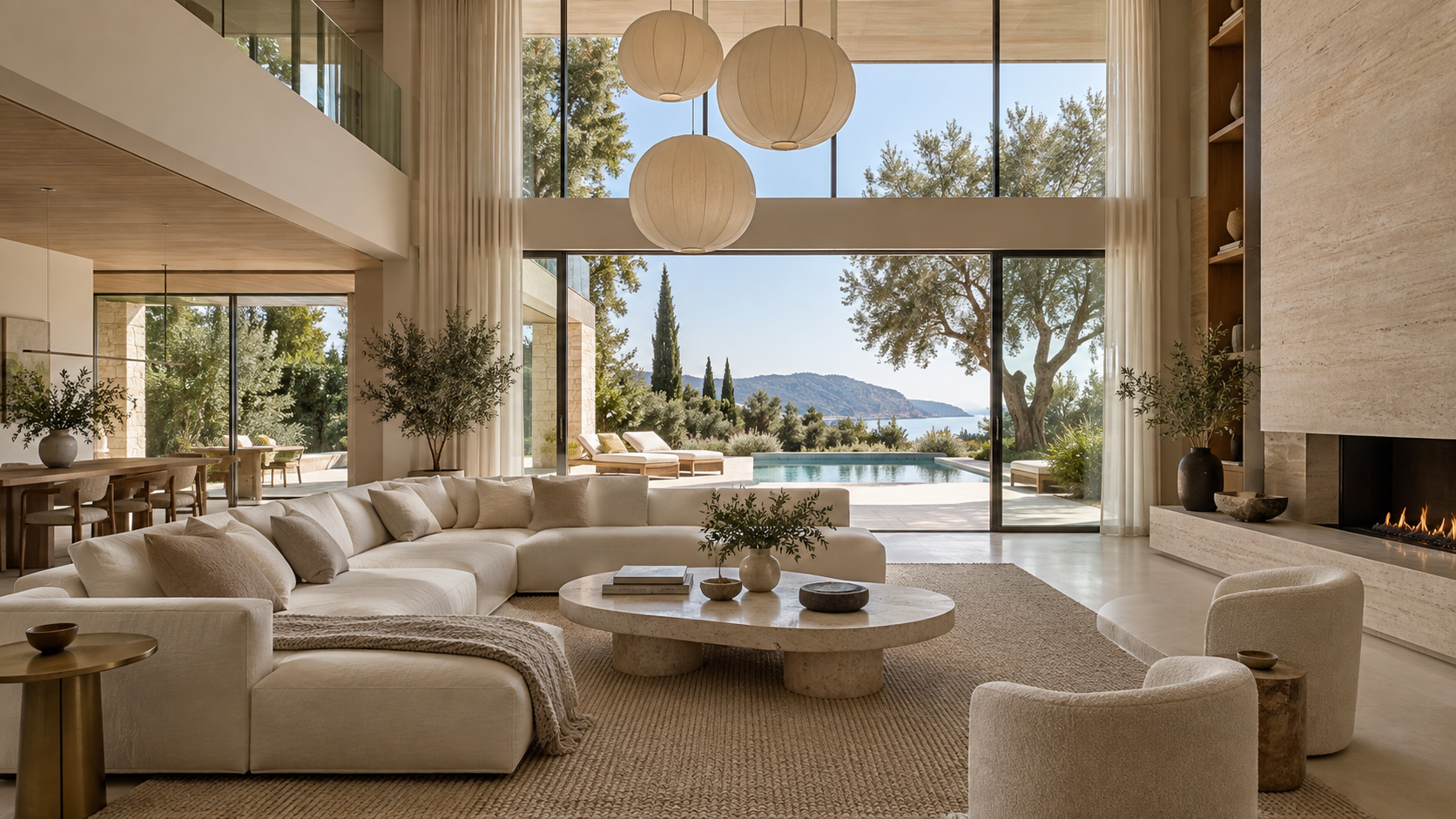
The living room is often the emotional center of a villa. A double-height ceiling can create drama, but scale must be balanced with comfort. Choose sofas that encourage conversation, place the coffee table within easy reach and use rugs or lighting to define zones inside a large open plan.
Neutral interiors work best when they include several tactile layers. Combine linen, boucle, wool, oak, limestone, plaster and brushed metal rather than relying on a single shade of white. If the room has large glass walls, use curtains or discreet solar shading so the space can remain comfortable during the brightest part of the day.
8. Villa kitchens: the most beautiful rooms are also highly functional
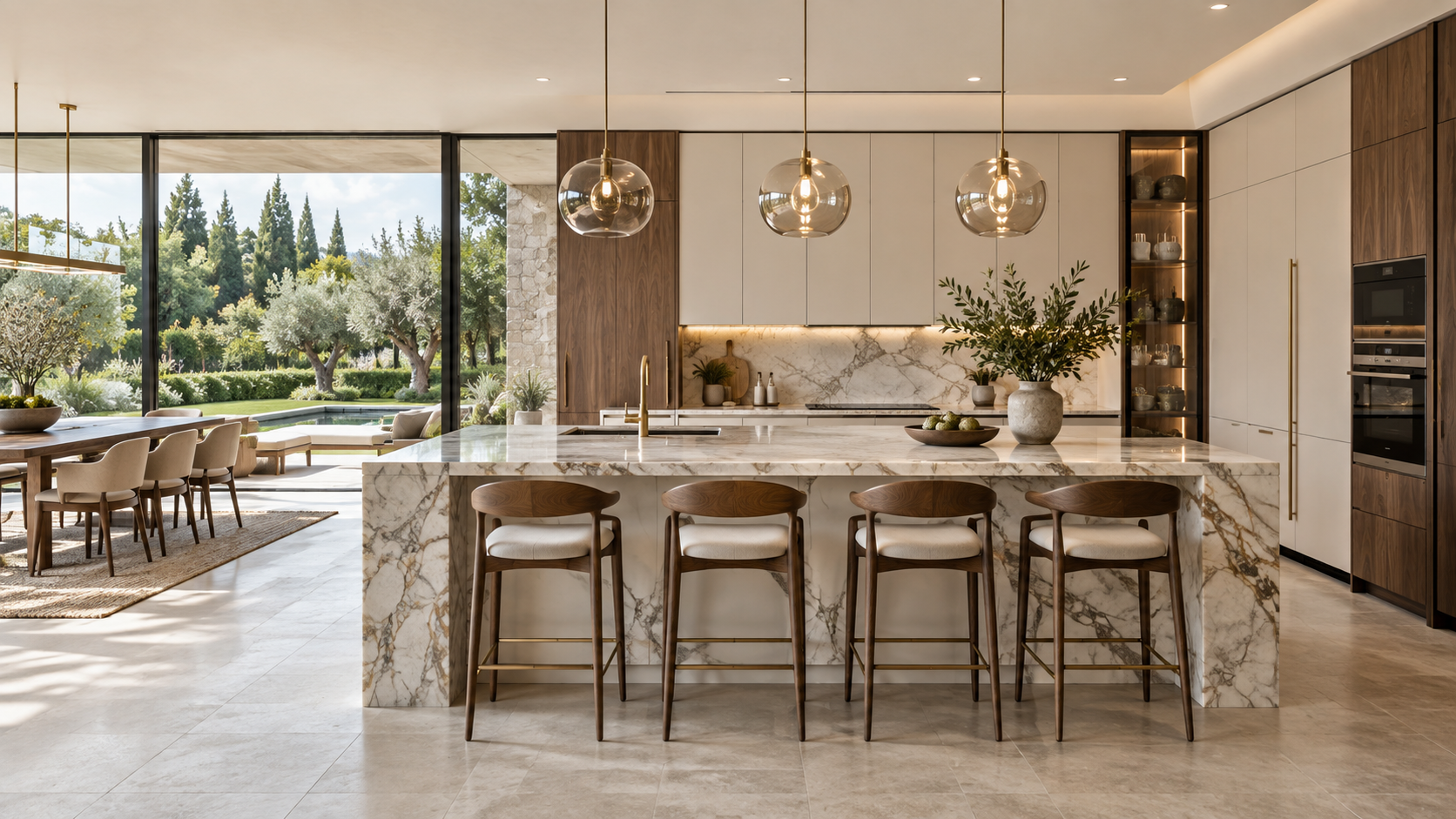
A luxury kitchen should look composed when it is not being used and perform efficiently when it is. The island is usually the visual anchor, so its size should be based on circulation and seating rather than appearance alone. Leave enough space for doors, appliances and more than one person to move comfortably.
Marble or stone can bring character to the island, while walnut or oak cabinetry adds warmth to a pale room. Integrated appliances preserve visual calm, but a pantry, utility zone or secondary preparation area is often more valuable than adding decorative features. Good task lighting, concealed storage and durable work surfaces are the details that make a kitchen remain beautiful for years.
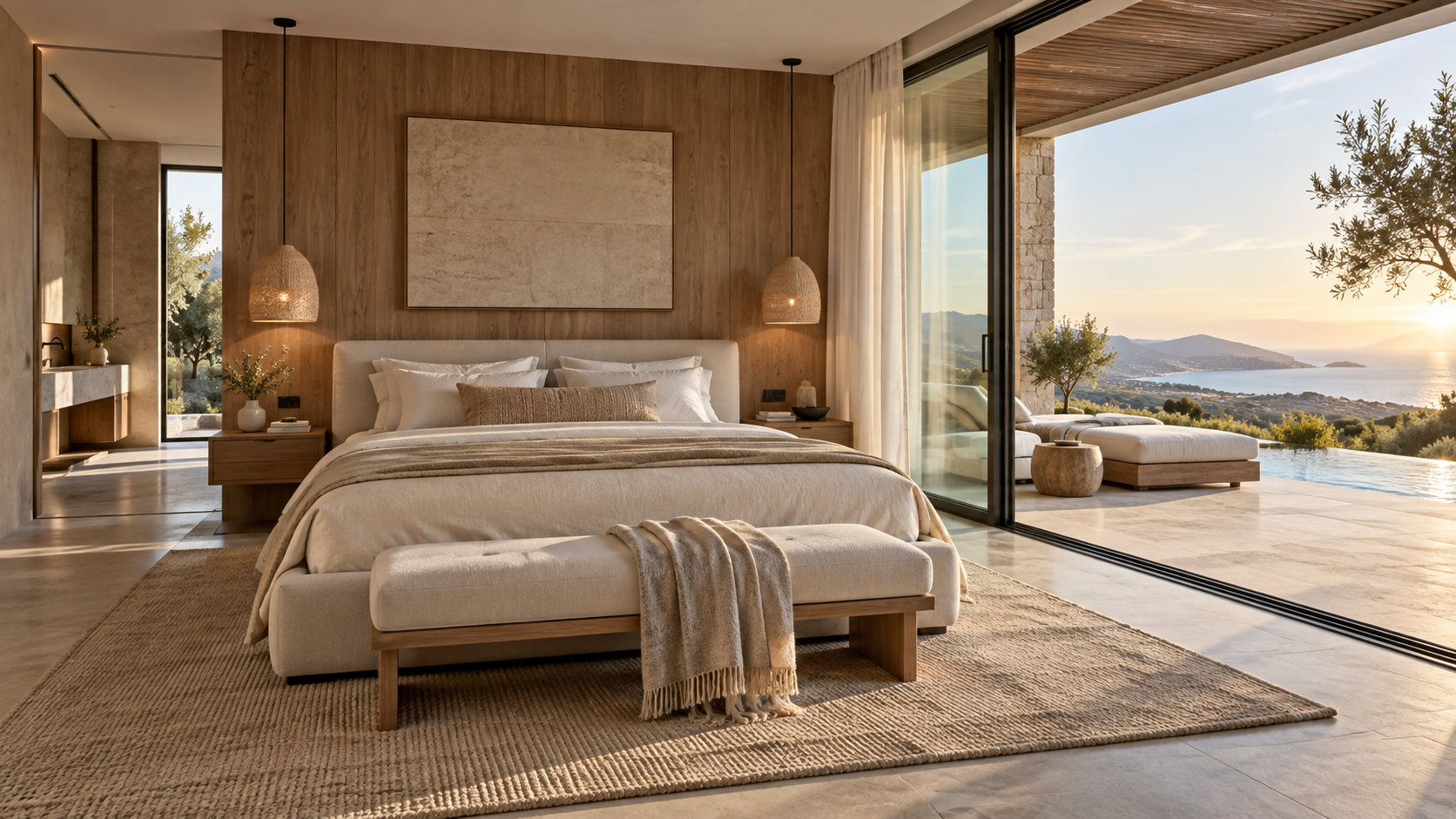
9. Master bedrooms: create a private hotel-like retreat
The master bedroom should feel quieter than the public rooms. Use a restrained palette, soft layered lighting and a clear visual axis toward a garden, terrace or landscape. A carefully designed headboard wall can provide architectural focus without filling the room with decoration.
Luxury is often found in the details residents touch every day: blackout curtains, comfortable bedside lighting, acoustically soft finishes, generous storage and a bathroom that is easy to reach without crossing a public space. If the bedroom opens directly outdoors, create privacy with planting, screens or a covered terrace rather than relying only on curtains.
10. Estate planning: design the entire property as one composition
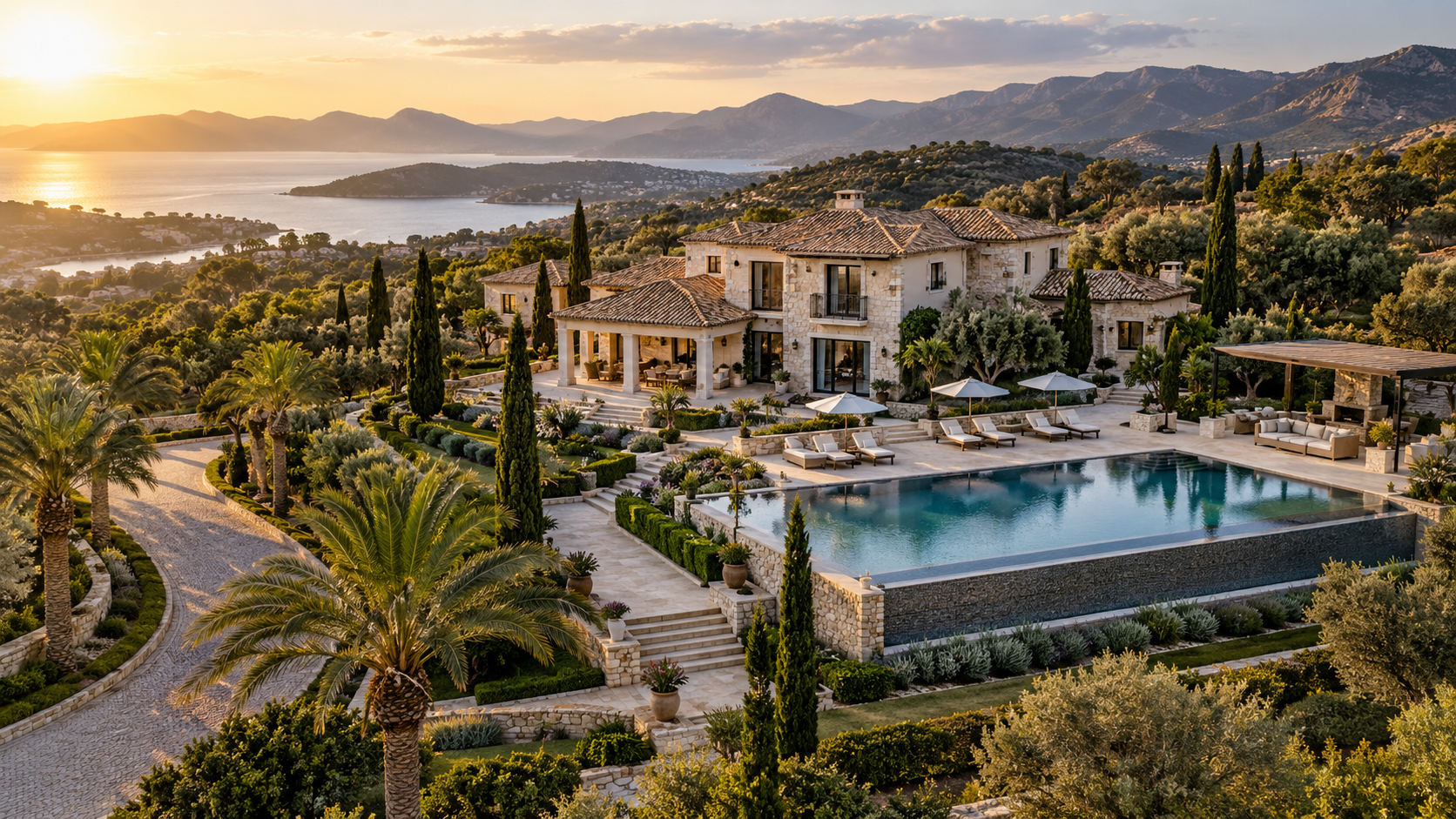
On a larger site, the villa should not be planned as an isolated building. The driveway, entrance court, main garden, pool, guest areas and service access need a clear relationship. Aerial views make this principle easy to understand: the best estates have a legible structure, with paths and planting guiding the eye rather than creating visual noise.
Think about the experience of moving through the property. A narrow arrival can open into a generous courtyard; a private garden can be revealed after passing through the main living area; the pool can act as a visual axis from the entrance. These sequences give a villa a sense of discovery and make even simple materials feel intentional.
Key design principles for planning a luxury villa
| Design priority | Why it matters | Practical approach |
|---|---|---|
| Orientation | Controls daylight, heat and the quality of the main views. | Position living spaces toward the best outlook and protect intense sun with shade. |
| Circulation | Makes a large home feel natural and effortless to use. | Create clear routes between arrival, living, bedrooms, gardens and service areas. |
| Material palette | Creates continuity and a sense of quality. | Choose a small group of durable materials and repeat them intentionally. |
| Privacy | Allows expansive glazing without sacrificing comfort. | Use courtyards, planting, screens and layered views to control exposure. |
| Lighting | Changes the atmosphere of the villa after sunset. | Combine ambient, task and accent lighting with concealed warm sources. |
How to choose the right villa style for your property
Start with the location and climate, then study the way you actually want to live. A coastal property may benefit from open terraces and low-maintenance materials. A city villa may need stronger privacy, compact courtyards and careful acoustic planning. A rural estate can use longer views, natural stone and a more generous relationship with the garden.
It is also useful to separate permanent decisions from replaceable ones. The position of the structure, windows, stairs, drainage, insulation and major finishes should be planned carefully because they are expensive to change. Furniture, artwork, rugs and accessories can evolve over time. Investing in the bones of the home usually creates a more convincing result than spending heavily on decoration while the layout remains weak.
Frequently asked questions about luxury villa design
What is the most important feature in a luxury villa?
There is no single feature that guarantees luxury. A strong layout, excellent natural light, privacy, durable materials and a thoughtful connection to the outdoors usually matter more than a dramatic decorative element.
How can a villa feel luxurious without looking excessive?
Use restraint: fewer materials, better proportions, concealed storage, layered lighting and high-quality textures. Luxury is often communicated through calmness and consistency.
Are large glass windows always a good choice?
Large windows are valuable when they frame a meaningful view and are supported by shading, ventilation and privacy measures. More glass is not automatically better if it creates heat, glare or a lack of privacy.
Which materials work well for modern villas?
Natural stone, textured plaster, timber, glass and carefully finished metal are versatile choices. The best combination depends on the climate, maintenance requirements and architectural context.
How do I make outdoor spaces feel like part of the home?
Use the same or complementary flooring, repeat interior materials outdoors, provide shade and lighting, and plan outdoor areas for real activities such as dining, relaxing and entertaining.
Final thought
The most memorable luxury villas are not defined by a single trend. They are defined by how naturally every decision works together: the architecture responds to the site, the materials age with character, the rooms receive beautiful light and the garden feels like a genuine part of daily life.
Use these ten concepts as a starting point, then adapt the ideas to your climate, landscape and personal routine. A villa becomes truly luxurious when it is not only beautiful to look at, but deeply comfortable to live in.