Mediterranean Garden Design Ideas for a Calm and Beautiful Outdoor Space
Discover Mediterranean garden design ideas for sunny patios, courtyards and low-maintenance outdoor spaces using stone, plants, shade and warm lighting.
Gardens & Outdoors · Casa Eloria
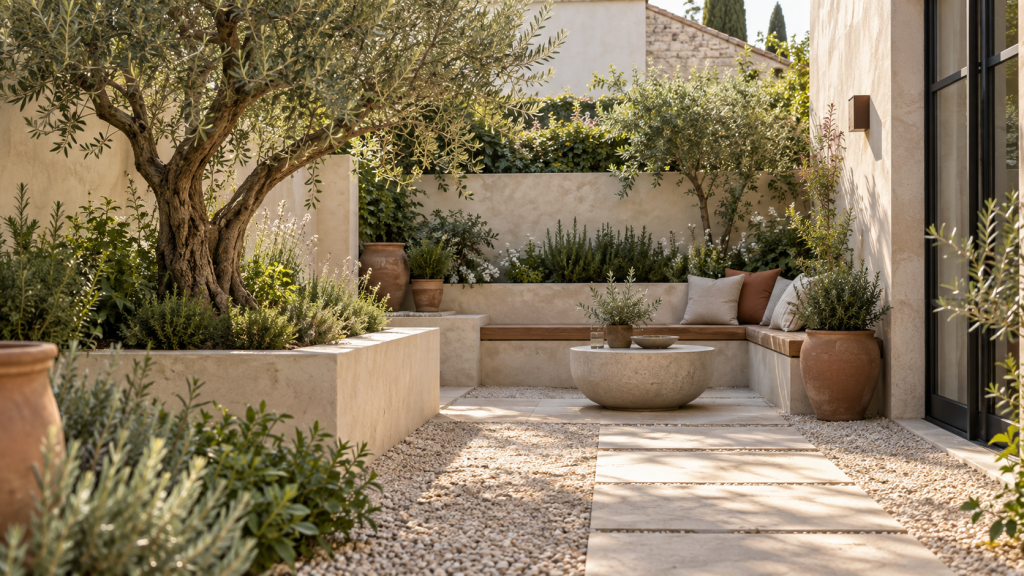
A Mediterranean garden can feel relaxed, elegant and deeply connected to its surroundings. The secret is not a large collection of plants, but a thoughtful balance of stone, shade, texture, fragrance and comfortable outdoor living.
The most successful Mediterranean gardens are designed for real life. They offer a welcoming route to the house, a cool place to sit, resilient planting for sunny weather and a visual rhythm that becomes more beautiful as it matures. These ideas will help you shape an outdoor space that feels natural rather than overly decorated.
1. Start with the structure before choosing plants
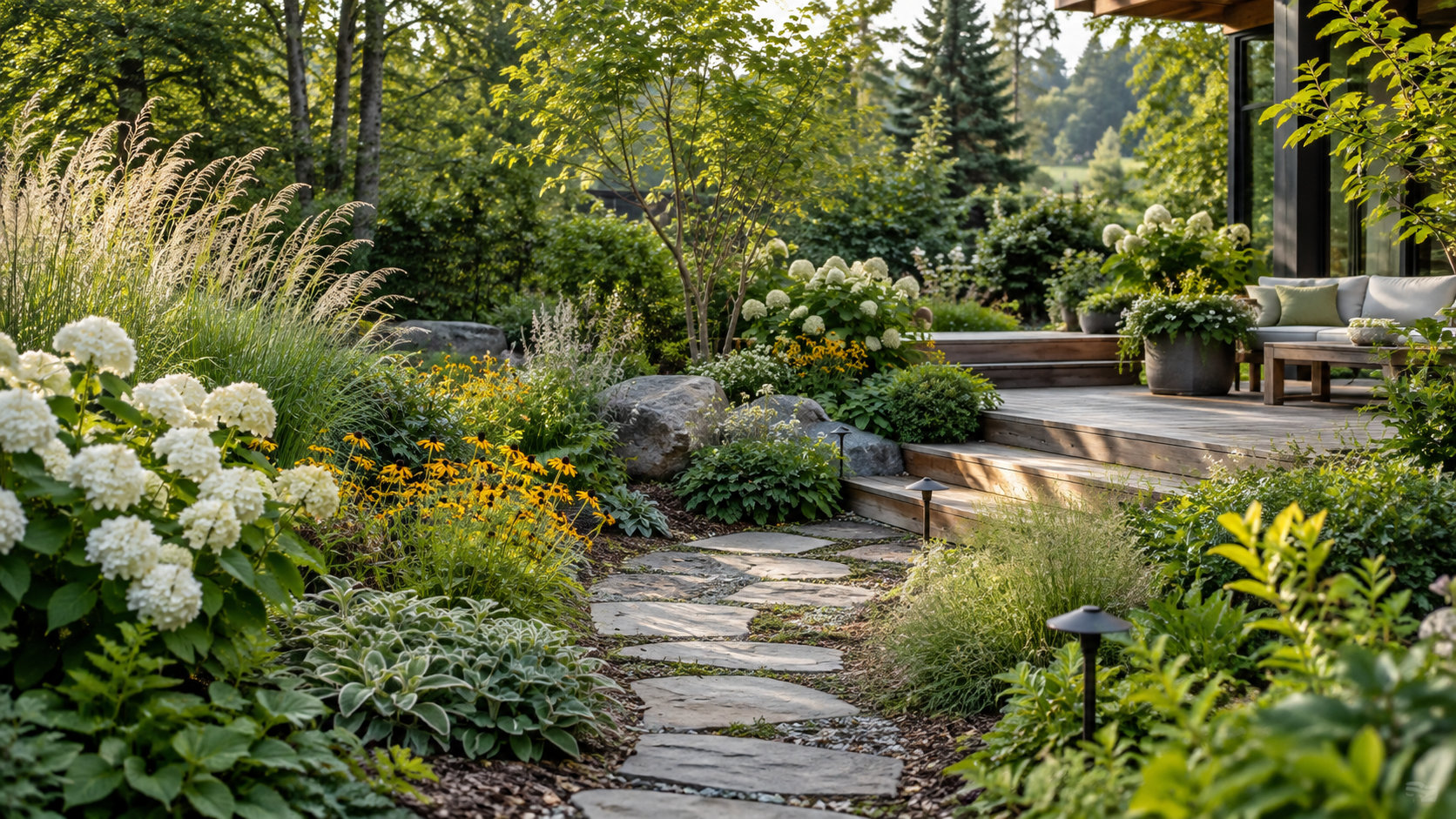
A beautiful garden begins with its framework. Define the main route from the entrance to the house, decide where people will sit, and identify the areas that need shade or privacy. Once these elements are clear, plants can support the design instead of competing with it.
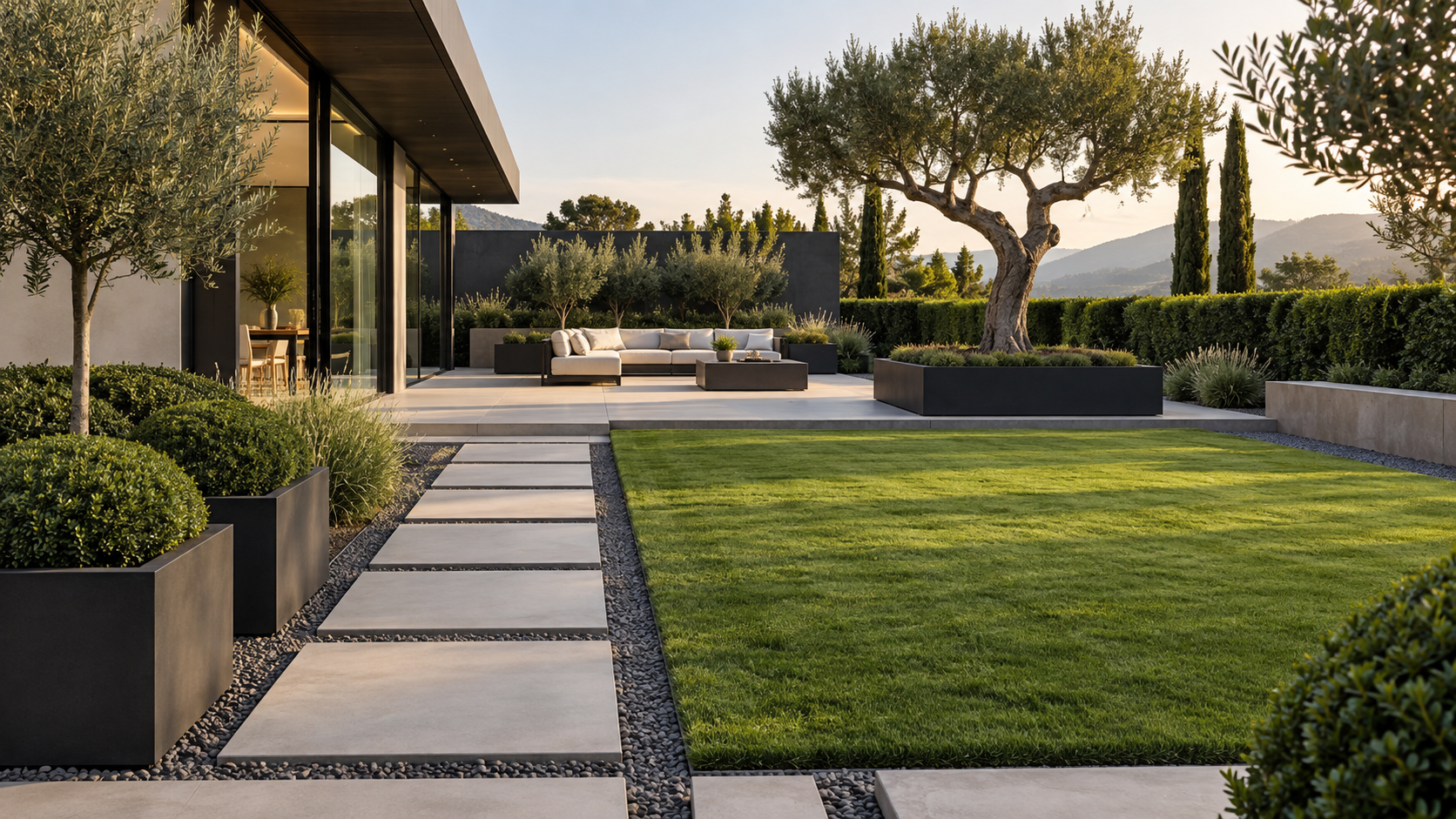
Use a small number of strong shapes: a straight stone path, a rectangular terrace, a circular seating area or a narrow water feature. Repeating these forms gives the garden visual order. Soft planting can then bring movement around the edges.
Create a clear, welcoming path that reveals the house gradually.
Plan shade, seating and lighting before adding decorative details.
Use layered shrubs and small trees to screen views without closing the garden in.
2. Combine stone with soft, drought-aware planting
Stone gives a Mediterranean garden its visual foundation. Pale limestone, warm sandstone, gravel and large natural boulders work particularly well because they echo the dry, sunlit character of the landscape. Avoid using too many different paving styles; one main surface and one complementary accent usually look more refined.
Soften the hardscape with plants that tolerate sun and periods of dryness. Olive trees, lavender, rosemary, sage, grasses, citrus trees and evergreen shrubs can create structure, fragrance and seasonal interest. The exact choices should follow the local climate and soil rather than a fixed plant list.
3. Make shade an architectural feature
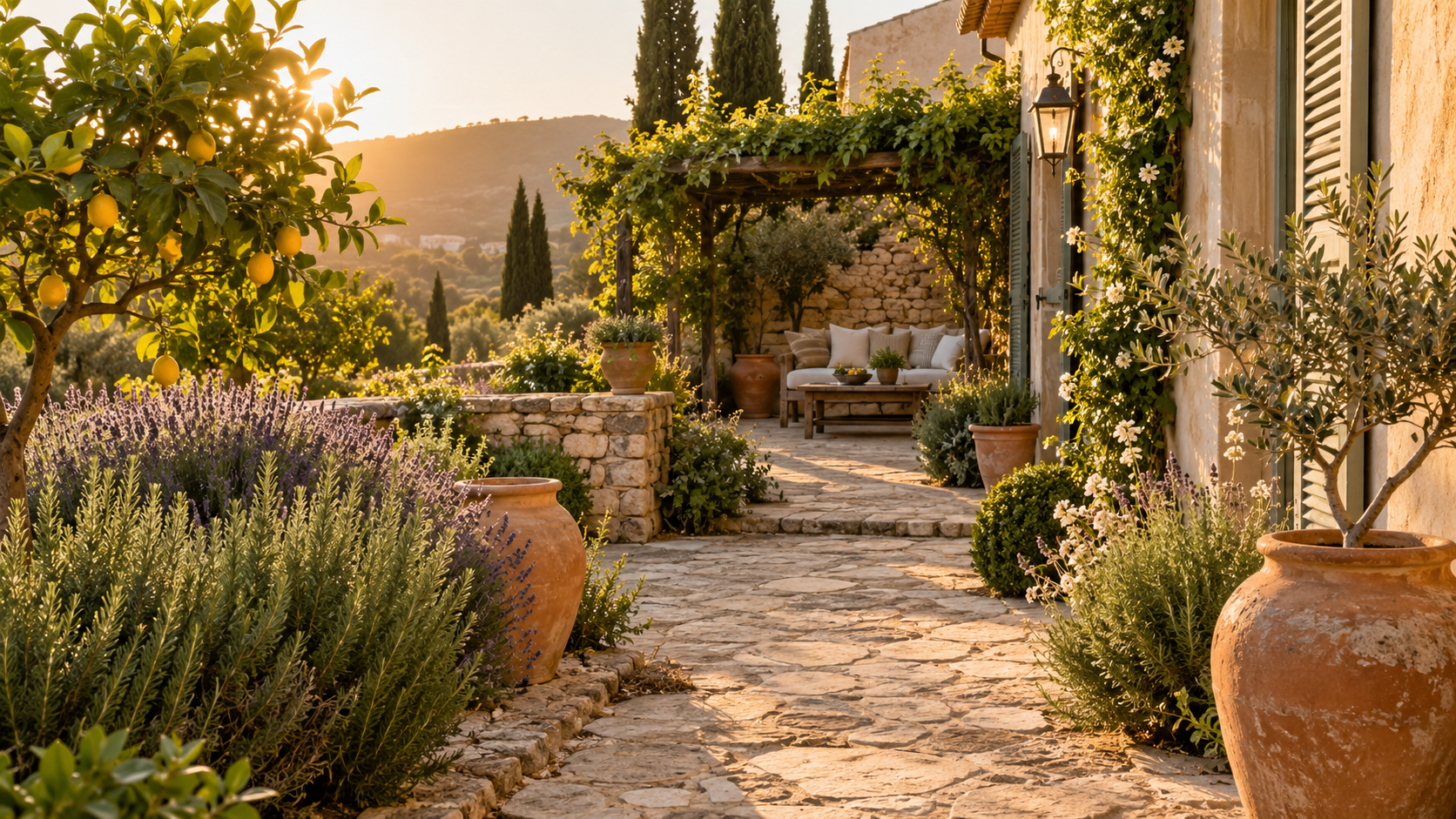
Shade is not an afterthought in a warm garden. A pergola, covered terrace, mature tree or planted screen can turn an exposed space into a comfortable outdoor room. Choose furniture placement first, then position the shade so it protects the areas used most often.
Wooden pergolas bring warmth, while pale fabric canopies create a lighter appearance. Climbing plants add softness, but they need a strong support structure and regular pruning. In smaller gardens, a simple umbrella or retractable shade may be more practical than a permanent construction.
4. Add a quiet focal point
Every garden benefits from one element that naturally attracts the eye. This might be a fountain, an olive tree, a sculptural pot, a low fire bowl or a framed view beyond the property. The focal point should be visible from an important position such as the kitchen, living room or entrance.
Water works especially well because it adds movement, reflection and a sense of coolness. It does not need to be large. A shallow basin or narrow rill can be enough when it is surrounded by carefully chosen paving and planting.
5. Use warm lighting after sunset
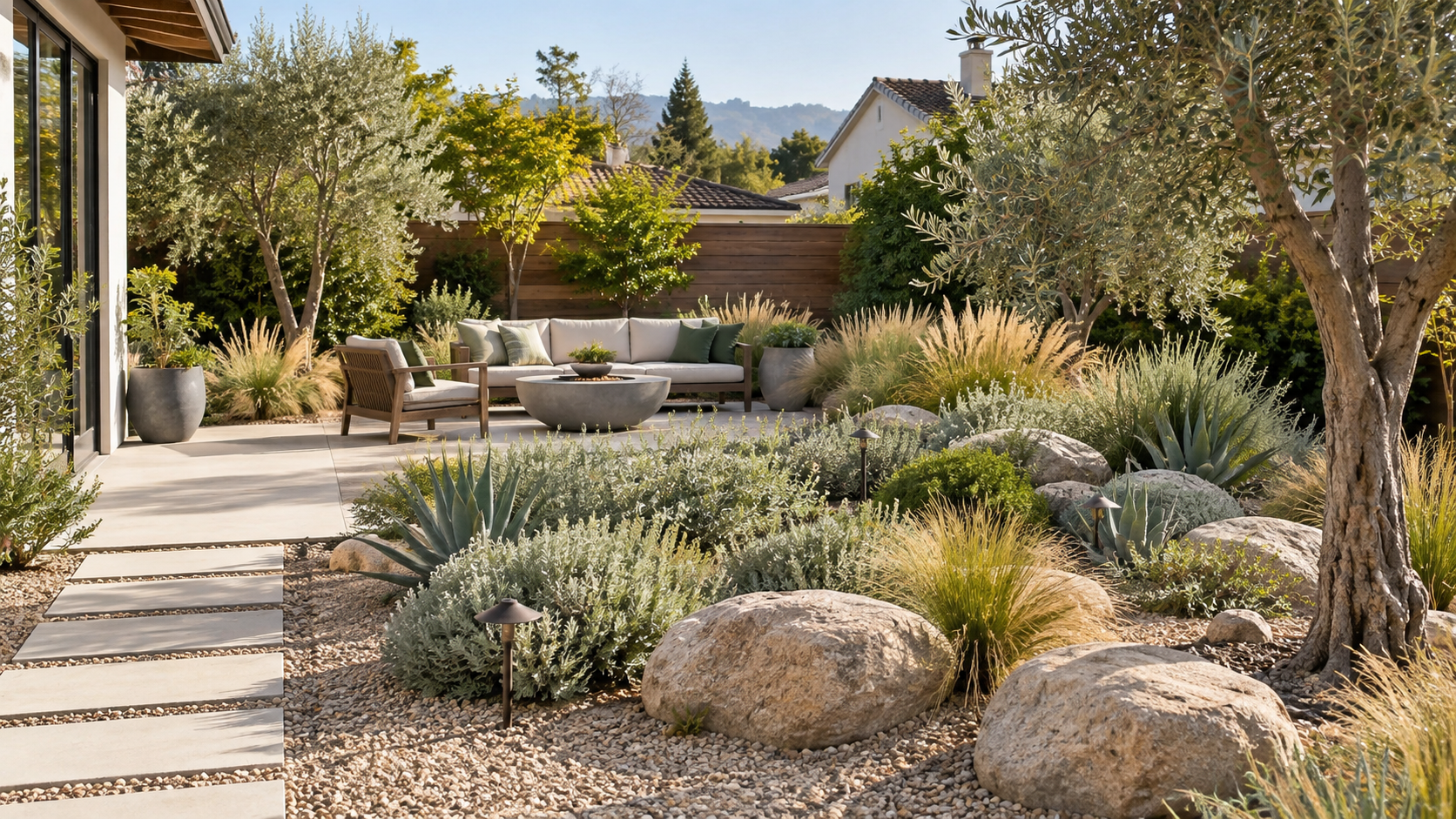
Outdoor lighting should guide, reveal and welcome. Low path lights make circulation safer, while concealed uplights can highlight a tree, textured wall or architectural detail. Warm color temperatures generally feel more comfortable in residential gardens than very bright white light.
Avoid placing a bright fixture at every corner. Too much light flattens the garden and can make it feel less private. A few carefully positioned sources create depth and allow the darker areas to remain part of the composition.
6. Design for maintenance from the beginning
A low-maintenance garden is not an empty garden. It is a garden where every plant, surface and irrigation decision has been chosen with care. Group plants with similar water needs, leave enough space for mature growth, and use mulch or gravel to reduce exposed soil.
- Choose durable paving with safe, non-slip surfaces.
- Install efficient irrigation zones rather than watering everything equally.
- Allow access around trees, planters and outdoor equipment.
- Select plants for the actual exposure, wind and soil conditions.
Frequently asked questions
Can a Mediterranean garden work in a small space?
Yes. A limited palette of gravel, one small tree, aromatic plants and a compact seating area can create the same atmosphere without requiring a large property.
What is the best material for a Mediterranean path?
Natural stone, textured porcelain and compacted gravel can all work. The best choice depends on drainage, local weather, accessibility and maintenance needs.
How do I make a sunny garden feel cooler?
Combine shade structures, trees, light-colored paving, dense planting near seating and a small water feature where appropriate.
A garden that grows more beautiful with time
Mediterranean garden design is ultimately about creating a calm relationship between architecture and nature. Keep the structure clear, choose resilient materials, and let planting develop character gradually. The result will feel personal, welcoming and easier to enjoy every season.