Modern Living Room Design: 9 Ways to Make an Open Space Feel Personal
Learn how to design a modern living room with better zoning, lighting, furniture proportions, texture and natural materials for a comfortable home.
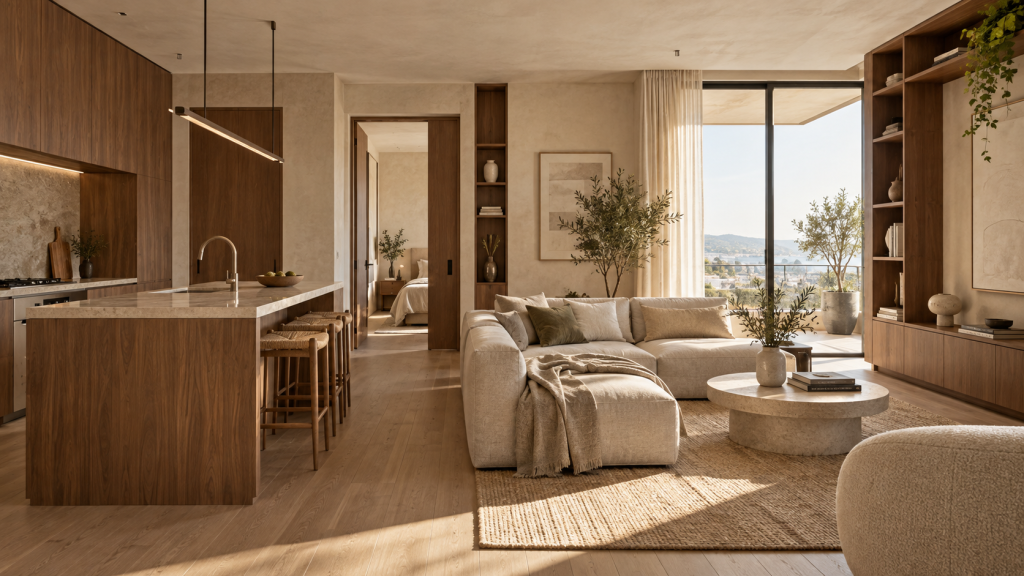
Living Rooms · Casa Eloria
A modern living room should feel open and polished, but never empty or impersonal. The right layout, lighting and materials can make a large room feel intimate while keeping its clean architectural character.
Modern does not mean minimal at any cost. It means every major element has a clear purpose. Seating should support conversation, lighting should create several moods, and the palette should allow everyday objects to live comfortably within the room.
1. Begin with the way the room is used
Before choosing a sofa or coffee table, list the activities the room needs to support. Conversation, television, reading, entertaining, working and children’s play may all require different positions. A successful layout allows these activities to coexist without making the room look divided.
Use the main seating group as the first decision. Then place secondary furniture around it. This approach prevents the common mistake of pushing every piece against the wall and leaving the center of the room disconnected.
2. Create zones without building walls
Open rooms need visual boundaries. A rug can define the sitting area, a pendant can identify the dining zone, and a console can mark the transition between circulation and relaxation. These elements provide order while preserving the feeling of space.
Use a size that allows at least the front legs of the seating to sit comfortably on it.
Repeat a different light source for each activity instead of relying on one central fixture.
Keep the main route clear so the room feels effortless to move through.
3. Choose furniture with appropriate scale
Large rooms can handle generous furniture, but scale is not the same as simply buying the biggest sofa available. Leave enough space for side tables, walking paths and visual breathing room. In a smaller room, a compact sofa with a deep comfortable seat may work better than an oversized sectional.
Mixing heights also improves composition. A low sofa can be balanced by a tall plant, a floor lamp or a vertical artwork. This creates rhythm without adding unnecessary decoration.
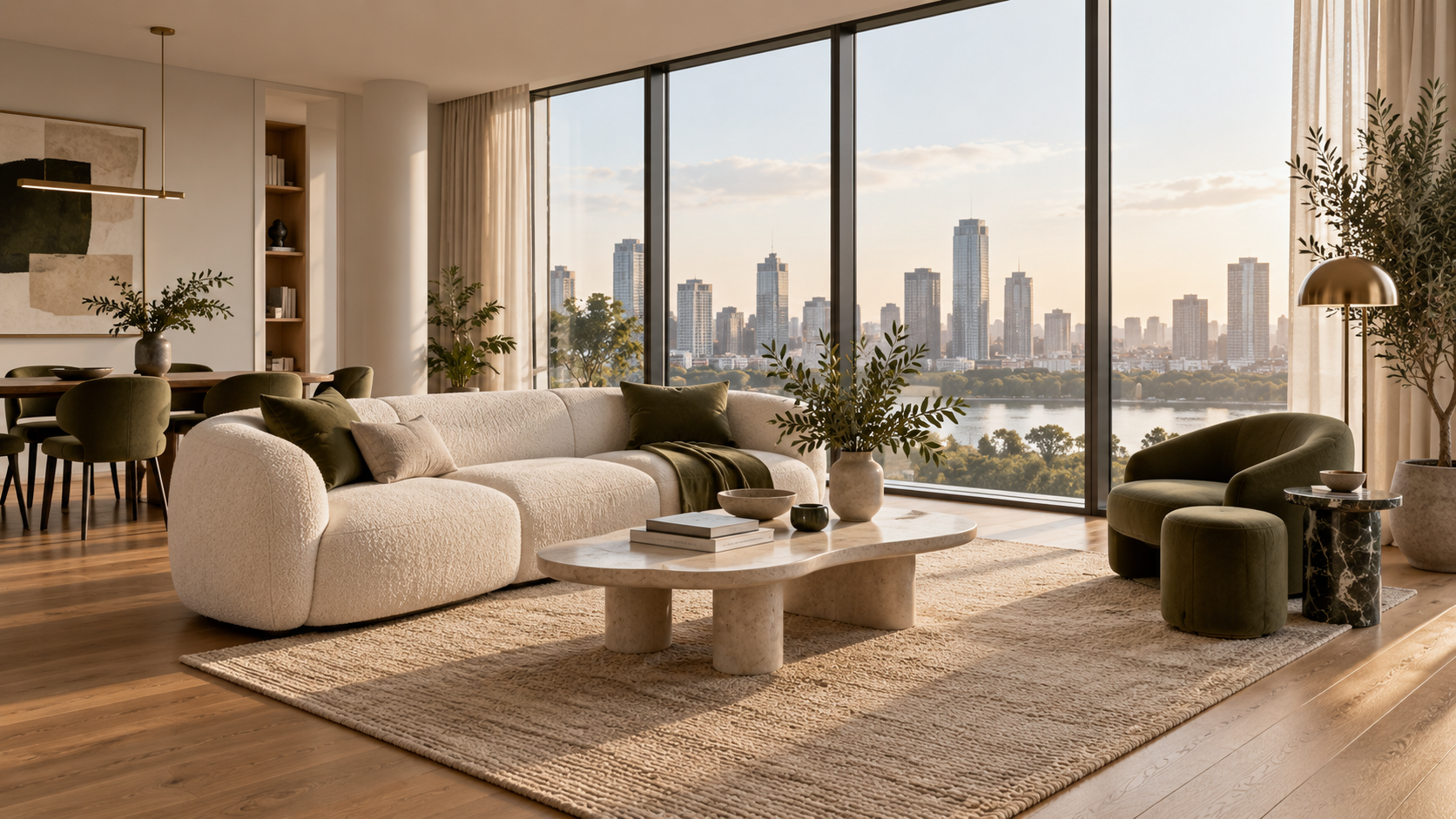
4. Use texture instead of excessive pattern
Neutral colors become interesting when the room contains different tactile surfaces. Combine linen, wool, oak, stone, plaster, woven baskets and soft upholstery. Texture gives depth in both daylight and evening light.
Patterns should be used as accents. One patterned cushion or a small geometric rug can add character, while a room filled with unrelated prints may quickly feel dated.
5. Design lighting for different moods
A living room needs at least three levels of lighting: general illumination, task lighting for reading or working, and accent lighting for artwork or architecture. Table lamps and floor lamps are especially valuable because they bring light down to a comfortable human scale.
Place lighting where it supports behavior. A reading chair needs a focused source, while a conversation area benefits from softer light positioned around the edges. Dimmers make the arrangement significantly more flexible.
6. Make the television less dominant
Technology is part of modern life, but it does not have to control the visual identity of the room. Use a low console, concealed cables and balanced storage around the screen. If the layout allows it, orient the seating so the fireplace, garden or view remains an equally important focal point.
7. Bring nature inside
Plants, timber and natural stone keep a contemporary living room from feeling overly hard. Select plants according to available light and choose containers that relate to the room’s materials. One large plant often creates more impact than many small pots scattered across the space.
8. Add one memorable element
A modern room needs a point of character. This could be a sculptural chair, a large artwork, a stone coffee table, a curved sofa or a handmade pendant. The element should be strong enough to be remembered but supported by a quiet background.
9. Keep everyday storage within reach
Open shelves can display books and objects, but closed storage is essential for controlling visual clutter. Plan a place for remotes, toys, cables, blankets and documents. A living room feels more luxurious when it can return to calm quickly after daily use.
Frequently asked questions
How do I make an open living room feel cozier?
Use a correctly sized rug, warm layered lighting, curtains, tactile fabrics and seating arranged toward one another instead of only toward a wall.
What is the best color for a modern living room?
There is no universal best color. Warm neutrals are flexible, but muted green, clay, blue-grey or charcoal can work beautifully when balanced with natural materials and daylight.
Should all living room furniture be the same style?
No. A coherent palette and similar scale are more important than identical furniture. Mixing one or two contrasting pieces often makes the room feel more personal.
Modern comfort is a design decision
The most successful living rooms are edited but not sterile. Solve the layout first, build a layered material palette, and allow the room to show how it is genuinely used. That is what turns a modern interior into a welcoming home.