Small Living Room Ideas: 15 Ways to Make a Small Space Feel Bigger
Discover 15 practical small living room ideas to make an apartment or compact space feel brighter, calmer, and more spacious.
Living Room Guide
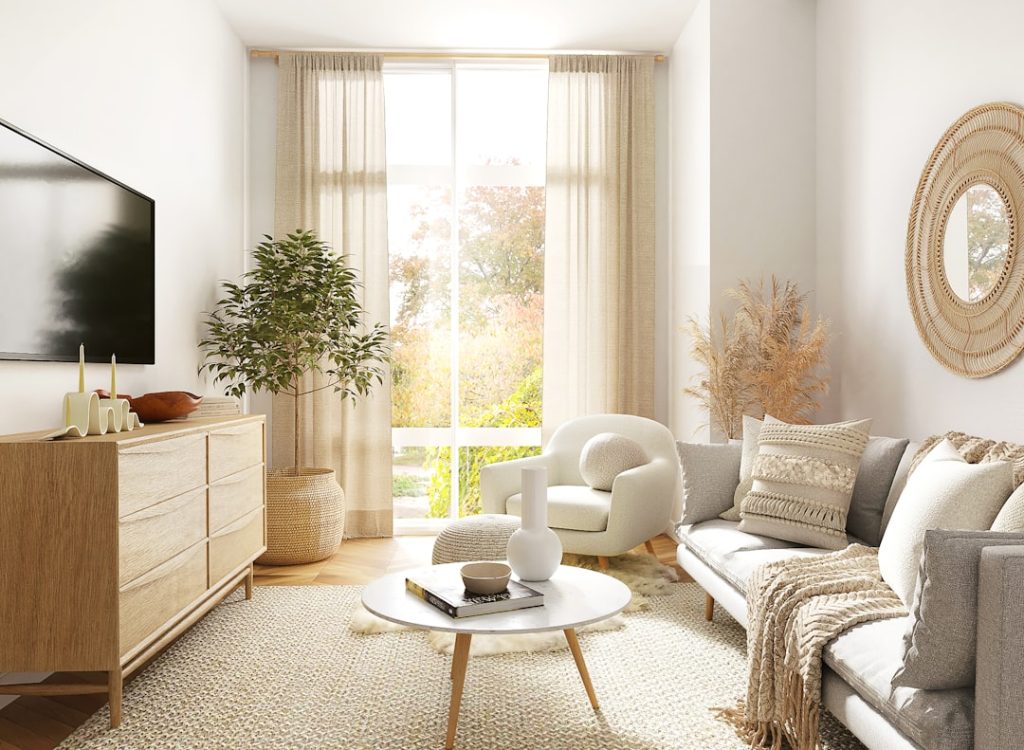
A small living room can feel calm, generous, and beautifully finished. The key is not filling it with more furniture—it is choosing the right scale, keeping the visual lines clear, and making every detail work harder.
Small rooms are often more rewarding to design than large ones. Every decision is visible, so a thoughtful layout can create a stronger sense of character than a space filled with unnecessary pieces. Whether you are furnishing an apartment, refreshing a rental, or working with an awkward sitting room, these ideas will help you create a space that feels welcoming rather than crowded.
1. Choose one calm color story
Begin with two or three related shades instead of a long list of contrasting colors. Soft white, warm beige, pale taupe, muted sage, or gentle clay can make the room feel connected from wall to wall. You can still add contrast through a dark wood table, a black lamp, or a patterned cushion, but keep the larger surfaces quiet.
2. Measure before buying anything
Use masking tape on the floor to mark the footprint of a sofa, coffee table, and armchair. Leave a comfortable walkway between each piece. A beautiful sofa that blocks the entrance will make the room feel smaller every day, so measurements should come before shopping.
3. Pick a sofa with a slimmer profile
Look for raised legs, narrow arms, and a depth that suits the room. A sofa that sits slightly above the floor allows more of the flooring to remain visible, which creates a lighter visual impression. Choose comfort carefully, but avoid oversized cushions that swallow the available space.
4. Let the natural light lead the layout
Keep the area directly in front of the brightest window as open as possible. Position seating so that daylight reaches the center of the room instead of being blocked by tall furniture. Light curtains that stack neatly to the side are usually more effective than heavy drapes in a compact space.
5. Use a round or oval coffee table
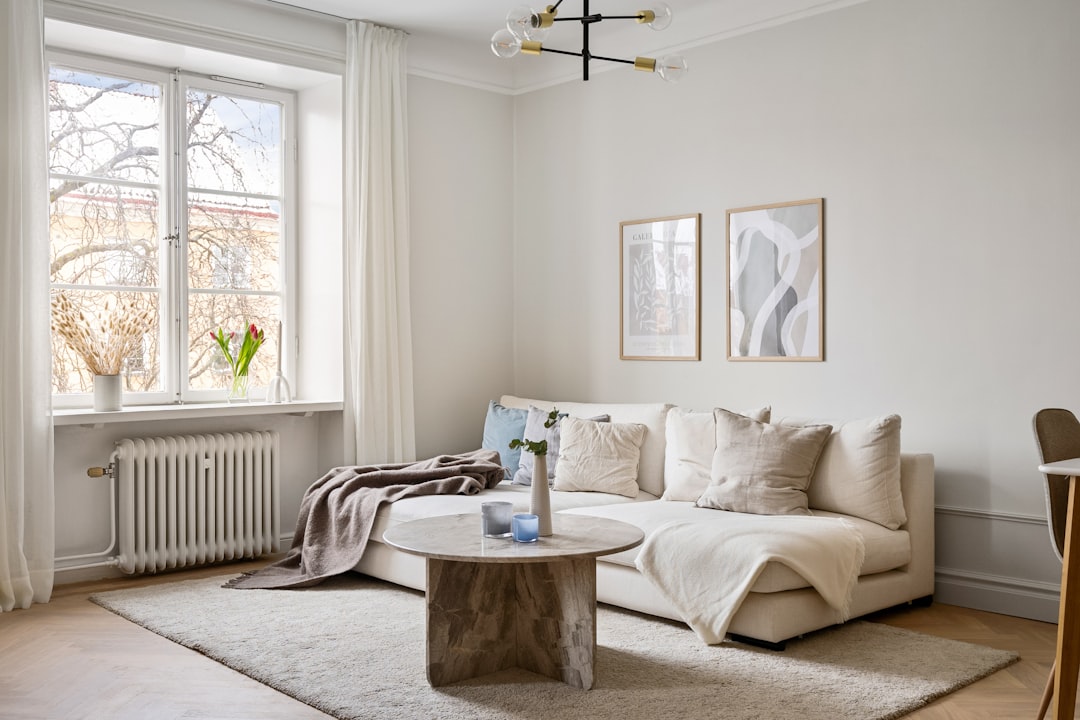
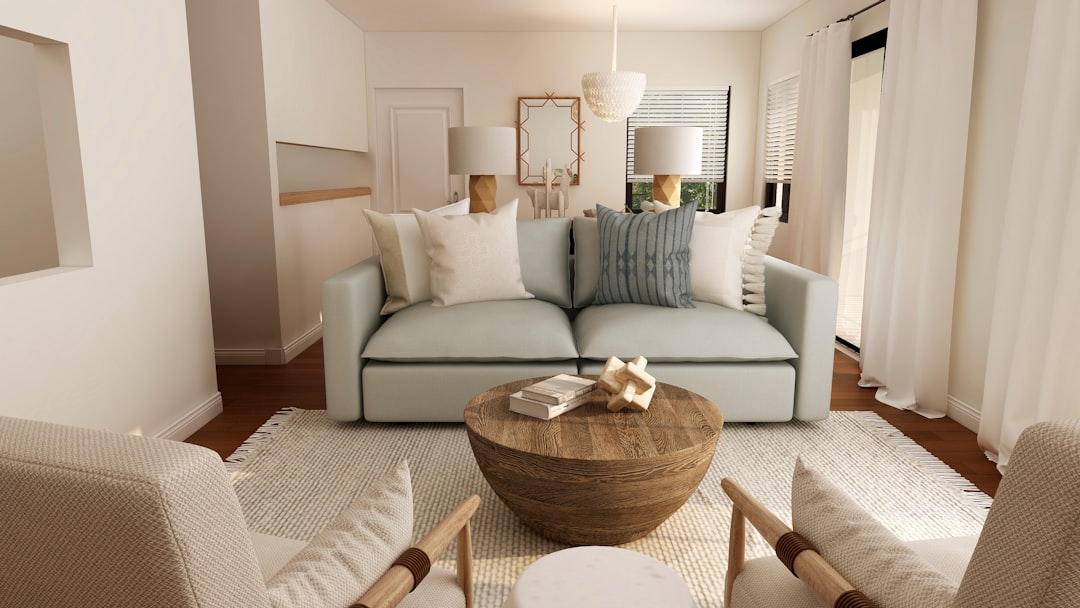
Curved edges make movement easier and remove the hard corners that can interrupt a narrow walkway. A round coffee table also creates a softer balance when the main sofa and rug are rectangular. Choose a table with an open base so the flooring remains visible underneath.
6. Choose a rug large enough for the seating
A rug that is too small can make the room look fragmented. Whenever possible, place at least the front legs of the sofa and chairs on the rug. This simple connection visually groups the furniture into one calm conversation area.
7. Take storage up, not out
Use tall, shallow shelving or a narrow cabinet instead of several low pieces. The upper part of the wall is useful for books, baskets, framed art, and everyday objects. Keep the lower shelves more closed and leave a little breathing room so storage feels intentional rather than busy.
8. Hang curtains close to the ceiling
Mount the curtain rod a few inches above the window frame and let the panels fall close to the floor. This draws the eye upward and gives the wall a taller proportion. Choose a simple fabric in a shade close to the wall for a seamless effect.
9. Add one well-placed mirror
A mirror works best when it reflects light, a window, or a visually pleasing part of the room. One large mirror is usually more effective than a collection of small mirrors. Avoid placing it where it reflects clutter or a television screen.
10. Build layers of lighting
Do not rely on a single ceiling light. Combine a floor lamp, a table lamp, and a small wall or picture light where possible. Different levels of light make a compact room feel deeper in the evening and let you create a softer atmosphere without adding more objects.
11. Keep the center visually open
The middle of the room should support movement. Choose a coffee table with enough clearance around it and avoid placing baskets, stools, or decorative piles in the main walkway. Open floor is not wasted space—it is what makes the room feel comfortable.
12. Use furniture that can do two jobs
An ottoman can work as extra seating, a footrest, and a coffee table when paired with a tray. A console can hide technology while offering a surface for lighting. Flexible pieces reduce the number of objects needed without making the room feel temporary.
13. Repeat materials for a designed look
Small spaces benefit from repetition. Echo the wood tone of the coffee table in a picture frame, repeat a warm metal finish in the lamp and hardware, or use the same soft neutral in the curtains and cushions. Repetition creates visual order and makes a simple room look considered.
14. Edit the surfaces regularly
Keep only the objects you use or genuinely enjoy. A small tray can contain remotes, a lidded basket can hold throws, and one generous plant can add life more effectively than several tiny accessories. Leave some surfaces empty; restraint is part of the design.
15. Finish with texture, not clutter
When the palette is quiet, texture keeps the room from feeling flat. Try linen curtains, a woven basket, a wool rug, a boucle cushion, or a ceramic lamp. These details add warmth while keeping the overall composition clean.
A simple small-living-room formula
- One comfortable sofa with a slim frame.
- One properly sized rug to connect the seating.
- One round coffee table with an open base.
- One tall storage or display element.
- Three layers of warm lighting.
- A limited palette with two or three natural textures.
Explore more ideas in the Interior Design and Apartments & Villas collections on CasaEloria.
Photography via Unsplash: Spacejoy, Lisa Anna, and Collov Home Design. Images are used with creator attribution.