Balcony Privacy Ideas for a Peaceful Outdoor Retreat
Create a private yet airy balcony with practical guidance on slatted screens, curtains, container plants, railing panels, wind safety, and renter-friendly solutions.
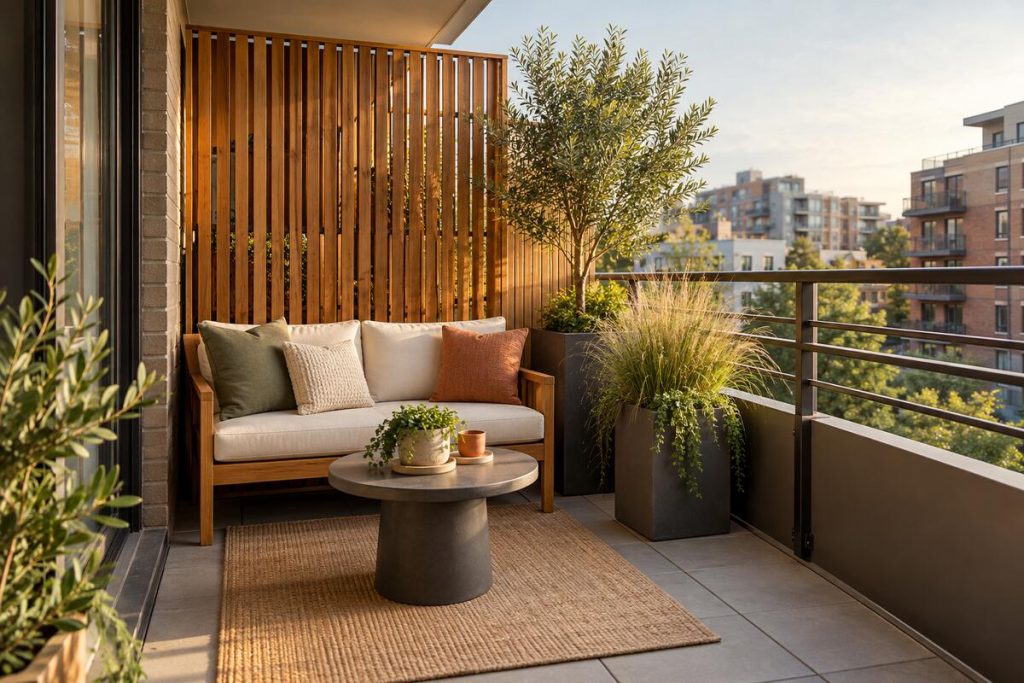
A balcony feels far more inviting when it offers some separation from neighboring windows, busy streets, and shared courtyards. The right balcony privacy ideas can soften direct views without turning a small outdoor area into a dark enclosure. Screens, curtains, plants, and railing panels all work differently, so the best solution starts with the direction of the unwanted view, the available sunlight, and the way wind moves around the building.
Privacy should never compromise safety or comfort. Any addition must respect the railing, drainage, ventilation, emergency access, and structural limits of the balcony. Renters and apartment owners may also need approval before attaching anything to walls, ceilings, or railings. Once those practical limits are clear, it becomes much easier to create a sheltered retreat that still feels open to air and daylight.
Identify the View You Actually Need to Block
Stand and sit in every place where you expect to use the balcony. The view that feels exposed while standing may disappear once you sit behind the railing, while a neighboring window may remain visible from only one chair. Mark the exact sightline before buying a full-width screen. A narrow panel in the right location often provides more useful privacy than covering every edge.
Observe the balcony at different times of day. Morning sun may be welcome, while late-afternoon glare may require adjustable shade. Note prevailing wind, rain direction, and any air-conditioning exhaust. A solid panel facing strong wind can behave like a sail; an open slatted design, permeable fabric, or plants may be safer and more comfortable.
Decide whether you need privacy at seated height, standing height, or both. Lower railing coverage protects a dining area from views below, while a side screen addresses a close neighboring balcony. This focused approach preserves the best parts of the outlook rather than closing the space completely.
Check Building Rules Before Adding a Screen
Apartment balconies are part of a larger building system. Review lease terms, association rules, fire requirements, and local regulations before drilling, attaching panels, or installing overhead hardware. Some buildings control exterior colors and materials because additions are visible from the street. Others prohibit anything fixed to railings or require wind-rated products.
Confirm the balcony’s permitted load before adding large planters, water-filled bases, or heavy timber screens. Wet soil is considerably heavier than dry potting mix. Spread weight sensibly and consult the building manager or a qualified professional when limits are unclear. Never alter the structural railing or use it as support for an installation unless that use is specifically approved.
Keep doors, drains, vents, and emergency routes unobstructed. A beautiful screen is not successful if it traps water, restricts an exit, or makes maintenance impossible. Choose reversible, freestanding solutions when permanent fixings are not allowed.
Use a Slatted Screen to Filter Views and Light
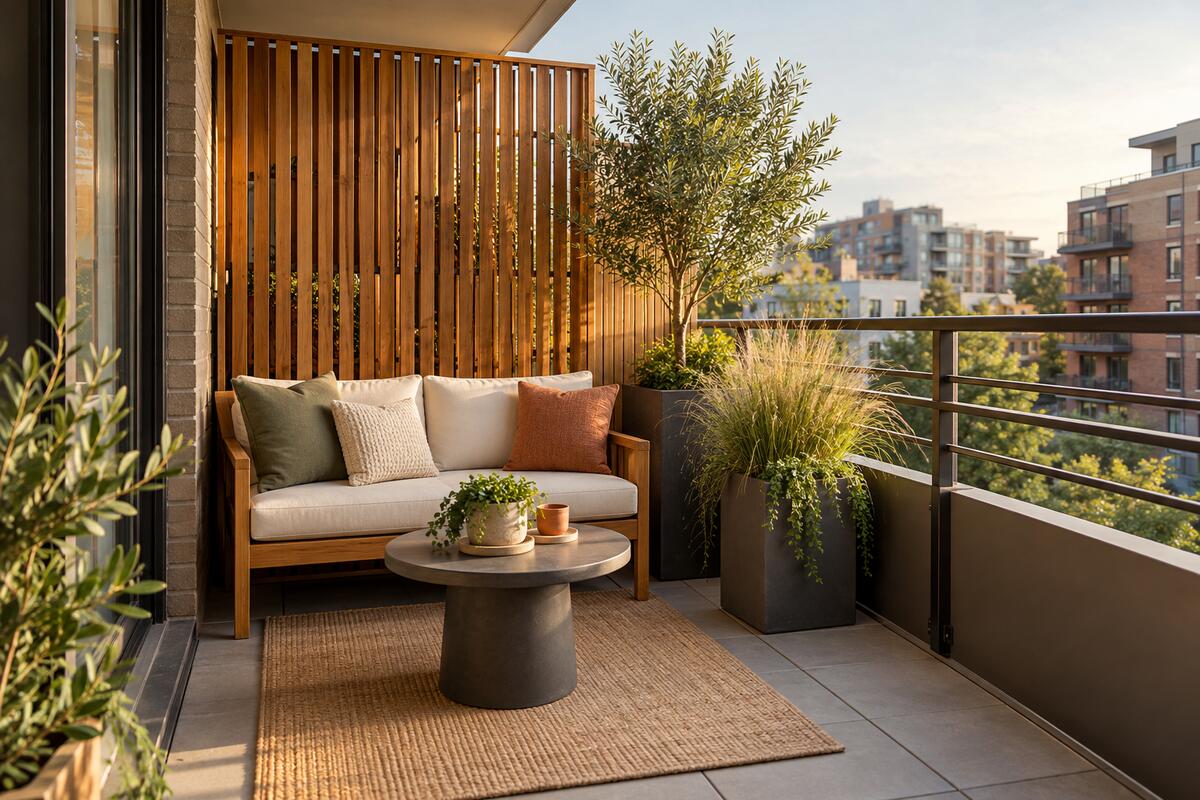
Wood or weather-resistant composite slats create a warm architectural backdrop. The gaps break a direct sightline while allowing some breeze and filtered light to pass through. Vertical slats can visually increase height, while horizontal slats make a narrow balcony feel longer. Select the orientation that suits the architecture rather than treating the screen as an isolated object.
A screen should cover only the exposed zone when possible. Leaving space above or beside it prevents the balcony from feeling boxed in. Repeat the screen’s material in a small table, planter, or bench so it becomes part of the design. Natural wood needs an exterior finish appropriate to the climate and periodic maintenance.
Fixed screens require suitable structural attachment. Do not improvise with loose wire or lightweight indoor panels. In exposed locations, use a product designed for outdoor wind loads and have the support assessed if necessary. A secure screen is more important than a perfectly seamless appearance.
Choose Freestanding Privacy for a Rental Balcony
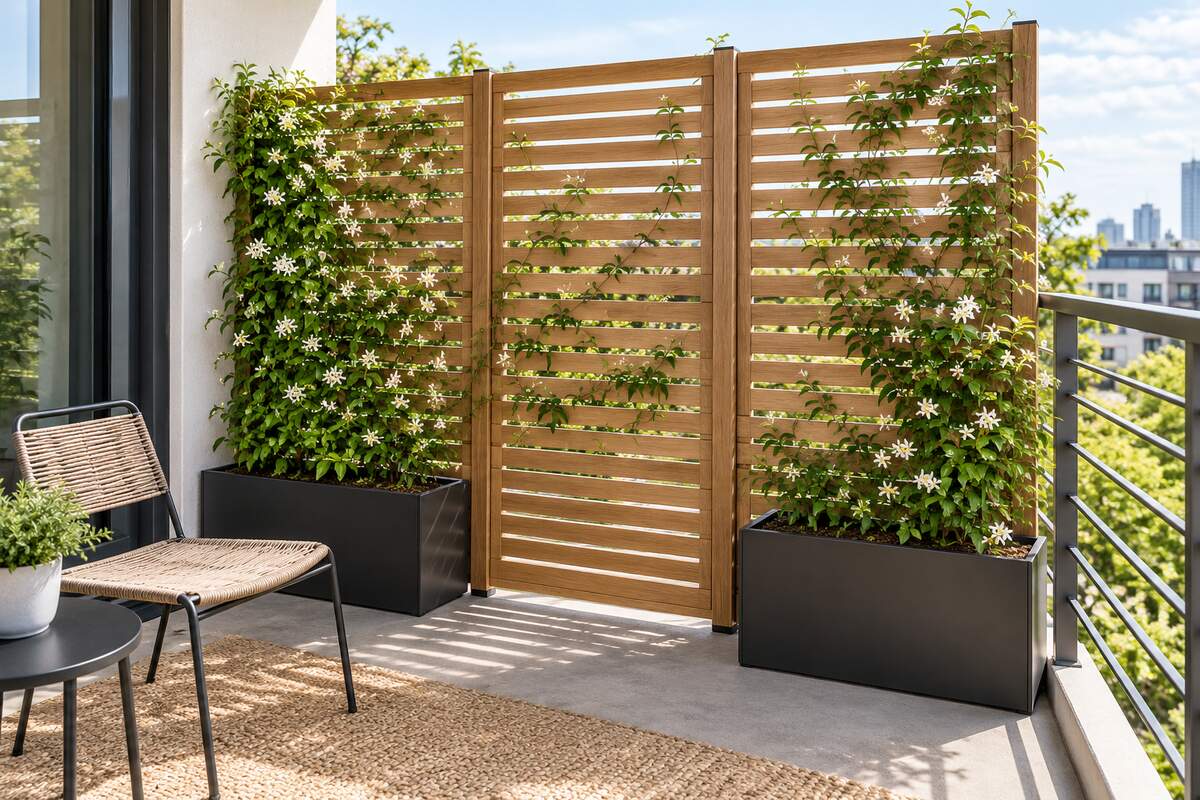
Freestanding panels can be practical when walls and railings cannot be altered. Look for an outdoor-rated design with a broad, stable base rather than a light folding room divider. Position it inside the balcony boundary and away from the railing edge. The base must resist tipping without creating an unsafe concentrated load.
Planter-supported trellises combine privacy with greenery, but the planter and screen should be engineered to work together. A small pot is not enough ballast for a tall panel. Choose a restrained height and an open design in windy settings, and move or secure the unit according to the manufacturer’s severe-weather instructions.
Keep the panel easy to remove for inspections or seasonal storage. A renter-friendly arrangement should protect floors and walls as well as avoid permanent holes. Outdoor mats, furniture feet, and drainage trays help prevent staining, but they must not block water flow.
Soften a Covered Balcony With Outdoor Curtains
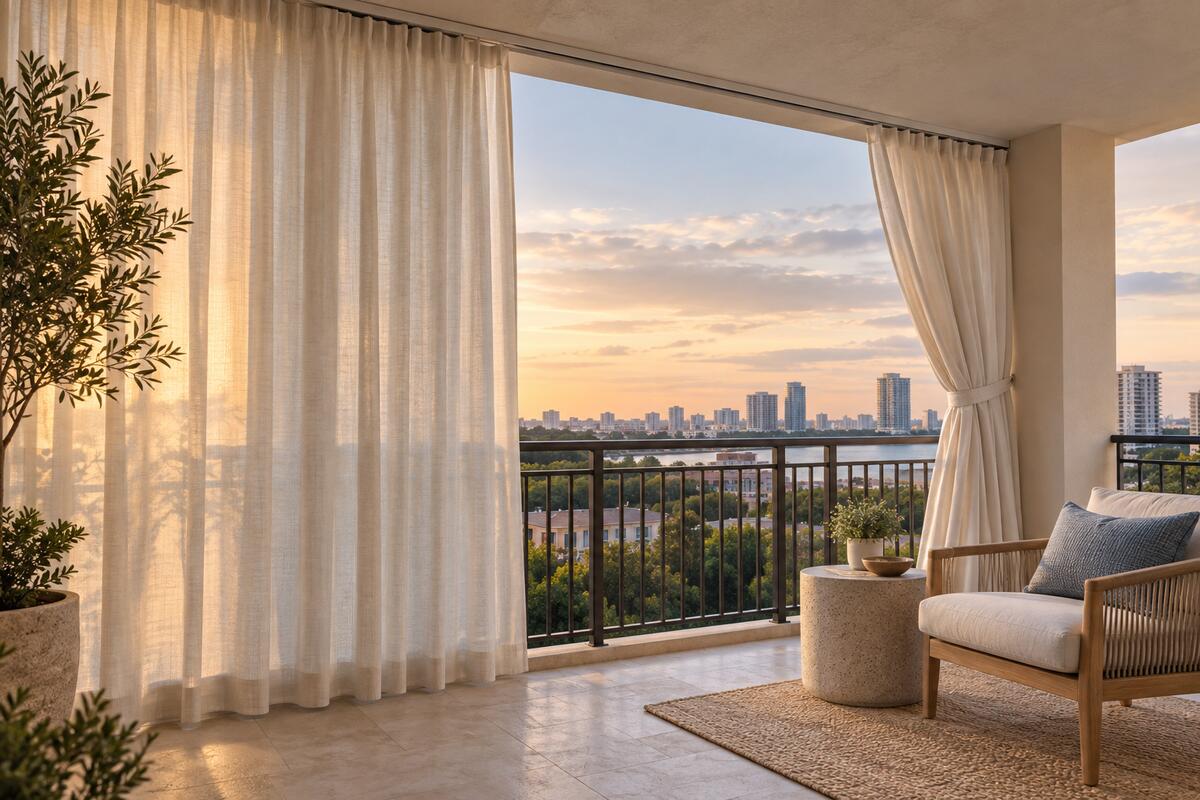
Curtains create the softest form of balcony privacy and can be opened in seconds. They work best on covered balconies with an approved track or rod and protected attachment points. Choose outdoor fabric that resists moisture, fading, and mildew. Indoor drapery can absorb water, become heavy, and deteriorate quickly.
Allow the panels to hang clear of the floor and railing so they do not collect dirt or blow outward. Use secure tiebacks when the curtains are open, and close or remove them during strong wind according to the product guidance. Weighted hems can reduce gentle movement, but they do not make fabric safe in severe weather.
Light-colored fabric diffuses glare while maintaining brightness. A sheer or loosely woven panel creates visual separation without eliminating the skyline. If total screening is needed at night, a denser outdoor textile can be combined with warm, shielded lighting so the balcony remains comfortable rather than enclosed.
Create a Living Screen With Container Plants
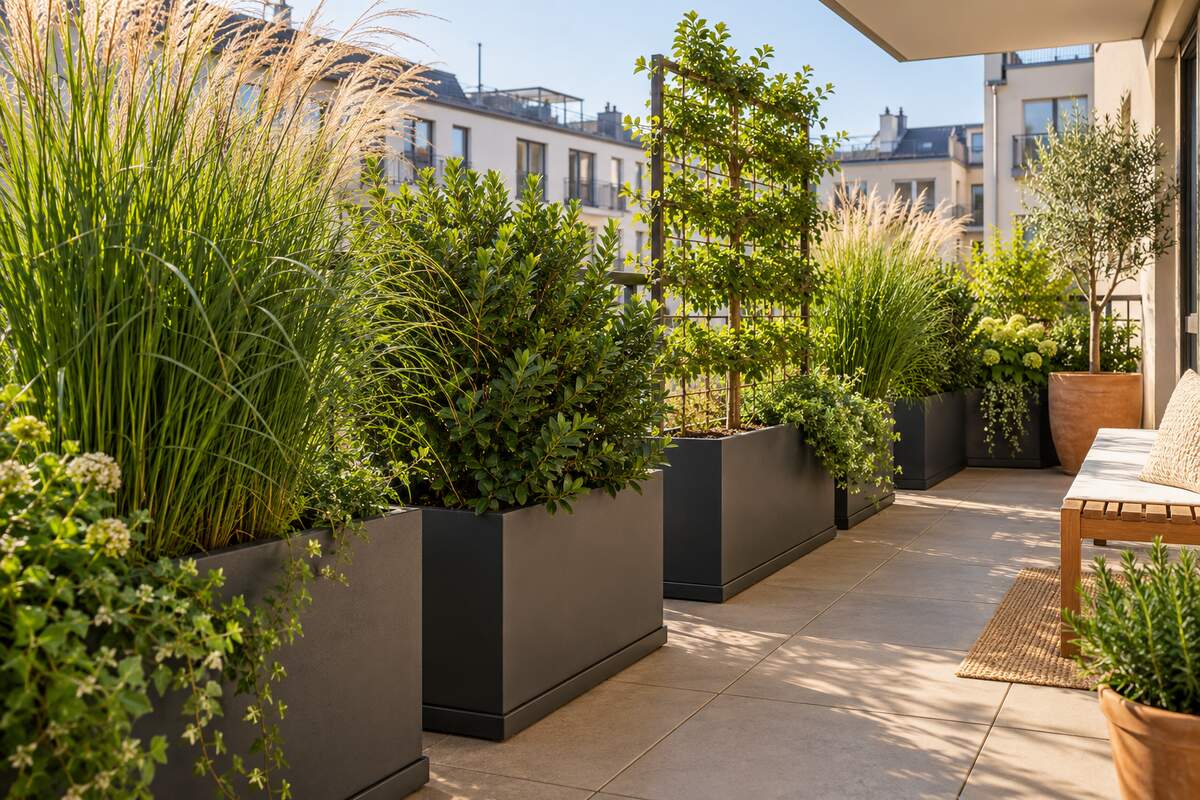
Plants provide partial screening, movement, and seasonal character. Choose species for the balcony’s actual sun, wind, temperature, and container depth rather than selecting by height alone. A local nursery can recommend compact, non-invasive plants that tolerate exposed conditions. Clumping grasses, narrow evergreen shrubs, and espaliered plants often offer useful coverage without consuming the entire floor.
Use stable containers with drainage and appropriate saucers or trays. Grouping pots in a staggered line creates a fuller screen than placing identical plants at equal intervals. Keep foliage within the balcony boundary and preserve access for pruning, watering, and cleaning. Automated irrigation can help, but it should not leak onto neighbors or leave standing water.
Remember the weight of containers after watering and the effect of wind on tall foliage. Avoid top-heavy pots. If you want a broader planting strategy, adapt the principles in our garden design guide to the balcony’s smaller scale and structural limits.
Add Railing Privacy Without Hiding the Sky
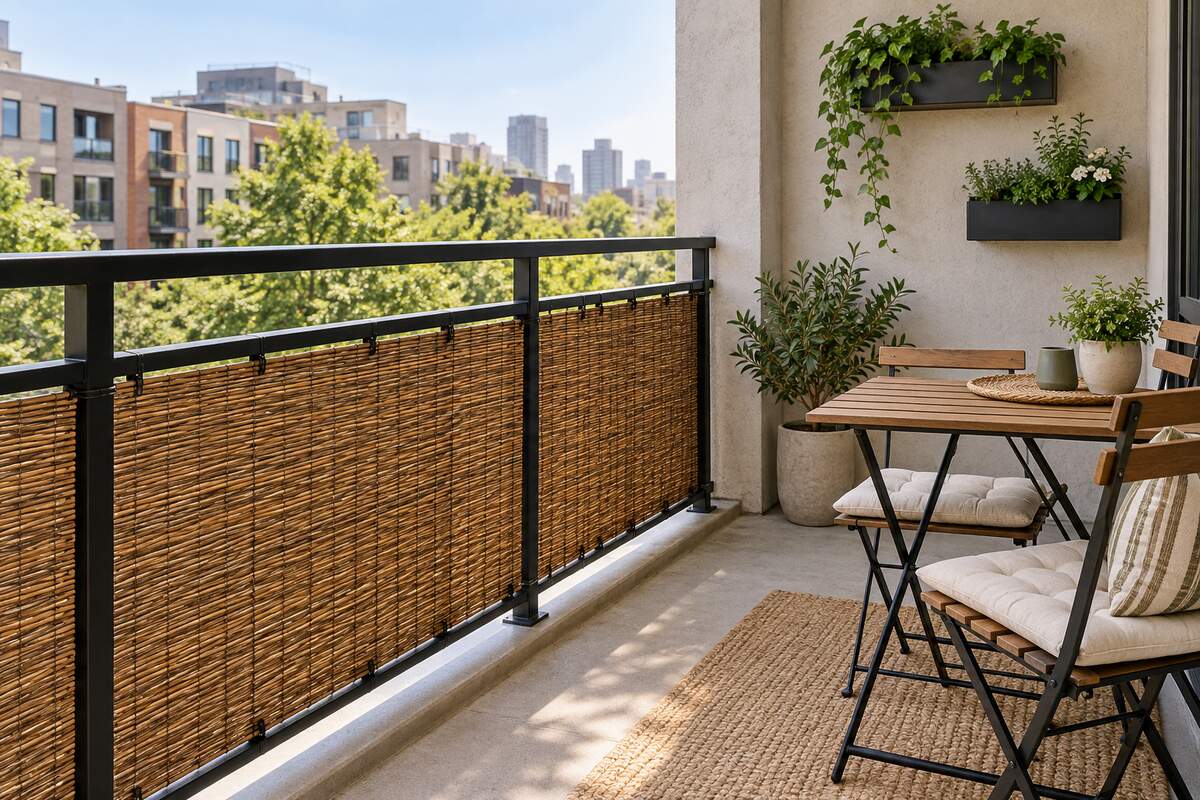
A fitted railing panel is useful when the main concern is a view from the street or a nearby lower building. Because it covers only the lower zone, it can provide seated privacy while leaving the horizon open. Outdoor mesh, woven synthetic material, or an approved rigid insert can be more durable than untreated natural reed in wet climates.
Install the panel on the inside of the railing using the approved attachment method. It should be taut, neatly trimmed, and unable to flap or detach in wind. Do not wrap material around drainage openings, structural joints, or handrail surfaces that must remain accessible. Avoid sharp ties and long loose ends.
Match the color to the railing or nearby furniture for a quieter look. Dark mesh tends to recede visually, while warm woven material adds texture. Check the exterior appearance from ground level if building rules require a consistent facade.
Layer Privacy Instead of Building One Solid Barrier
The most comfortable small balconies often combine several partial solutions. A narrow side screen can stop the closest view, medium-height plants can soften the edge, and a lower railing panel can protect the seating area. Each layer performs a specific job, so none needs to be overly tall or opaque.
Layering also helps preserve daylight and airflow. Keep the brightest side more open, and place the densest screen where it will not shade plants or interior windows unnecessarily. Repeat two or three materials and colors so the arrangement feels calm. Warm wood, charcoal metal, pale fabric, and green foliage form a versatile palette.
Use furniture with a compact footprint and maintain a direct route from the door. Our small-space decorating ideas can help you edit the number and scale of pieces, while the micro-Zen balcony guide offers additional inspiration for creating a restful atmosphere.
Make Privacy Feel Welcoming After Dark
A screen changes how light behaves at night. Use low, warm illumination aimed toward the floor, table, or plants rather than bright lamps that expose the balcony to surrounding windows. Exterior-rated rechargeable lanterns and approved wall lights can provide enough visibility without glare. Keep cords protected and use only products suitable for outdoor conditions.
Privacy materials should remain visually light. One outdoor cushion, a small rug approved for exposed use, and a simple tray may be enough. Too many accessories make a narrow balcony harder to clean and store during bad weather. The budget-conscious editing principles in our budget home makeover guide apply outdoors as well: improve the largest practical issue before buying decorative extras.
At the end of each season, inspect fasteners, fabric, planters, and wood finishes. Tighten or replace worn components and remove anything that has become unstable. Regular maintenance keeps a privacy solution attractive and prevents small weather-related problems from becoming safety risks.
A Private Balcony Can Still Feel Open
The strongest balcony privacy ideas respond to real sightlines rather than covering every surface. Begin with rules, load limits, wind, and drainage. Then choose the lightest solution that solves the problem: a slatted side panel, adjustable curtain, living screen, fitted railing cover, or a careful combination.
Preserve the best view, keep air moving, and leave a clear path to the door. When each element has a purpose and is installed safely, even a small urban balcony can feel sheltered without becoming closed off. The result is a peaceful outdoor room that remains bright, practical, and connected to its surroundings.