Living Room Design Ideas for a More Comfortable Home
Discover practical living room design ideas for better furniture layouts, calmer colors, layered lighting, and a more comfortable home.
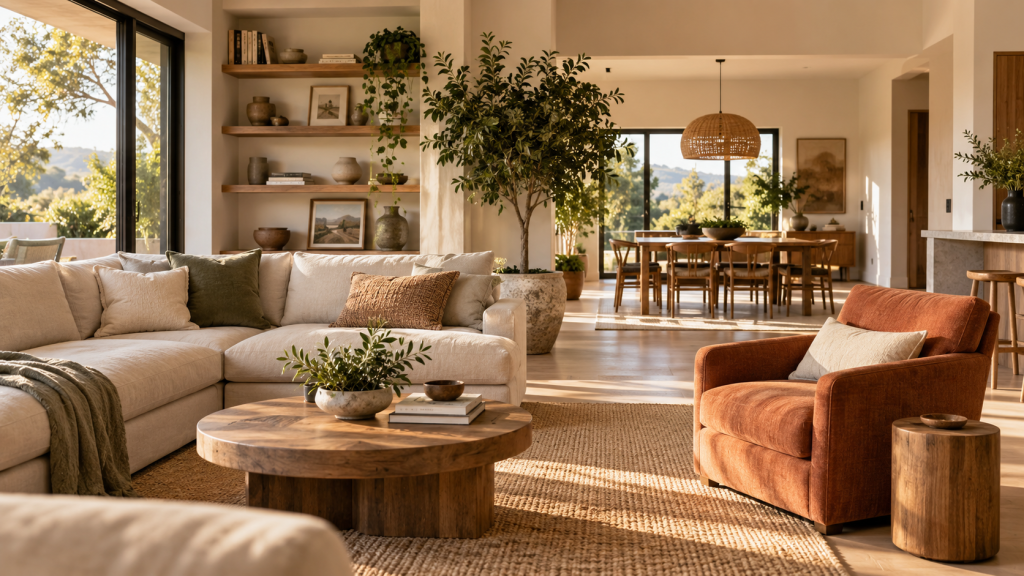
A well-designed living room should feel comfortable, balanced, and easy to use every day. The most successful spaces are not built around decoration alone; they combine thoughtful furniture placement, layered lighting, practical storage, and a color palette that supports the mood of the home.
A useful design rule: begin with the way you want to live in the room, then choose the furniture and details that make that routine feel natural. Explore more ideas in the CasaEloria Journal or browse the Living Rooms collection.
1. Build the Room Around Comfort
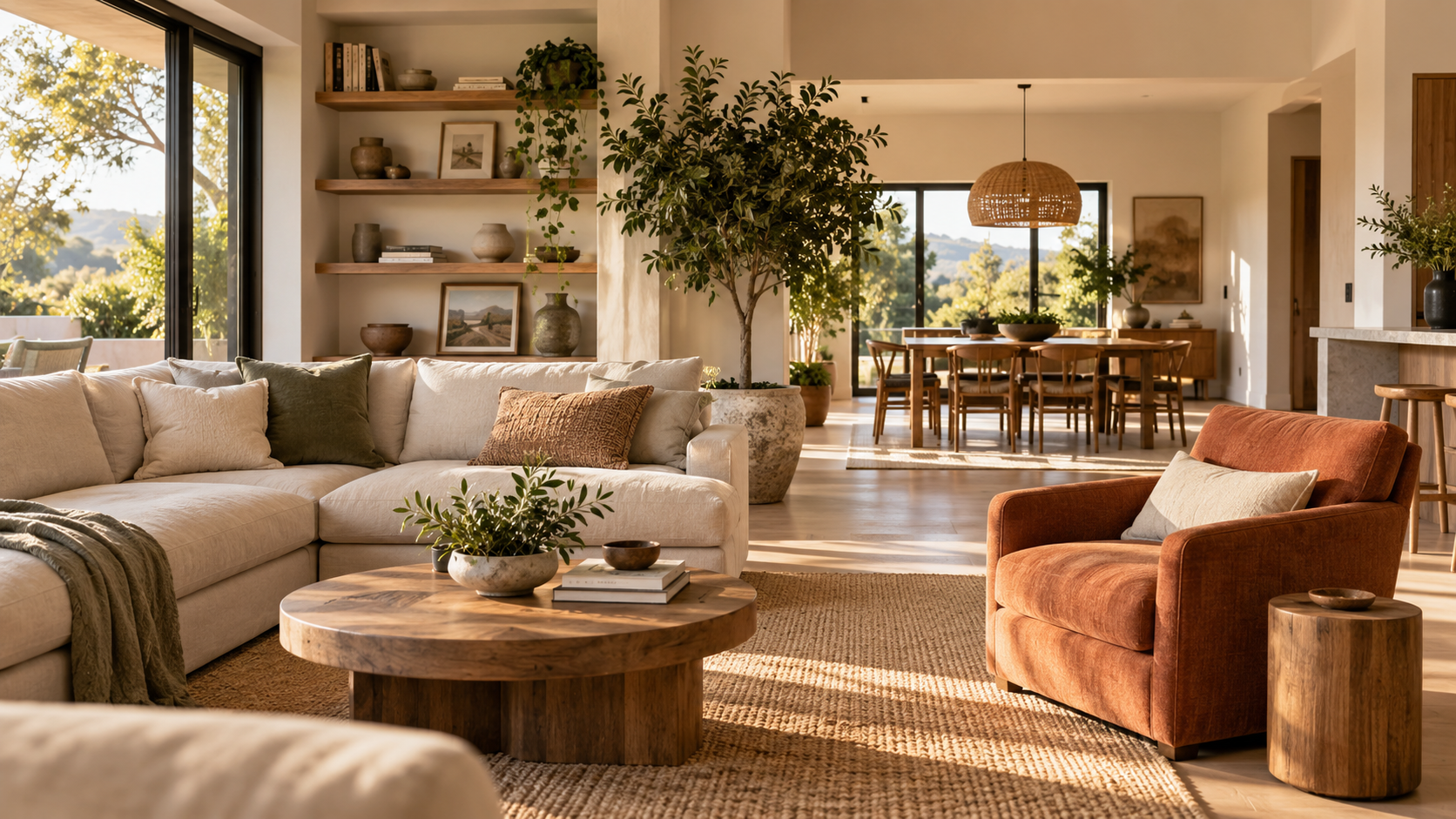
Start with the main sofa because it usually determines the scale and direction of the room. Choose a depth that suits how you relax, then add seating that encourages conversation instead of pointing every chair toward the television. A textured rug, soft cushions, and one or two natural elements can make the space feel finished without creating visual clutter.
2. Create Better Flow with Furniture Placement
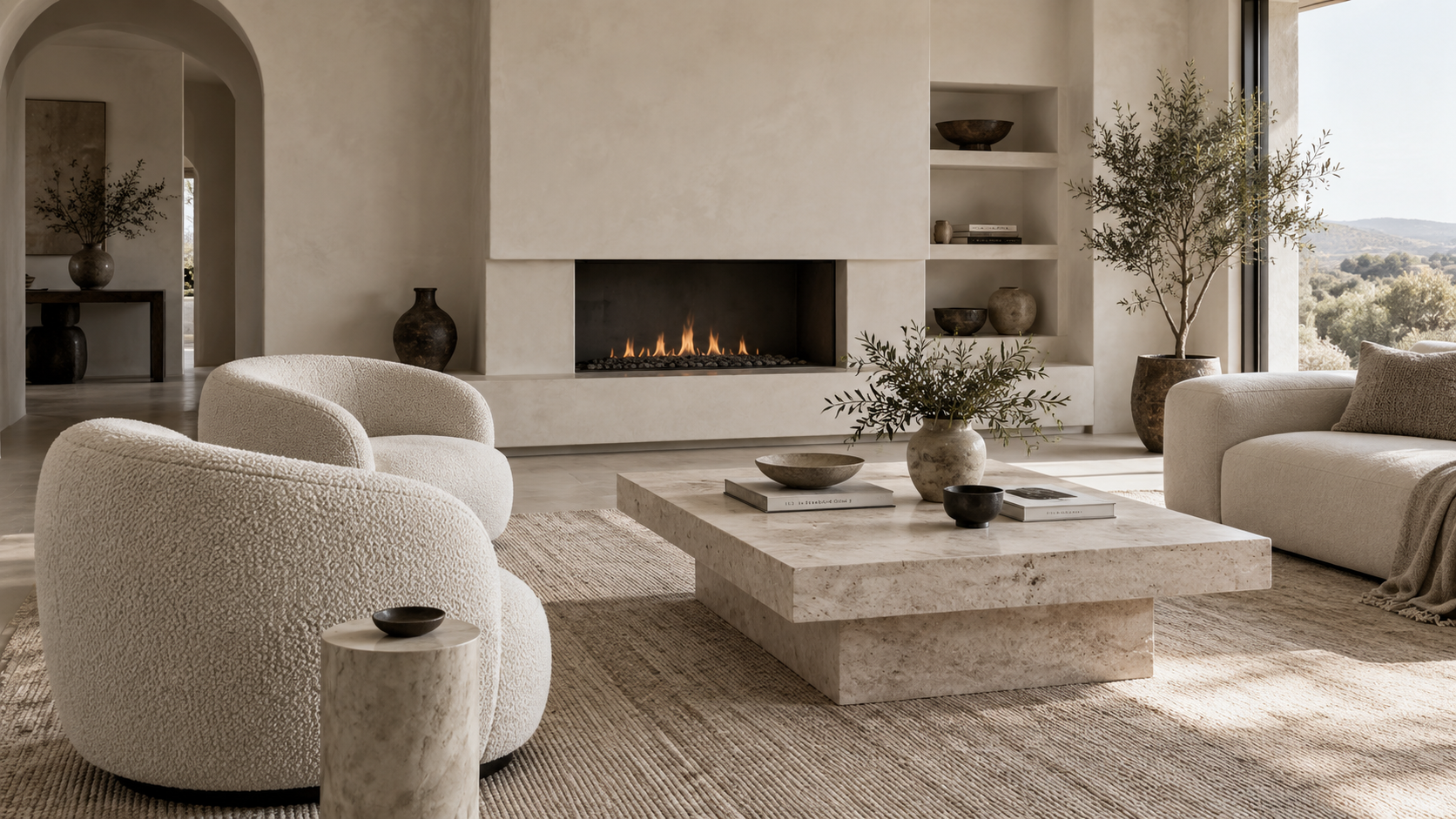
Good living room layouts leave enough space to walk naturally between the entrance, seating, windows, and adjoining rooms. Avoid pushing every piece against the wall simply because the room is small. In many spaces, bringing the sofa slightly forward creates a more intentional seating zone and improves the sense of proportion.
- Place the coffee table within comfortable reach of the main seating.
- Leave a clear walking route through the room.
- Use a pair of chairs to balance a large sofa.
- Keep the strongest view or architectural feature visible.
3. Use Color to Set the Mood
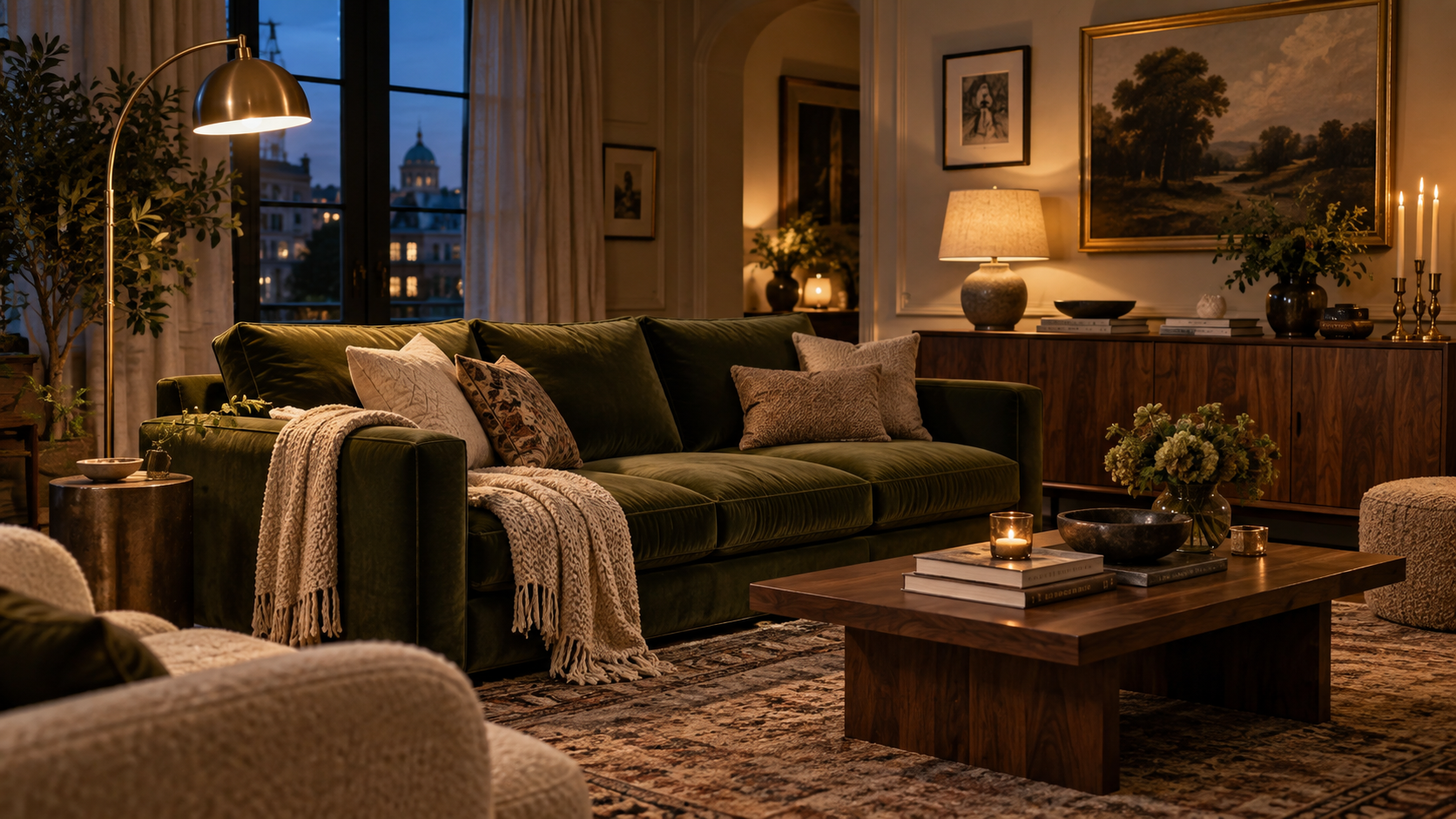
Neutral does not have to mean plain. Cream, taupe, warm gray, pale wood, and muted green can create depth when they are combined through different textures. If you prefer stronger color, use one confident accent on an armchair, artwork, or cushions and repeat it lightly so the room feels cohesive.
Ivory, oak, clay, and muted olive for a relaxed atmosphere.
Soft gray, dusty blue, pale wood, and charcoal for a crisp urban feel.
Moss, walnut, cream, and brass for a richer evening room.
Stone, linen, sand, and greenery for a quiet contemporary look.
4. Make Open-Plan Living Feel Connected
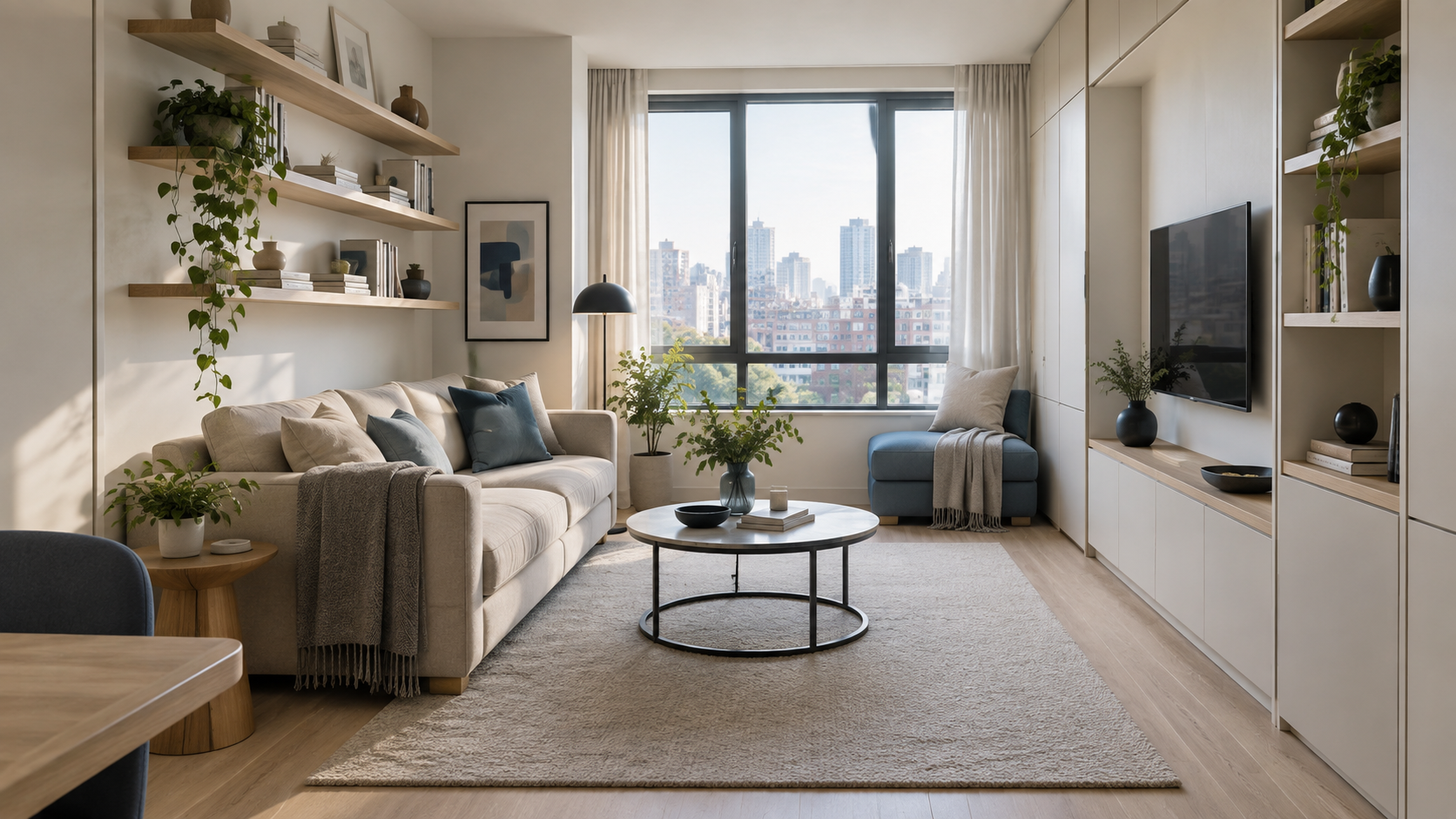
When the living room shares space with a dining area or kitchen, define each zone without closing it off. A rug can anchor the seating area, while a pendant light or artwork can give the dining zone its own identity. Repeating a wood tone, fabric color, or metal finish across both areas creates a calm visual transition.
Lighting that works throughout the day
Combine general illumination with a floor lamp beside the sofa, a table lamp on a sideboard, and softer accent lighting near shelves or artwork. This layered approach keeps the room practical in the daytime and atmospheric in the evening.
A Final Living Room Styling Checklist
- Choose the sofa and rug before adding small decorative pieces.
- Arrange seating to support conversation as well as television viewing.
- Keep at least one comfortable circulation route through the room.
- Repeat two or three materials to create visual continuity.
- Use lighting at different heights instead of relying on one ceiling fixture.
- Leave some empty surface area so the room can breathe.
Measure Before You Buy Living Room Furniture
Before ordering a sofa or rug, measure the room in full and mark the furniture footprint on the floor with painter’s tape or folded paper. Check the width of doors, stairways, lifts, and tight corners as well as the final position inside the room. This simple step prevents a common mistake: choosing a beautiful piece that is too deep for the circulation path or impossible to deliver.
Choose a compact sofa, slim side tables, and one visually light chair.
Use the seating to create two connected zones instead of one empty corridor.
Let the sofa or rug define the living area without blocking movement.
Combine seating pieces around a central focal point to avoid scattered furniture.
Get the Scale of the Rug and Coffee Table Right
A rug that is too small can make the furniture look disconnected. Ideally, at least the front legs of the sofa and chairs should sit on the rug, or the rug should be large enough to anchor the entire seating group. The coffee table should be close enough to reach comfortably but leave enough space for people to move around it. Rounded tables are especially useful when the room has narrow routes or many hard corners.
Common Living Room Mistakes to Avoid
The room often feels unfinished because too many decisions are made separately. A sofa, rug, curtains, and artwork may each look attractive but still compete when their scales and undertones do not relate. Build the room in layers: start with the large pieces, add lighting, then introduce art and accessories after the main proportions feel right.
- Avoid choosing every item from the same matching set.
- Avoid placing the television where it dominates the best architectural feature.
- Avoid using only one overhead light for the whole room.
- Avoid filling shelves with small objects that create visual noise.
- Avoid pushing furniture so far apart that conversation becomes uncomfortable.
Simple Living Room Updates That Make a Difference
Small changes can refresh the room without replacing the main furniture. Rotate the rug, change the arrangement of cushions, add a larger piece of artwork, or move a floor lamp closer to the seating area. Linen curtains can soften strong window lines, while a textured throw adds warmth and contrast. If the room feels flat, introduce one natural material such as wood, woven fiber, stone, or greenery.
Lighting is often the most effective low-cost improvement. Use a warm floor lamp beside the sofa, a small lamp on a console, and a dimmable ceiling fixture where possible. Different heights of light make the living room feel more layered and useful from morning through evening.
How to Create a Cohesive Home
A living room should feel connected to the rest of the home, but it does not need to match every room. Repeat one material, one accent color, or one shape across nearby spaces. For example, natural oak can link the living room to the kitchen, while terracotta or muted green can appear in small amounts throughout the home. If your living room opens into a kitchen, the modern kitchen design guide can help you coordinate the two zones.
Frequently Asked Questions
How do I make a small living room feel bigger?
Use furniture with an appropriate scale, keep the floor visually clear, choose a simple palette, and use mirrors or light textiles carefully. A well-defined layout often matters more than adding more decoration.
Should the sofa be against the wall?
Not always. Pulling the sofa slightly away from the wall can create a stronger seating zone and improve flow, provided there is enough room to walk behind or beside it.
How many colors should a living room have?
A practical starting point is two or three main colors supported by natural materials. Stronger accents work best when they are repeated in small, intentional details.
The most beautiful living rooms are designed for real life. Prioritize comfort, proportion, movement, and light, then add character through textures and details that genuinely belong to your home.