Shade Garden Design Ideas for a Cool and Beautiful Outdoor Retreat
Create a cool, welcoming shade garden with practical guidance on light, layered foliage, containers, paths, seating, drainage, and subtle evening lighting.
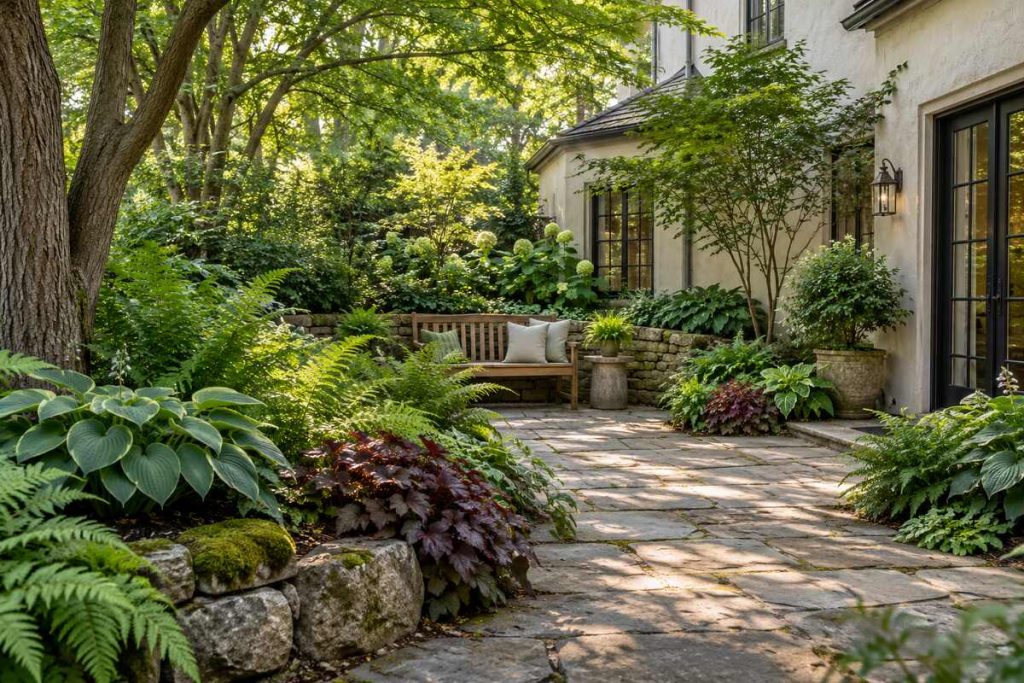
A shaded garden can become one of the most comfortable and atmospheric parts of a home. It offers relief on warm days, softens hard boundaries, and reveals textures that may disappear in harsh sun. The challenge is that shade is not one fixed condition. A bed beneath a deciduous tree, a narrow side yard, and a covered patio may all receive different amounts of light, moisture, and root competition.
The best shade garden design ideas begin with observing those conditions before choosing plants or furniture. Once you understand where light moves, how water drains, and which routes people naturally use, you can build a cool outdoor retreat with layered foliage, practical paths, comfortable seating, and gentle evening light. The result should feel lush and restful without becoming dark, crowded, or difficult to maintain.
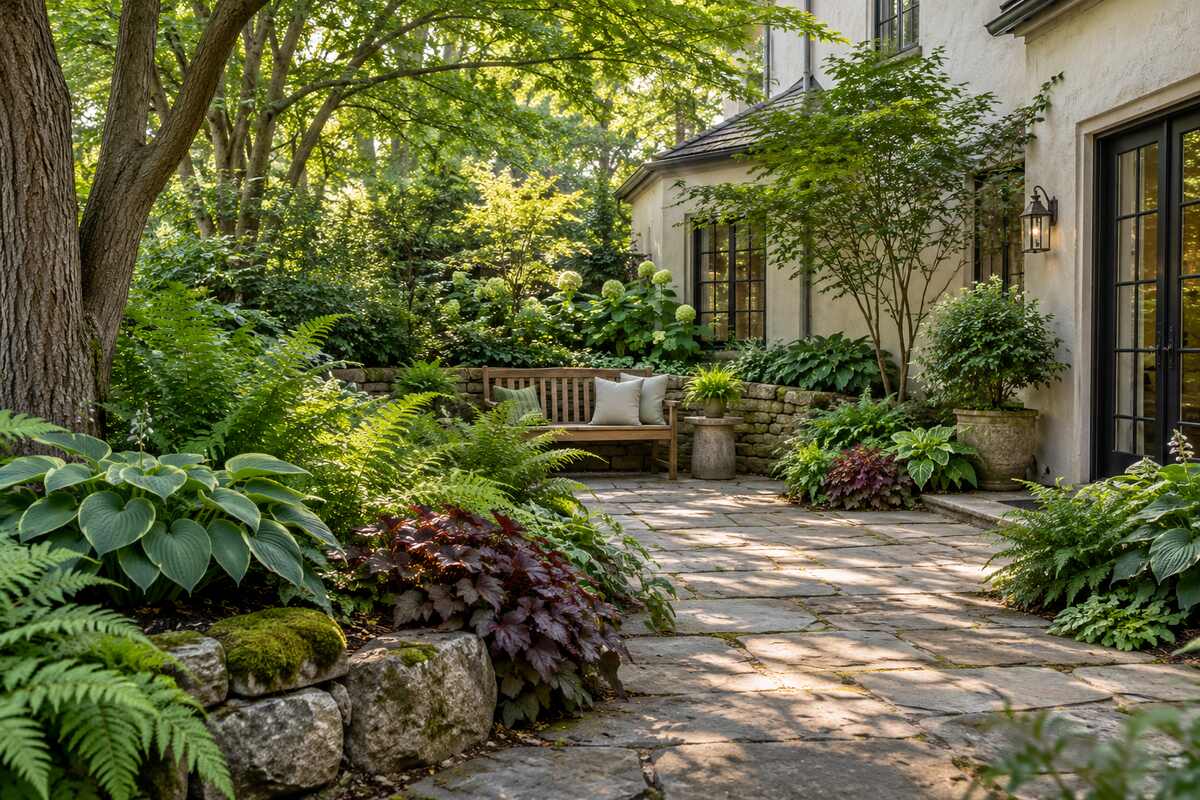
Understand the Shade Before You Design
Spend several days watching the space from morning to evening. Note whether it receives bright indirect light, short periods of direct sun, shifting dappled light, or deep shade for most of the day. The pattern can change with the season as the sun angle moves and deciduous trees gain or lose their leaves.
Photograph the garden at the same times on different days, or sketch the brighter and darker areas on a simple plan. This helps you avoid treating the entire garden as one planting zone. A position close to an open sky may support a broader range of plants than a dry corner beneath dense evergreen branches.
Shade also affects temperature and evaporation. Some shaded beds stay damp, while others remain surprisingly dry because tree roots take up moisture quickly or a roof blocks rainfall. Check the soil after rain and during a dry period. These observations will guide plant selection more accurately than the word “shade” alone.
Build a Clear Framework Before Planting
A successful shade garden needs structure because foliage colors are often quieter than those in a sunny flower border. Begin with the practical framework: entrances, paths, seating, views from indoor windows, and any service access. Keep the main route easy to follow and wide enough for normal use rather than allowing plants to close over it.
Next, choose a small number of permanent anchors. A multi-stem shrub, compact tree, bench, large planter, or birdbath can provide a focal point. Repeat one material—such as weathered stone, warm wood, or dark metal—to connect these elements. The restrained approach used in our guide to beautiful and functional garden design is especially helpful in a low-light setting.
Avoid adding features simply to fill every gap. Open soil may later support groundcovers, and a quiet patch of gravel can make surrounding foliage appear richer. A clear framework allows the garden to remain readable even when individual plants are dormant or newly cut back.
Layer Foliage From Ground Level to Canopy
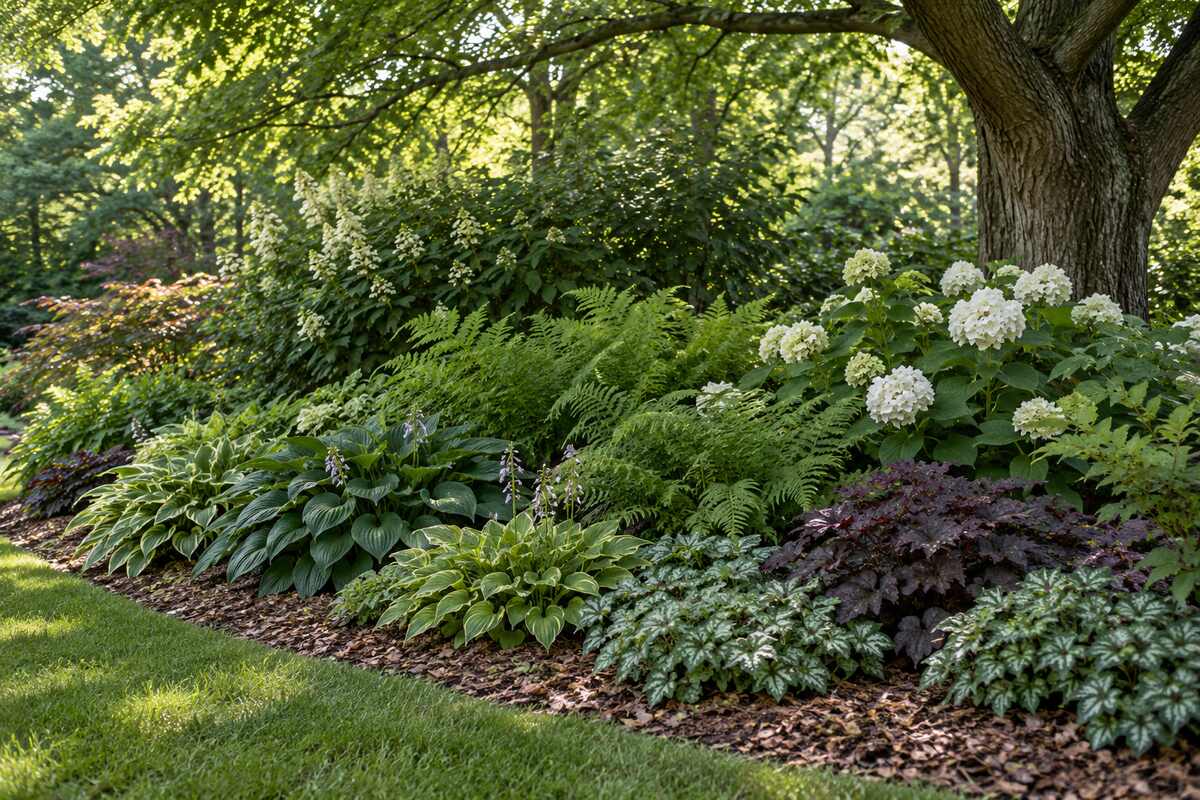
Layering gives a shaded border depth and prevents it from looking like a flat line of low plants. Place taller shrubs or airy structural plants toward the back, then add medium forms such as ferns or mounded perennials. Use low groundcovers along the front to soften edges and protect visible soil.
Vary leaf shape as deliberately as plant height. Broad leaves make a strong visual statement, while fine fronds add movement and lightness. Upright foliage can interrupt too many rounded forms, and a trailing groundcover can connect separate groups. Repeating each important plant in two or three places creates rhythm without making the bed look rigid.
Choose plants for your climate, soil, moisture, and exact light level. Hostas, ferns, heuchera, hydrangeas, and woodland groundcovers can be useful references for many temperate gardens, but suitability varies by region and species. Check local guidance before planting, especially where summers are hot, winters are severe, or water is limited.
Work With Tree Roots and Existing Soil
Planting beneath mature trees requires care. Major roots should not be cut, buried under deep new soil, or damaged by aggressive digging. Instead of forcing large holes into a dense root zone, use smaller plants, position them between visible roots, and work gradually. If the tree is valuable or the root area is difficult, consult a qualified arborist before making major changes.
Improve the bed with a modest layer of organic mulch rather than building a raised mound around the trunk. Keep mulch away from direct contact with bark and avoid creating a thick volcano shape. Mulch can reduce moisture loss and moderate soil temperature, but it does not eliminate competition from established roots.
Where dry shade is persistent, consider containers or a designed gravel area instead of repeatedly replacing unsuitable plants. Working with the conditions produces a more sustainable result than trying to turn every shaded corner into a dense flower bed.
Create a Container Shade Garden for Small Areas
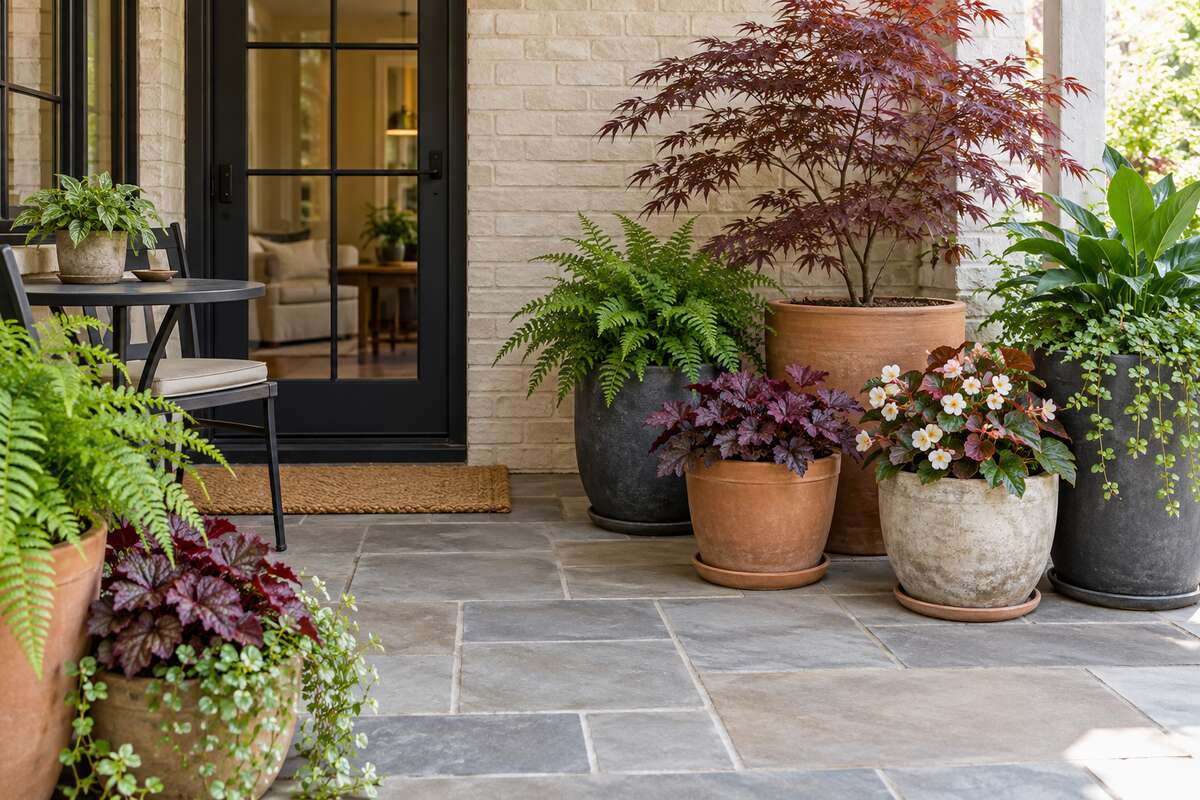
Containers are valuable when soil is poor, tree roots are dense, or the shaded space is a paved patio. Group three or four pots in different heights rather than lining many small containers around the perimeter. Use one taller plant as the anchor, a medium foliage plant for volume, and a lower or trailing plant near the front.
Choose pots large enough to buffer roots from rapid temperature and moisture changes. Every container needs suitable drainage, and saucers should be managed so plants do not sit in stagnant water. Containers under a roof may receive no rain even when the surrounding garden is wet, so check them individually.
Repeat a limited family of materials—terracotta with one dark accent, for example—to keep the display cohesive. Leave the doorway and main walking route open. These principles echo our small balcony retreat, where a compact space succeeds through careful scale and restraint.
Use Color and Texture to Brighten the Shade
Green is not a single color. Deep blue-green foliage creates depth, lime or chartreuse leaves catch limited light, and silver markings can bring definition to a dark corner. Burgundy leaves add contrast, but they are most effective in small repeated accents rather than one isolated patch.
Pale flowers can appear luminous in evening shade, while dark flowers may disappear from a distance. Consider bloom as a seasonal bonus and let foliage carry the design for the rest of the year. Bark, seed heads, evergreen leaves, and plant silhouettes become important when flowers fade.
Hard materials contribute color too. Light gravel, warm stone, and a softly painted wall can reflect available light into the garden. Avoid brilliant white across large surfaces if it creates glare; muted cream, pale gray, and natural stone usually feel gentler beside foliage.
Guide Movement With a Safe, Inviting Path
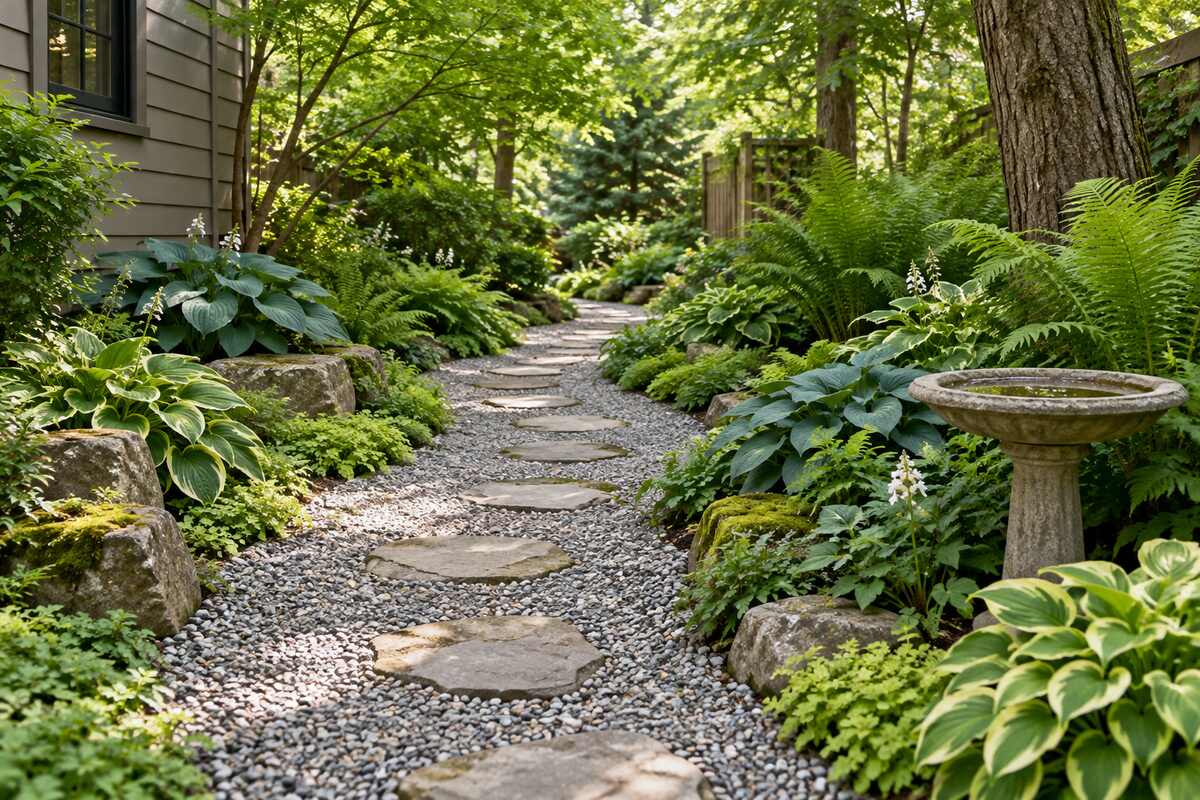
A path gives purpose to a shaded side yard and invites people to move through the planting instead of viewing it only from a doorway. Use a gentle curve when it responds to the site, but do not create unnecessary bends that make a short route awkward. A focal point at the end—a bench, vessel, gate, or birdbath—adds direction.
Choose a surface suited to local rainfall and maintenance. Compacted gravel, textured paving, bark in informal areas, or stepping stones can all work when properly installed. Smooth polished materials may become slippery with moisture or algae, so traction matters in a cool shaded setting. Provide stable edges and address drainage before adding decorative layers.
Keep thorny plants and wide leaves away from the main route. Low groundcovers can soften the boundary, but allow for mature spread so they do not hide the path. Clear circulation is particularly important in a small garden, just as it is inside the home; our small-space decorating ideas use the same principle.
Design a Comfortable Place to Sit
Shade feels most valuable when there is a reason to stay. Position seating where the ground is level, the view is pleasant, and circulation does not pass directly through the sitting area. A bench against a wall or beneath a tree can be enough for a small garden. A larger courtyard might accommodate two chairs and a compact table.
Check what falls from above before choosing the exact position. Branches, heavy fruit, nesting activity, and constant leaf drop may make one spot less practical. Outdoor cushions should be made for exterior conditions and stored dry when necessary. Leave air around furniture so damp surfaces can dry after rain.
Frame the seating with plants rather than enclosing it completely. A taller group behind the bench and lower foliage near the front can create a sense of shelter while preserving sightlines. The warm stone and drought-conscious structure found in Mediterranean garden design can also inspire materials, even when the planting palette is different.
Add Subtle Lighting for Evening Use
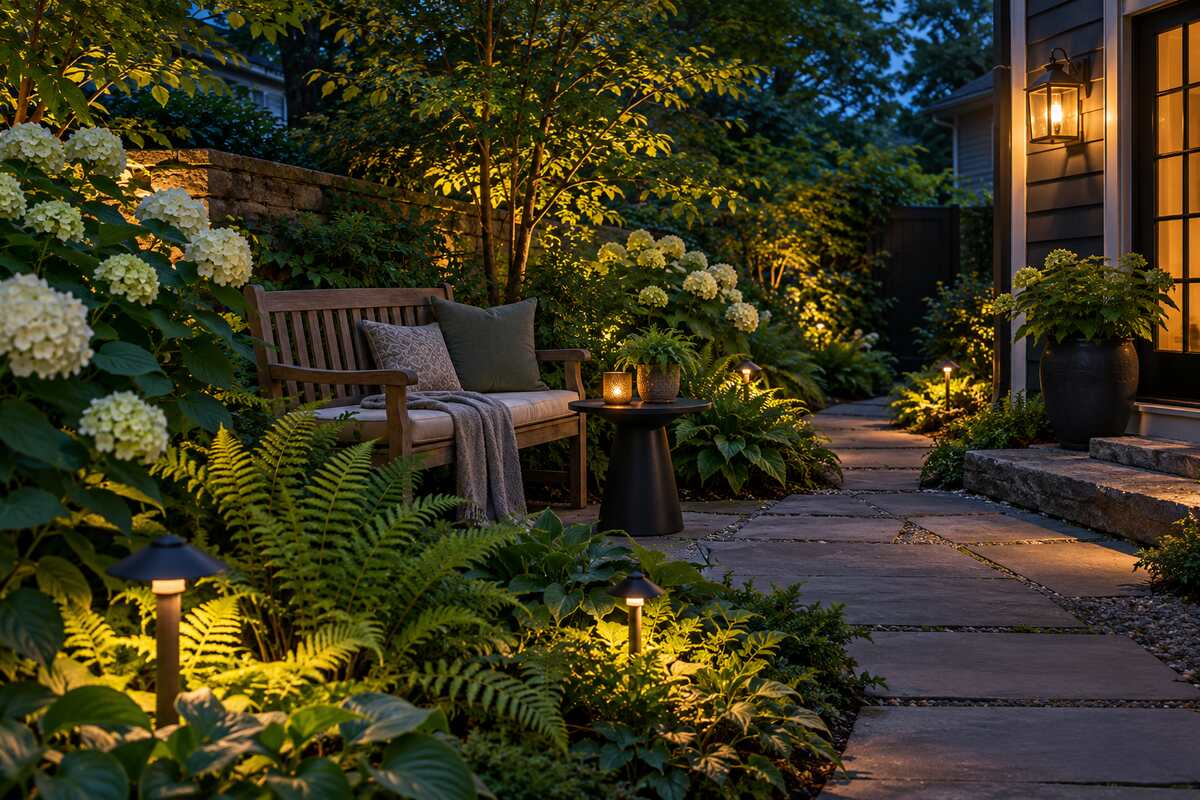
Lighting should help people move safely and enjoy the garden without turning the space into a bright stage. Illuminate steps, changes in level, and the main route first. Then add one soft layer near seating or wash a textured wall with gentle light. Warm, restrained lighting usually feels more natural against deep green foliage.
Avoid aiming powerful fixtures into neighbors’ windows or directly into seated eyes. Shielded, downward-facing lights reduce glare and keep the focus on the path. Outdoor electrical work must use equipment rated for the location and should be installed according to local requirements by a qualified professional where necessary.
Leave parts of the garden dark. Darkness gives the lit areas depth and is kinder to the nighttime atmosphere than illuminating every plant. One or two carefully chosen focal points are more effective than a row of equally bright fixtures.
Plan for Watering and Seasonal Maintenance
Group plants with similar moisture needs so watering remains straightforward. Newly planted beds usually need closer attention while roots establish, even when the garden feels cool. Check the soil rather than assuming shade means moisture. Water deeply when appropriate for the plant and soil, and avoid keeping foliage constantly wet in areas with poor airflow.
Design for access from the beginning. You should be able to reach the back of a bed for pruning, remove leaves from drains, and inspect pots without stepping on plants. A few discreet stepping stones can make maintenance safer. Choose plant spacing based on mature width so air and pathways do not disappear after two growing seasons.
Seasonal cleanup does not require removing every fallen leaf immediately. In suitable beds, a light natural layer can support soil life, but thick wet piles on paths, small evergreen plants, or drainage points should be cleared. Review the garden each year and edit plants that are spreading beyond their role.
A Shade Garden Should Feel Calm, Not Complicated
The strongest shade garden design ideas respond to what the site already offers. Observe the moving light, protect mature roots, build a clear path, layer foliage by height and texture, and create one comfortable destination. Containers and reflective materials can solve difficult corners without forcing unsuitable planting.
Begin with the framework and one well-prepared bed rather than trying to complete everything at once. As plants establish and the seasons reveal new patterns, you can refine the palette with confidence. A thoughtful shade garden becomes more than a solution to low light—it becomes a cool, beautiful room outdoors.