Small Space Decor Accessories That Make Your Home Feel Beautiful
Discover beautiful small space decor accessories, including plants, mirrors, lighting, textiles, storage, and styling ideas that add personality without clutter.
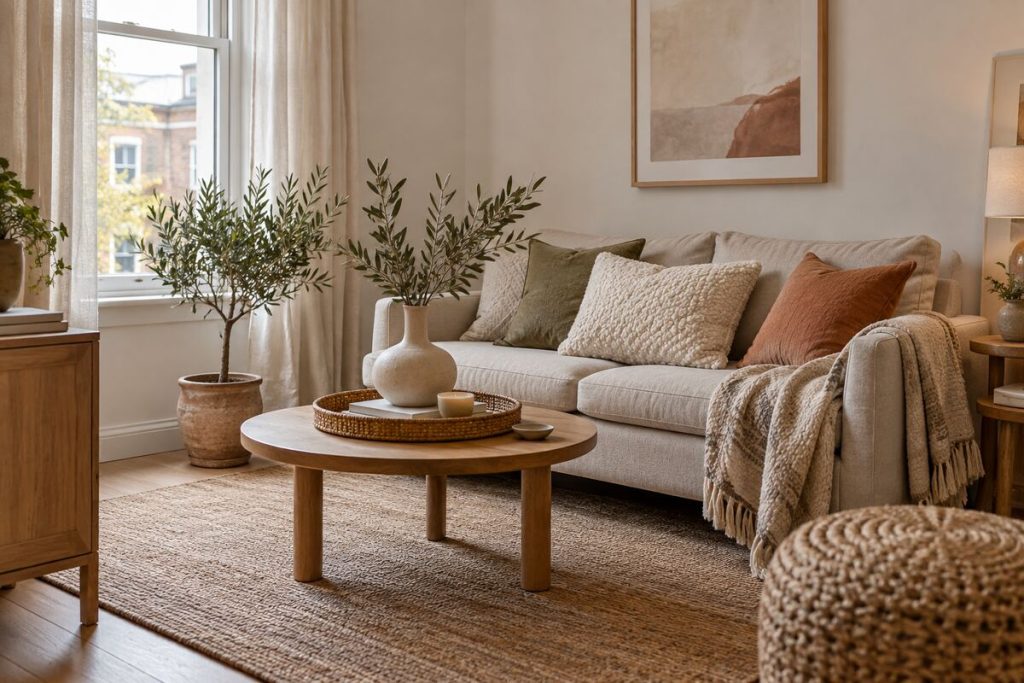
A small home does not need more decoration; it needs better decoration. The most successful small space decor accessories earn their place by adding beauty, function, or a sense of warmth without stealing valuable room. A well-positioned mirror can multiply light, a healthy plant can soften a hard corner, and a single lamp can make an ordinary seat feel like a destination.
The secret is editing. Instead of filling every surface, choose fewer pieces with stronger shapes, useful purposes, and a consistent color story. The ideas below work in apartments, studios, compact houses, and any room where every inch matters. If you are still arranging your furniture, begin with our guide to small space decorating ideas, then use these finishing touches to give the room personality.
Begin With a Quiet Color Story
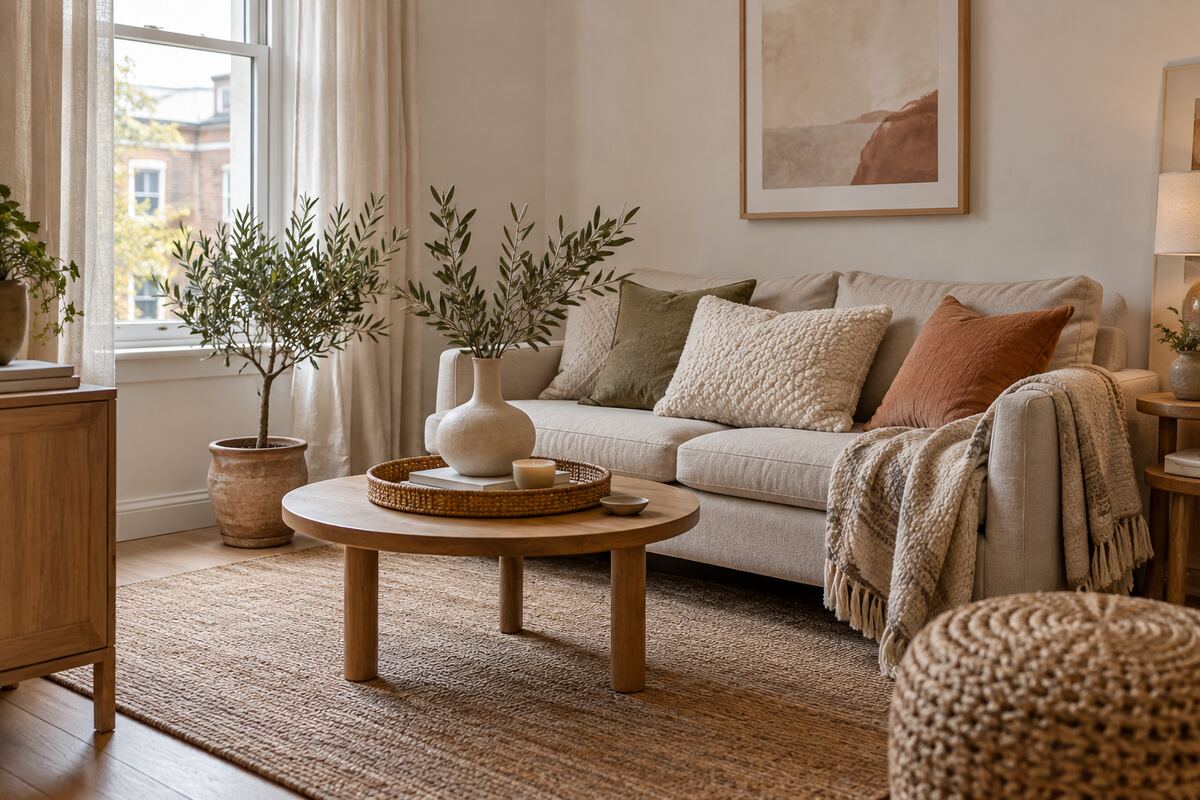
Accessories feel calm when they share a visual language. Start with two or three base tones already present in the room, then add one accent color. In a warm neutral interior, for example, cream, light wood, and olive green can be joined by a small amount of terracotta. Repeating these colors in cushions, pots, artwork, and textiles makes separate objects feel intentional.
This does not mean every item must match. A room becomes more interesting when finishes vary: matte ceramic beside woven fiber, smooth glass beside textured linen, or pale timber beside a dark metal detail. Keep the palette consistent while allowing texture and shape to create contrast.
Turn an Unused Corner Into a Green Reading Spot
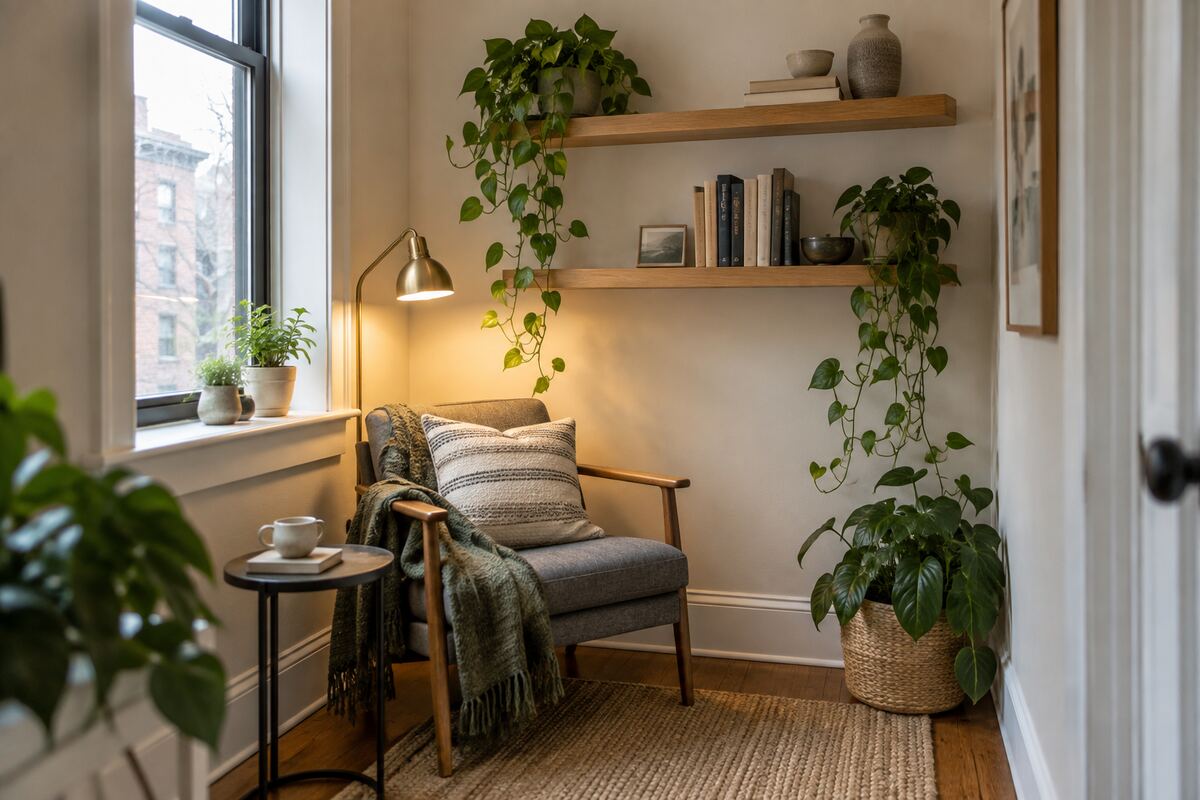
A narrow corner can become one of the most inviting places in the home. Use a comfortable chair with a small footprint, a slim side table, and a focused reading lamp. Floating shelves bring decoration upward, which helps the eye travel around the room instead of stopping at furniture level.
Plants are especially effective here because their irregular shapes soften straight walls and shelving. Choose one trailing variety for height and one compact plant for balance. Leave breathing space between books, pots, and ceramics; an open shelf should still show some wall behind it. That negative space is what keeps the composition light.
Use a Mirror as Decoration and a Light Tool
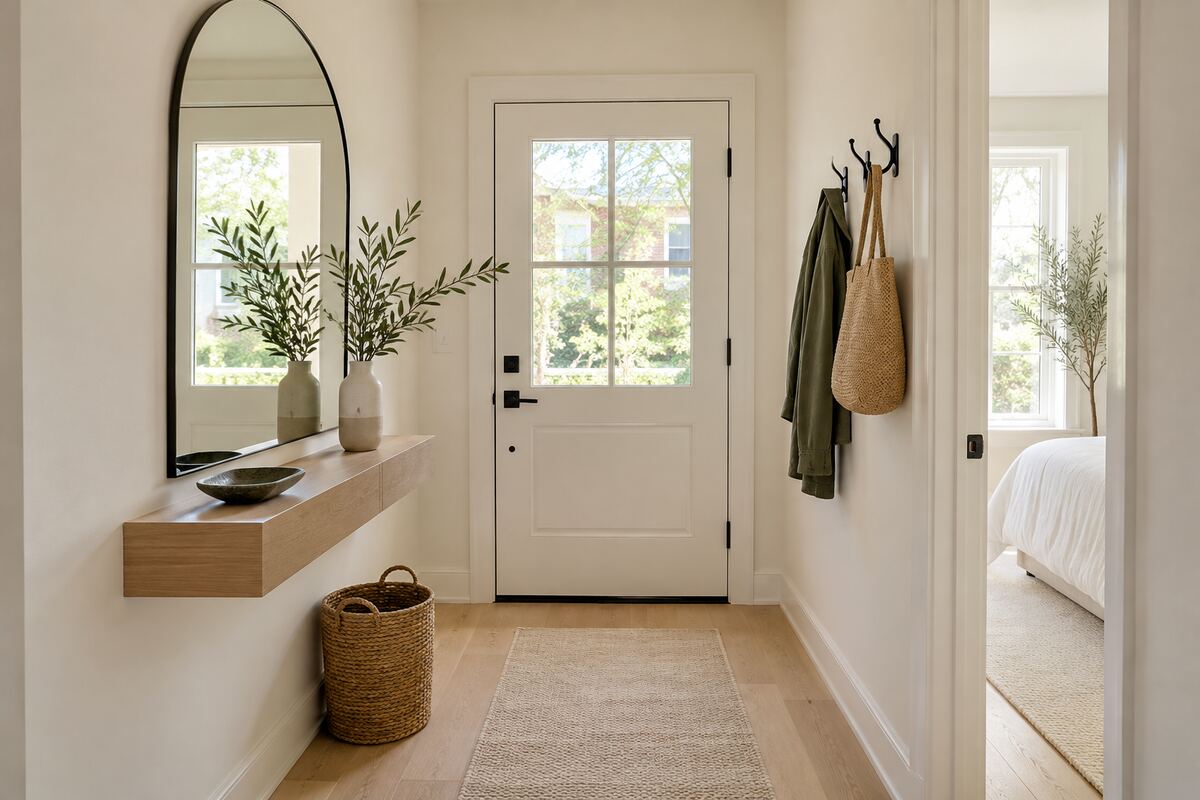
In a small entryway or dim corner, a mirror is more than a finishing touch. Place it where it can reflect a window, a lamp, or an attractive view into the next room. A tall rounded design also introduces a soft curve that contrasts beautifully with doors and straight walls.
Pair it with a floating ledge or narrow console rather than a deep cabinet. A bowl for keys, a vase with a few branches, and a basket below are enough. The goal is not to display a collection; it is to create a welcoming moment while keeping the route through the home clear.
Layer Textiles Without Overfilling the Bedroom
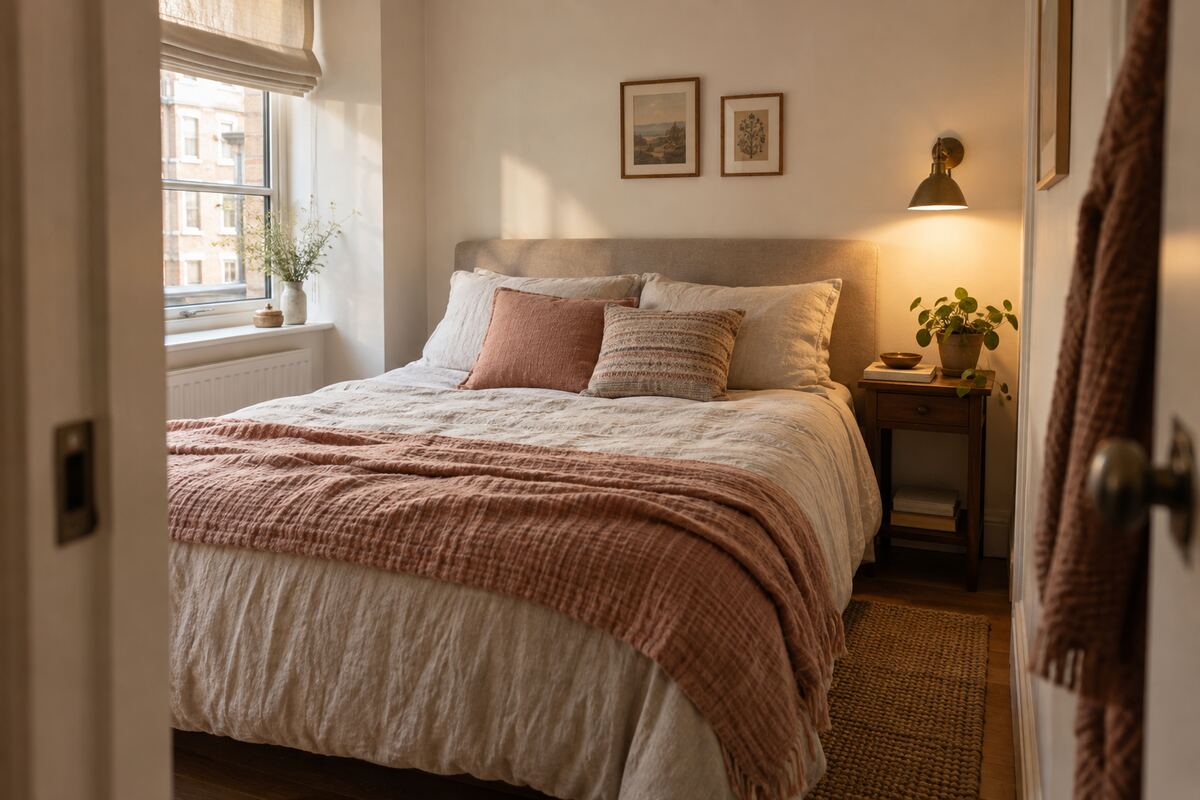
Textiles can make a small bedroom feel finished with almost no loss of floor space. The key is to vary texture, not quantity. Combine simple linen bedding with one folded throw and two decorative cushions in different materials. A restrained arrangement is easier to live with and keeps the bed from looking oversized.
Wall-mounted lighting is another useful accessory because it frees the nightstand. Choose a warm bulb and direct the shade toward the bed. Above the headboard, a small pair of artworks often feels more balanced than one enormous piece. Keep the frames narrow and repeat a color from the bedding for cohesion.
Decorate the Kitchen With Things You Use
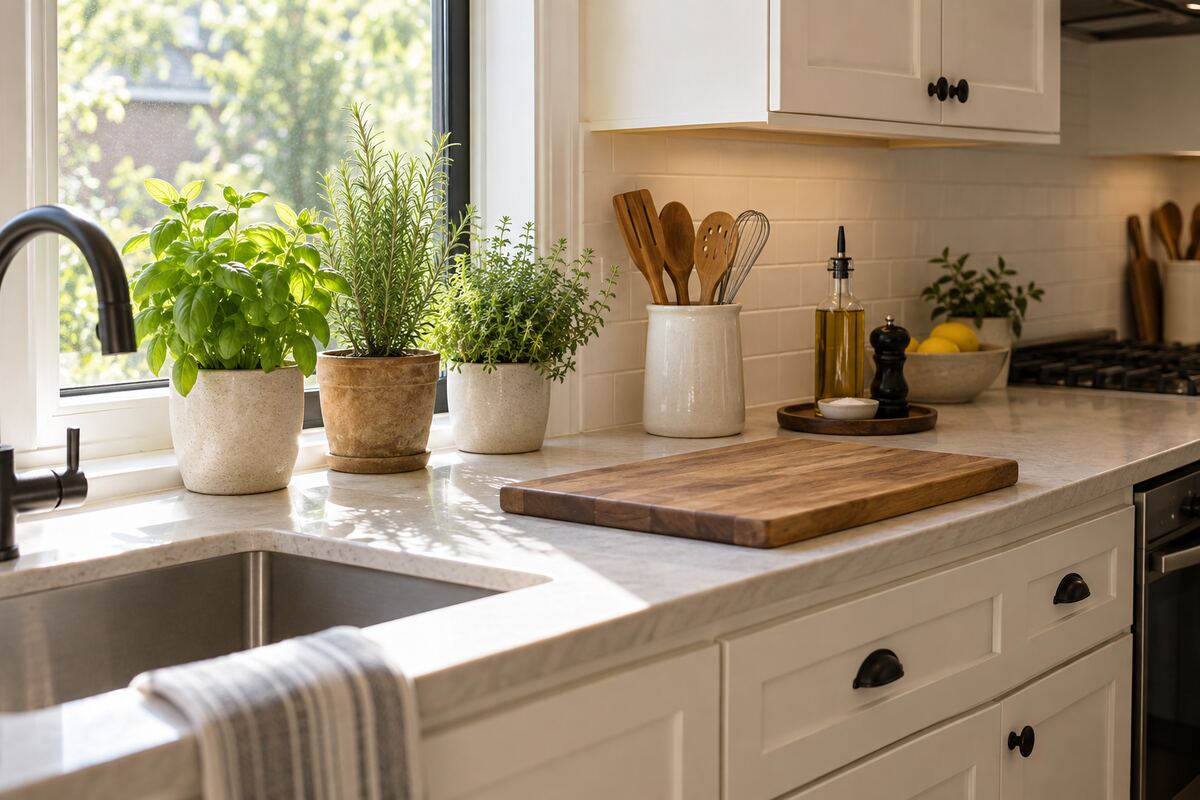
Counter space is too valuable for decoration that does nothing. Instead, make practical objects part of the design. Group cooking oil, salt, and pepper on a small tray so they read as one tidy unit. Store wooden utensils in an attractive crock and keep the best cutting board upright when it is not in use.
Potted herbs add freshness and can replace purely decorative plants. Basil, rosemary, and thyme look beautiful near a bright window and are ready for cooking. Keep most of the worktop empty, however. One organized cluster makes a stronger impression than accessories scattered along every surface.
Give a Tiny Bathroom a Natural Accent
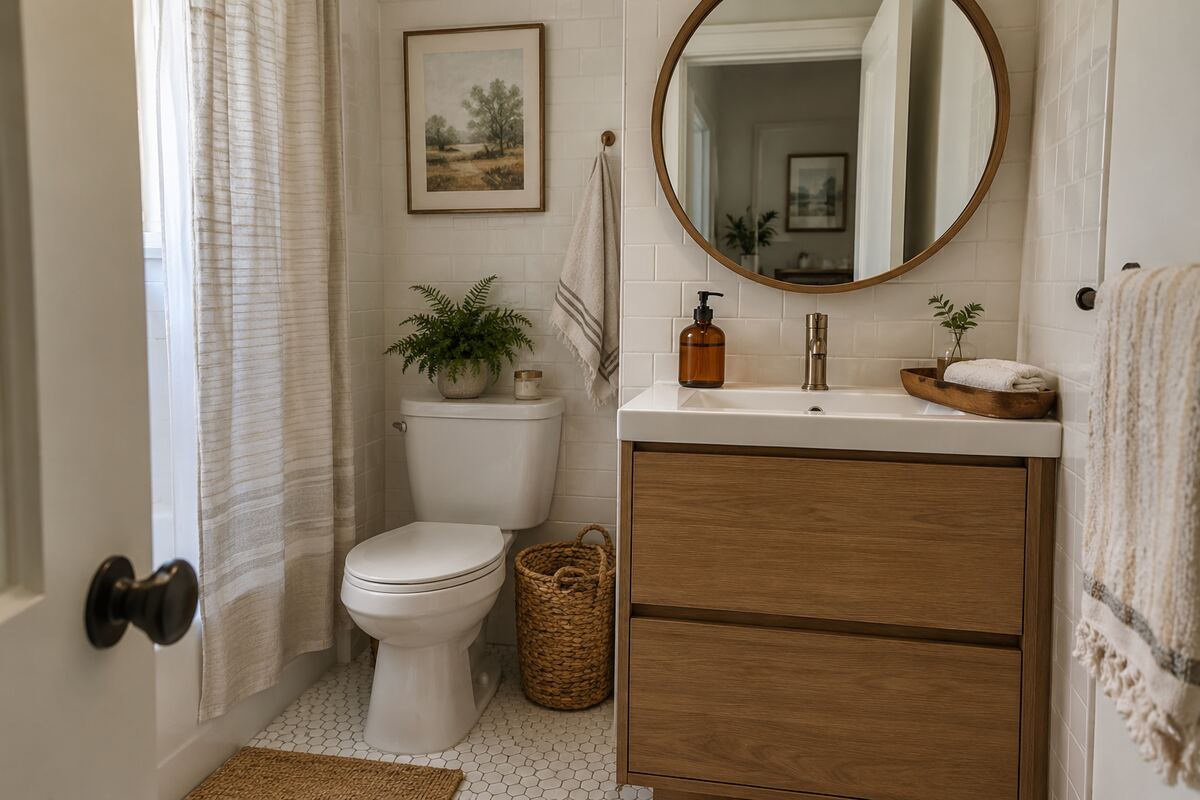
Small bathrooms benefit from accessories that introduce warmth without creating a crowded vanity. Transfer everyday soap into one simple dispenser, fold fresh towels neatly, and use a shallow tray to contain the few items that remain visible. A woven basket can hide spare rolls or laundry while adding texture.
If the room receives indirect light, a fern or another humidity-tolerant plant can soften the tile and make the space feel alive. Keep electrical items and delicate objects away from wet zones. Natural materials are most effective when they are used sparingly against a clean background.
Create a Dining Moment in a Small Nook
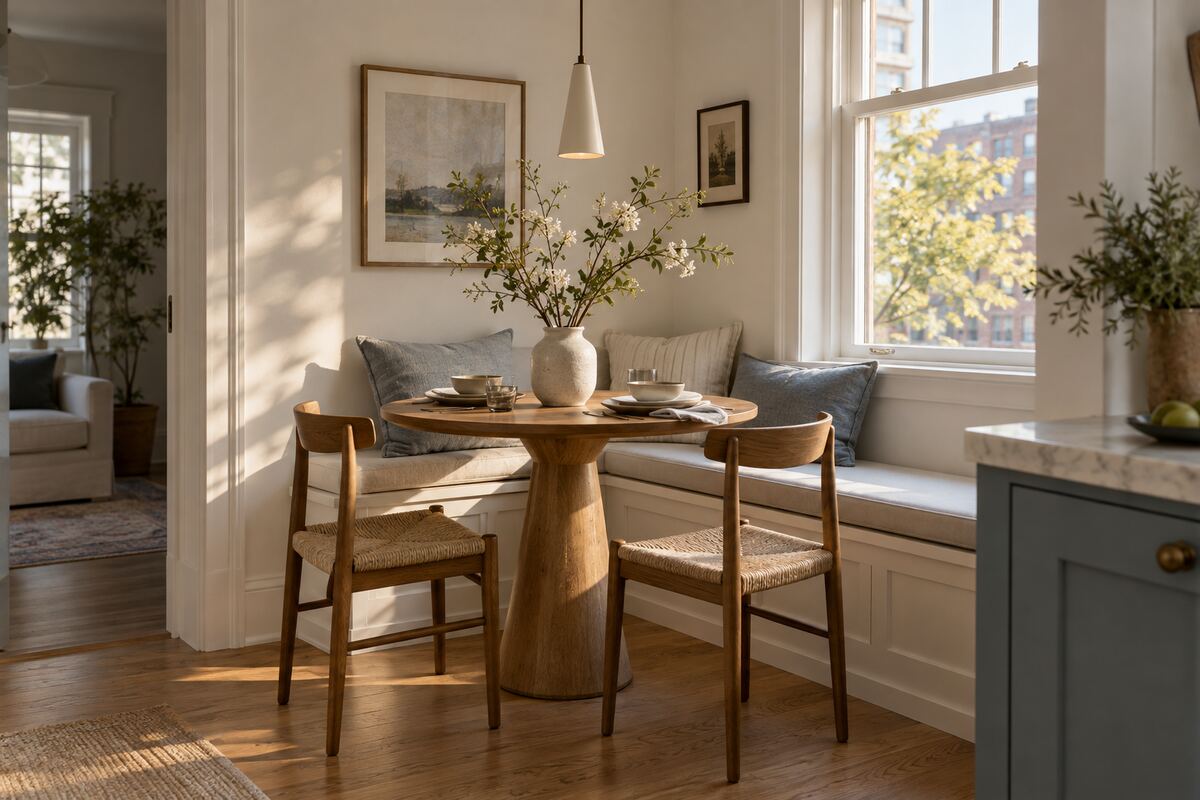
A round table is often easier to move around than a square one, while a built-in bench can turn an awkward corner into useful seating. Once the basic layout works, use accessories to make the nook feel deliberate: a pendant establishes a visual center, cushions add comfort, and one vase gives the table height.
Choose a narrow arrangement that allows conversation across the table. Everyday place settings can remain simple and stackable. When the surface is needed for work or food preparation, the vase should be easy to lift away in one movement.
Build a Windowsill Garden With Varied Heights
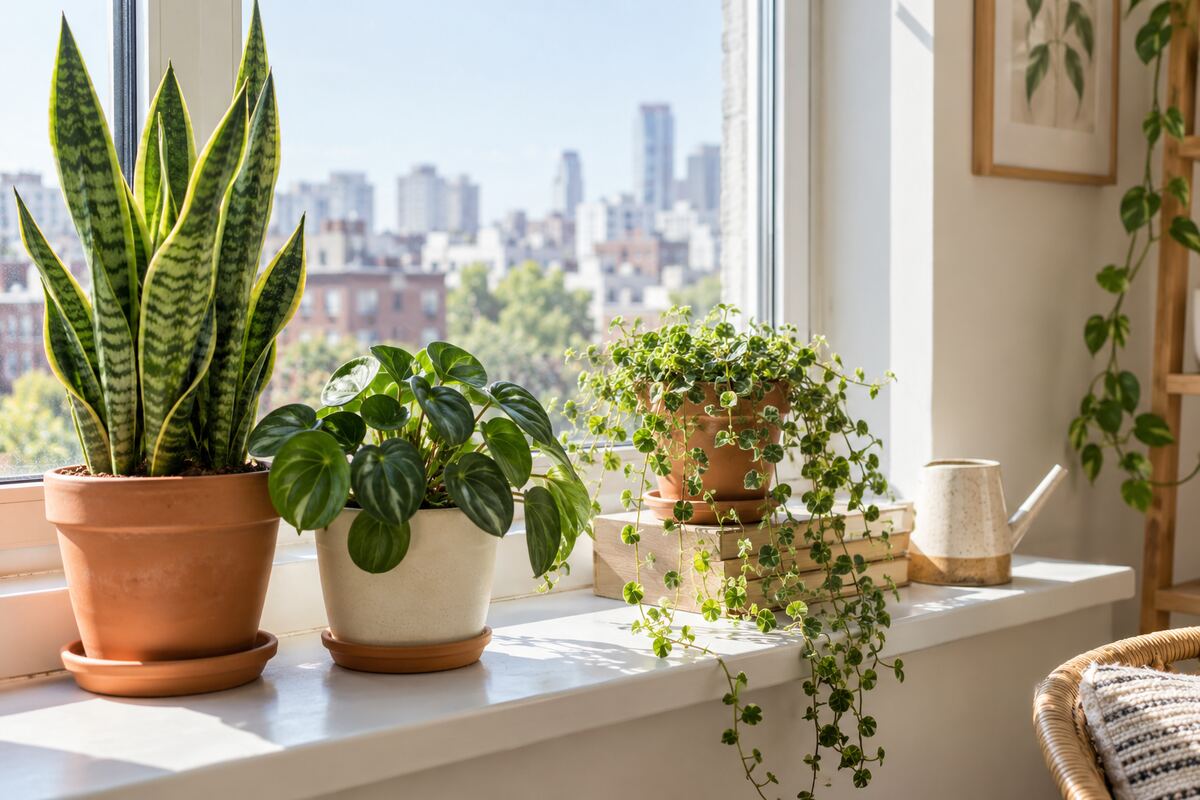
Several tiny pots can look busier than a thoughtful group of three. Combine an upright plant, a rounded leafy plant, and a trailing variety so their silhouettes are clearly different. Use containers from the same material family—terracotta, warm white ceramic, or stone—to unite the composition.
Always match plants to the window’s light rather than choosing them only for appearance. Leave part of the glass unobstructed, place saucers beneath drainage holes, and rotate pots occasionally for even growth. Healthy plants are better decoration than a larger number of struggling ones.
Make Wall Art Feel Collected, Not Crowded
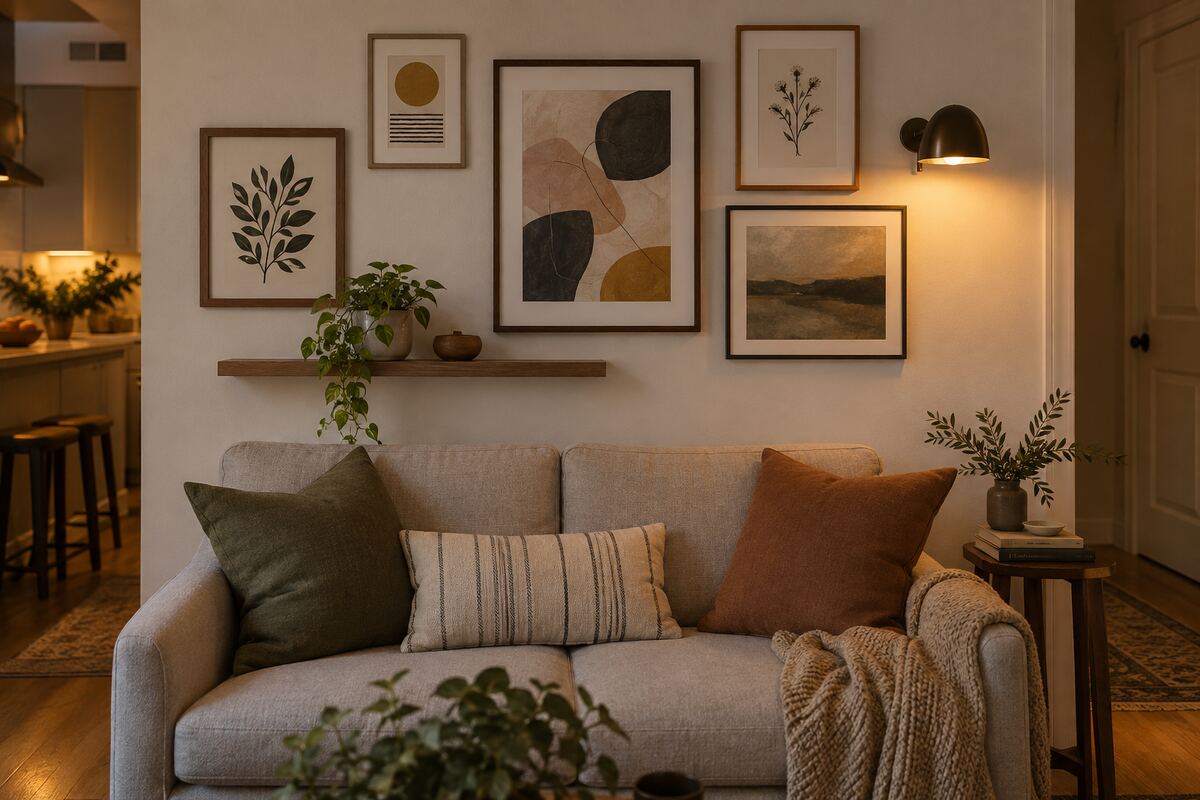
A gallery wall can work in a compact room when it is treated as one composition. Select a limited group of images that share colors or subject matter, then keep the gaps between frames consistent. Before hanging anything, arrange paper templates on the wall or test the layout on the floor.
A slim picture ledge gives you flexibility and reduces the need for many holes. Layer only two or three frames and add a single small object or plant. Resist extending the arrangement across the entire wall; a defined boundary makes the display feel purposeful and leaves visual rest around it.
Divide a Studio Without Blocking the Light
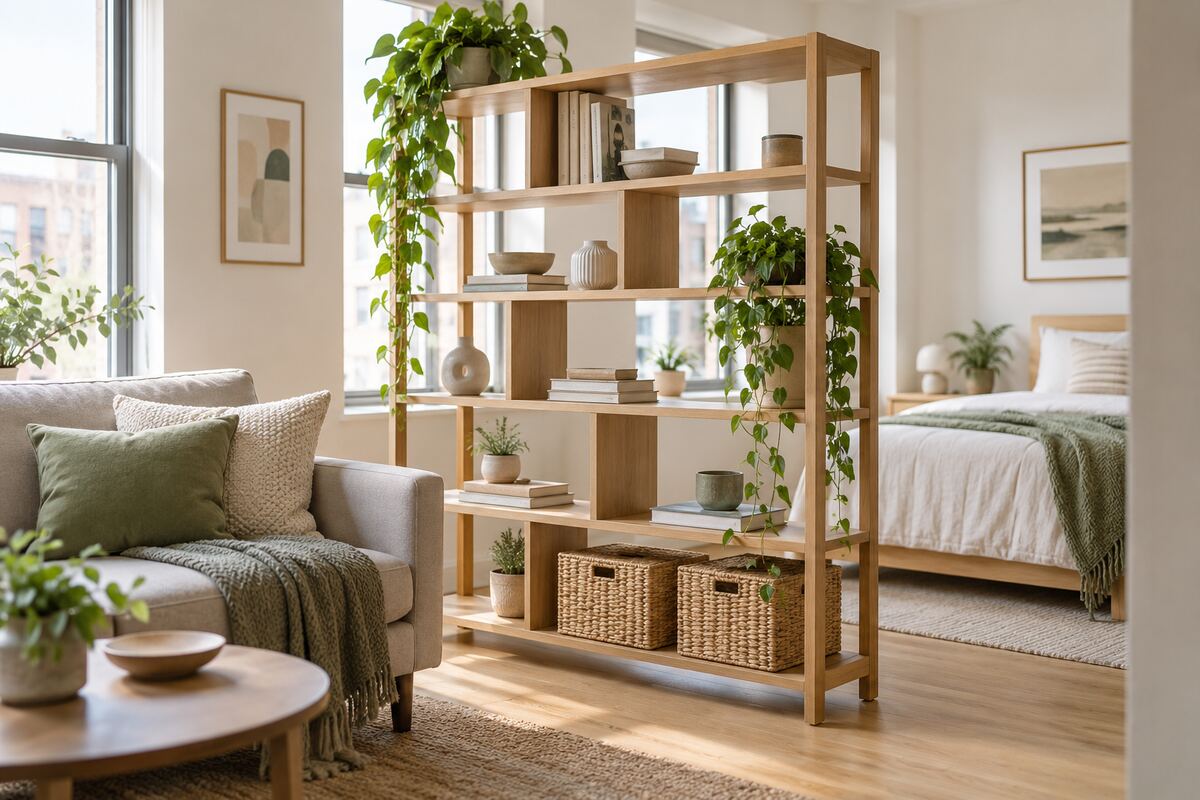
In a studio, accessories can help define zones as effectively as walls. An open shelving unit between the bed and living area creates a gentle boundary while allowing daylight to pass through. Baskets on the lower shelves hide practical items, and a few plants or ceramics make the divider attractive from both sides.
Do not fill every opening. Alternate books, empty space, and objects of different heights. The shelf must also be safely anchored according to its design, especially when used away from a wall. A beautiful divider is only successful when it remains stable and easy to walk around.
Style One Small Surface as a Focal Point
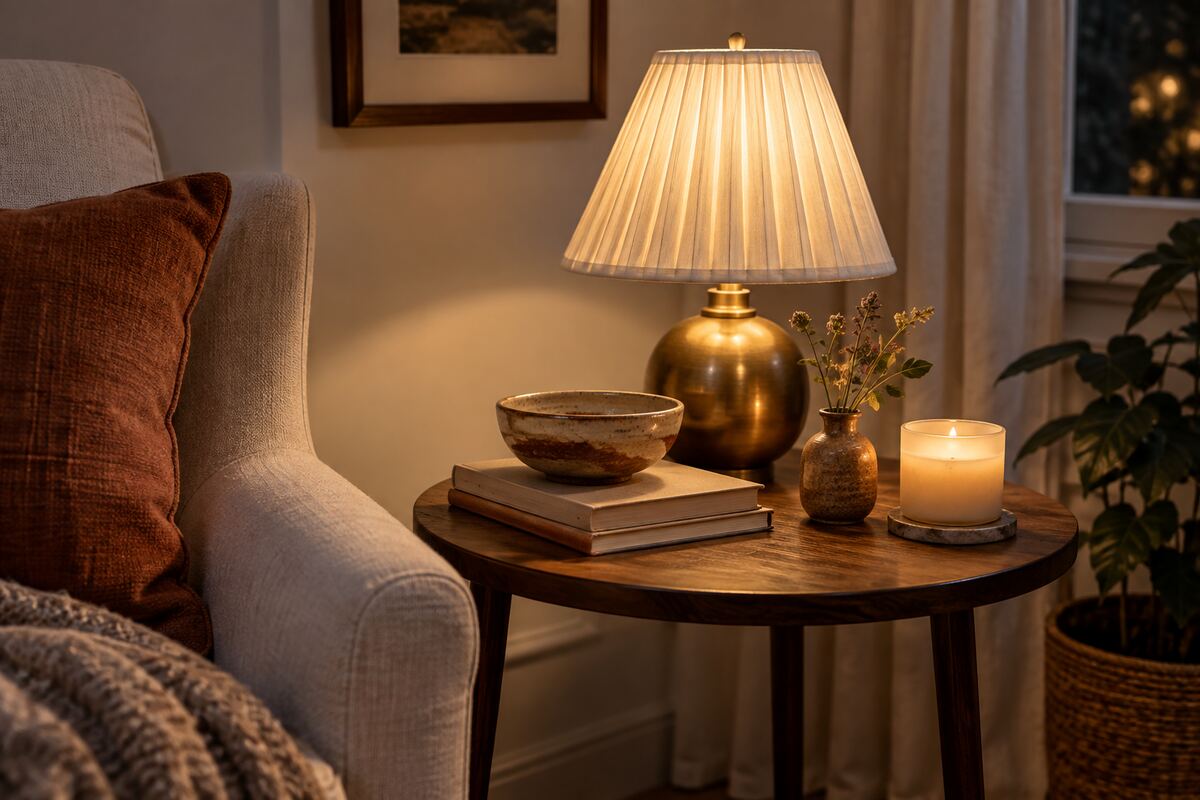
A polished vignette does not require a large console. On a compact side table, build around one practical anchor such as a lamp. Add a short stack of books for horizontal structure, a handmade bowl or vase for shape, and one small natural element. Objects look more balanced when their heights vary and their edges overlap slightly.
Keep enough surface free for a cup or phone. If you use a candle, give it clear space from flowers, books, curtains, and the lampshade. This final edit—removing anything that competes with function—is what separates thoughtful styling from clutter.
A Simple Rule for Choosing Small Space Accessories
Before buying or keeping an accessory, ask three questions: does it serve a purpose, does it support the room’s color and material story, and is there a clear place for it? The strongest pieces usually satisfy at least two of those conditions. A lamp can be useful and sculptural; a basket can add texture and storage; a plant can introduce color while softening an empty corner.
Small homes are not improved by making them look empty, nor by filling every gap. They feel beautiful when useful objects, personal details, and open space are carefully balanced. Start with one surface or one corner, remove what does not belong, and add only the piece that completes the composition.