Warm Bedroom Design Ideas: How to Create a Calm and Timeless Retreat
Create a warm bedroom with layered textures, thoughtful lighting, balanced colors and practical storage. Explore timeless bedroom design ideas for every style.
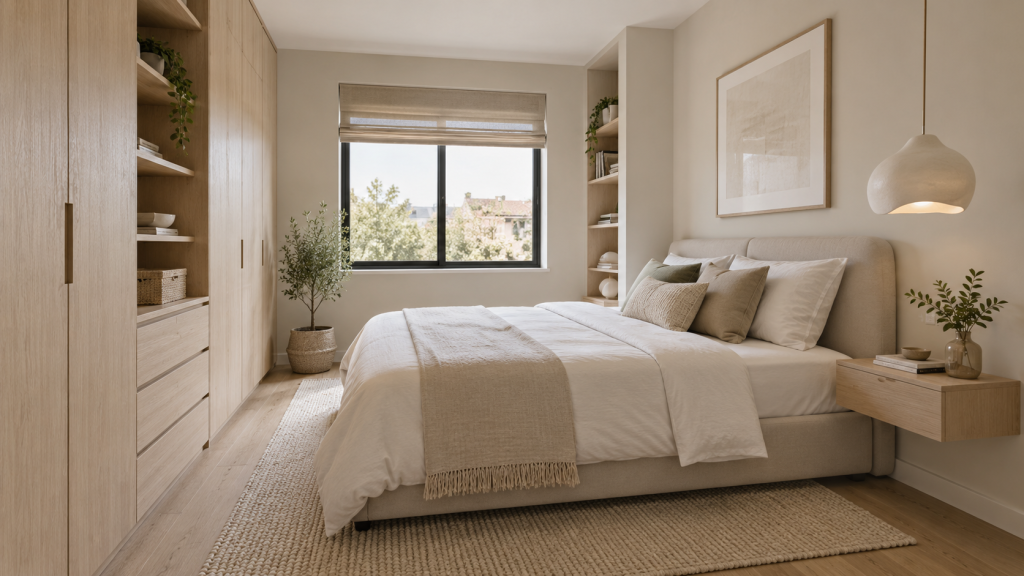
Bedrooms · Casa Eloria
The most beautiful bedrooms are not necessarily the most decorated. They are the rooms that feel calm at night, comfortable in the morning and quietly personal throughout the day.
Warm bedroom design begins with atmosphere. Soft natural materials, controlled lighting, a restful color palette and practical storage create a retreat that looks elegant without feeling staged. The following ideas can be adapted to a master bedroom, guest room or compact apartment bedroom.
1. Choose a color palette that supports rest
Warm bedrooms do not have to be dark. Cream, sand, mushroom, soft white and muted olive can create comfort while preserving daylight. The most successful palettes usually contain one dominant neutral, one supporting tone and a small number of darker accents.
Color temperature matters as much as color itself. A cool white can make a room feel clinical, while a warm off-white reflects light more gently. Test paint and fabric samples in both daylight and evening light before committing.
2. Build comfort through layers of texture
Texture prevents a neutral bedroom from feeling flat. Combine linen bedding with a wool throw, a woven rug, timber, plaster or a tactile upholstered headboard. The goal is not to add many patterns, but to create a sequence of surfaces that invite touch.
Keep large items simple and introduce character through smaller, replaceable layers. A textured bench, ceramic lamp or handmade vase can bring individuality without making the room visually busy.
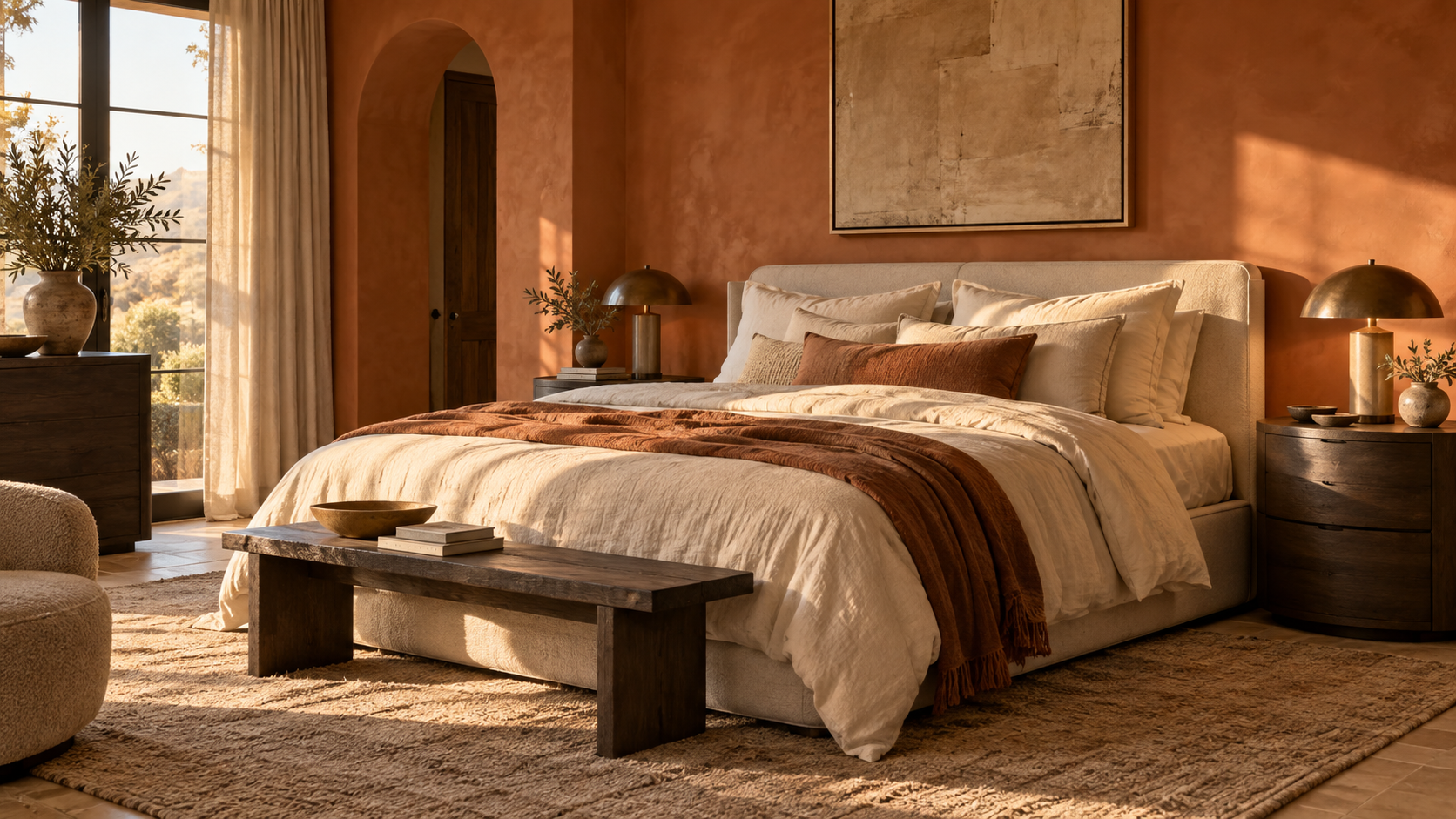
3. Let the bed remain the visual anchor
The bed is usually the largest object in the room, so its proportions influence everything around it. Choose a headboard that relates to the wall width, keep bedside tables balanced, and allow enough clearance for comfortable movement on both sides.
A built-in or full-width headboard can hide wiring and create a strong architectural background. In a smaller room, a simple upholstered panel or painted wall can achieve a similar effect with less visual weight.
4. Use lighting in layers
One ceiling light is rarely enough for a bedroom. Combine soft ambient lighting with reading lights and low-level accent light. Bedside fixtures should be positioned so they illuminate a book without shining directly into the eyes.
Dimmer switches are one of the most useful upgrades because they allow the room to change from practical in the morning to restful in the evening. Warm bulbs and shaded fixtures generally make fabrics and skin tones appear more natural.
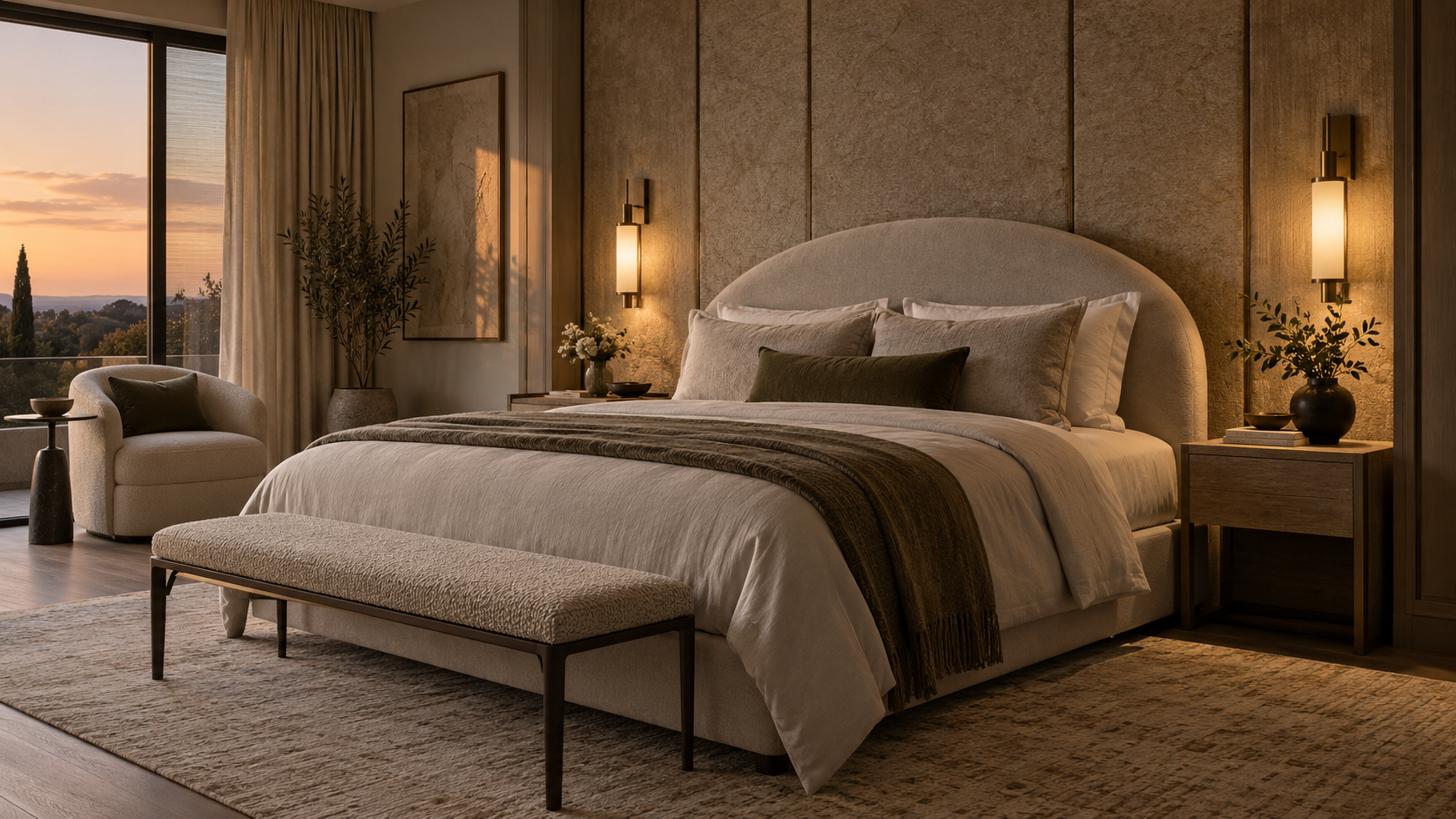
5. Match the bedroom to its natural light
Observe where the morning and afternoon sun enter the room. A bedroom with strong morning light may benefit from woven blinds and pale fabrics, while a dim north-facing room may need warmer wall colors and reflective details.
Window treatments should provide flexibility. Sheer curtains soften daylight, blackout layers improve sleep and full-height fabric can make a modest window feel more generous. Choose practical systems that are easy to operate every day.
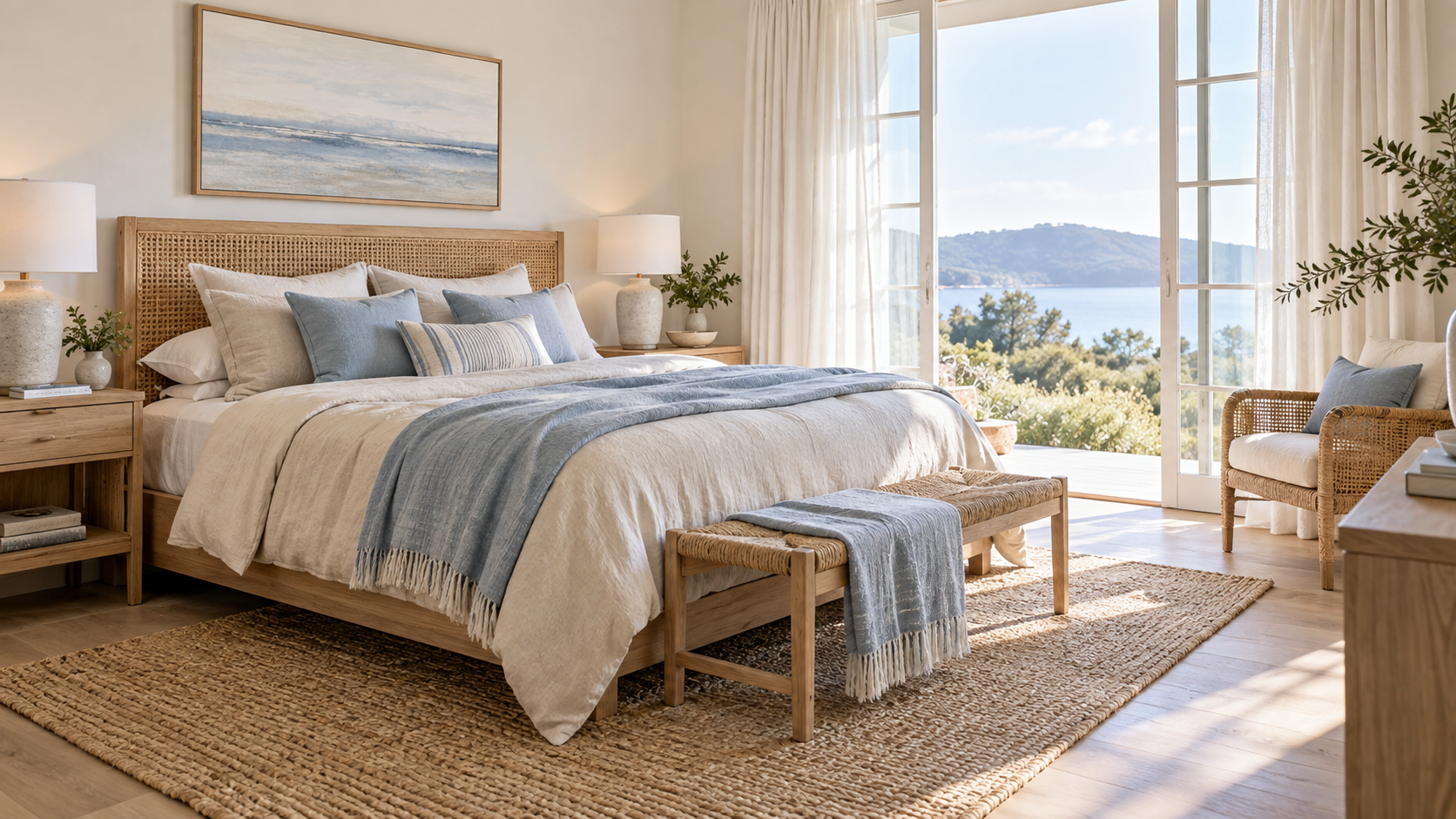
6. Use contrast carefully
Contrast gives a bedroom definition, but strong contrast should be placed intentionally. Dark wood, black lighting or an olive accent can draw attention to the headboard wall or a particular architectural feature. If every surface competes, the room becomes restless.
A good rule is to repeat a darker accent at least twice. For example, a charcoal lamp can relate to a picture frame and a small side table. Repetition makes the room feel designed rather than randomly accessorized.
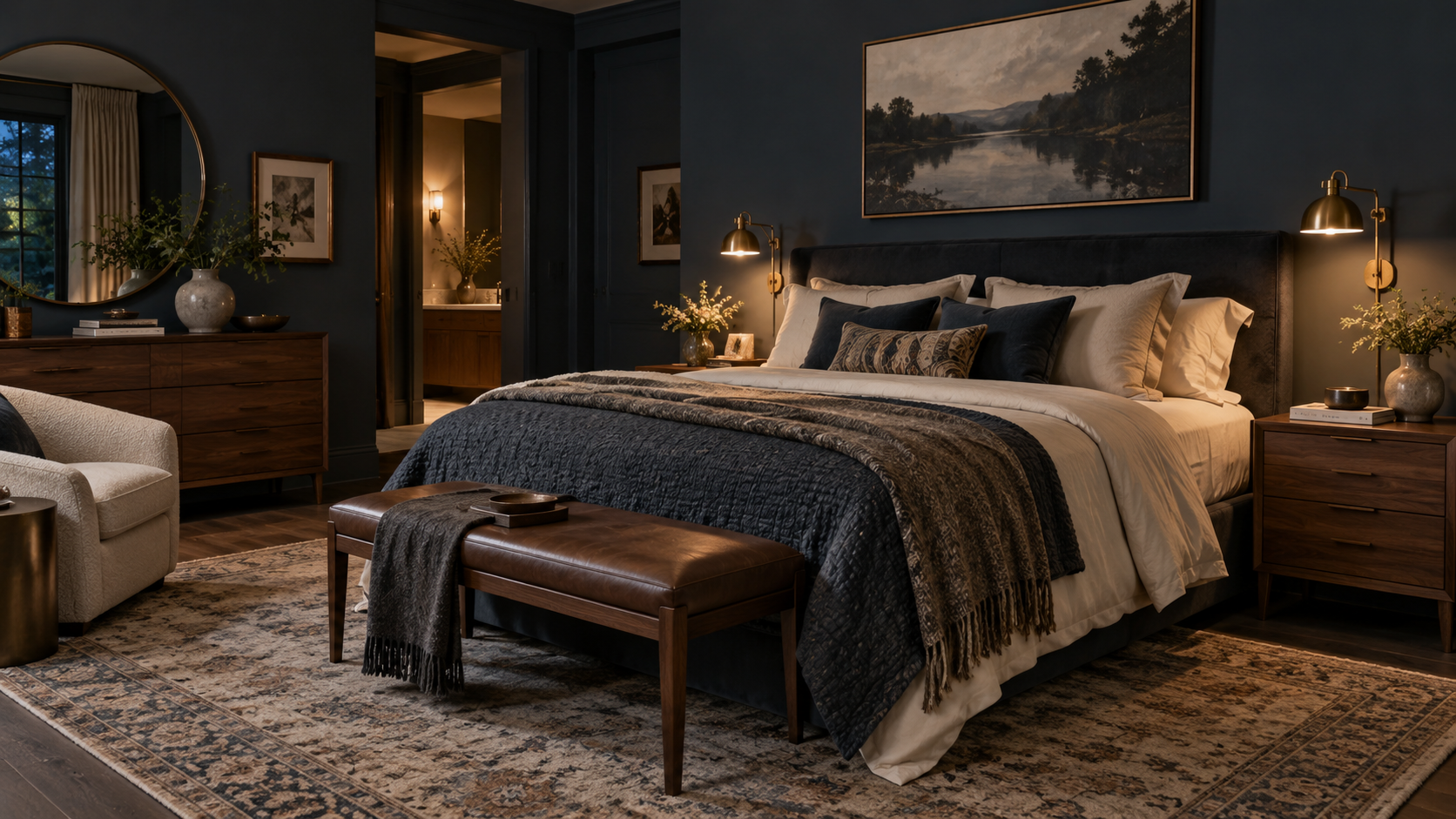
7. Create storage that disappears into the architecture
Clutter has a strong effect on how restful a bedroom feels. Built-in wardrobes, under-bed drawers and integrated bedside storage keep daily objects out of sight. Use matching fronts and simple handles so storage reads as part of the wall rather than a collection of separate cabinets.
Do not sacrifice useful storage for a purely minimal appearance. A bedroom feels more luxurious when there is a clear place for clothing, bags, chargers and spare bedding.
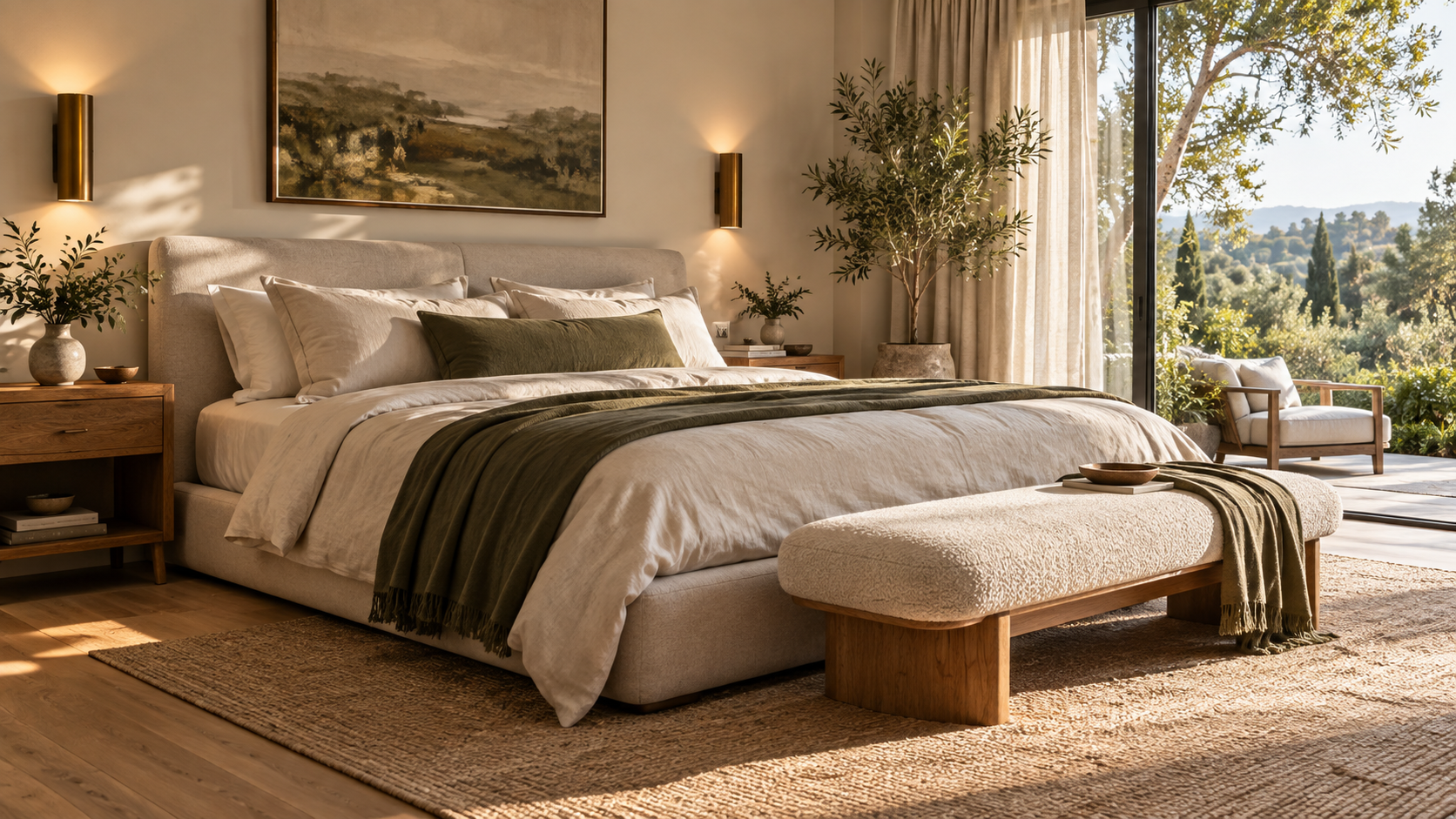
8. Add personality without adding noise
Personal details make a bedroom feel lived in. Choose one meaningful artwork, a small collection of books, a handmade object or a plant that suits the available light. The best accessories support the atmosphere rather than filling every empty surface.
Keep the bedside area especially controlled. A lamp, a book and one small object are often enough. This simple discipline improves both the appearance of the room and the ease of keeping it tidy.
Frequently asked questions
What colors make a bedroom feel warmer?
Soft beige, cream, clay, muted terracotta, warm grey and earthy green are reliable choices. Their success depends on the room’s natural light and the undertones of the furniture.
How can I make a bedroom look expensive on a limited budget?
Prioritize good bedding, layered lighting, a well-finished headboard wall and organized storage. These elements influence the room more than a large number of accessories.
Should bedroom furniture match?
It does not need to match exactly. Repeating materials and keeping proportions balanced is usually more sophisticated than buying a complete identical set.
The timeless bedroom formula
Begin with rest, comfort and function. Once those are solved, add color, texture and personal details slowly. A warm bedroom should feel peaceful enough to sleep in and distinctive enough to feel like your own.