Garden Design Ideas for a Beautiful and Functional Outdoor Space
Discover practical garden design ideas for patios, courtyards, and backyards, including smart layouts, layered planting, lighting, privacy, and low-maintenance solutions.
CasaEloria • Gardens & Outdoors
The best garden design ideas do more than make an outdoor space look beautiful. They improve how you move, relax, entertain, and connect with nature every day. Whether you have a compact courtyard, a family garden, or a generous backyard, the right layout can make the space feel larger, calmer, and far more useful.
Start with the way you live
Before choosing paving, furniture, or plants, decide what you want the garden to do. A quiet reading corner needs a different layout from a dining terrace, a children’s play area, or a space designed for weekend entertaining. Write down the activities that matter most and place them in order of priority.
A simple garden usually works best when it has three clear layers: a practical circulation route, a comfortable place to sit, and planting that softens the edges. This structure keeps the design attractive without making it feel crowded. It also makes future changes easier because every part of the garden has a clear purpose.
12 garden design ideas to create a more inviting outdoor space
These garden design ideas are flexible enough for different home styles and outdoor sizes. Use them as a starting point, then adapt the materials and planting to your climate, maintenance routine, and budget.
Define one strong focal point
Choose a mature tree, sculptural planter, water bowl, or attractive bench as the visual anchor. One clear focal point gives the eye somewhere to rest and makes the garden feel intentional.
Create a small outdoor room
Use paving, a pergola, a low wall, or a change in floor texture to frame a seating or dining area. Treat it like a room with a purpose instead of scattering furniture across the lawn.
Use a simple planting palette
Repeating a few dependable plant shapes creates a calmer, more designed look. Combine evergreen structure with seasonal flowers and grasses for movement and long-lasting interest.
Lead the eye with a path
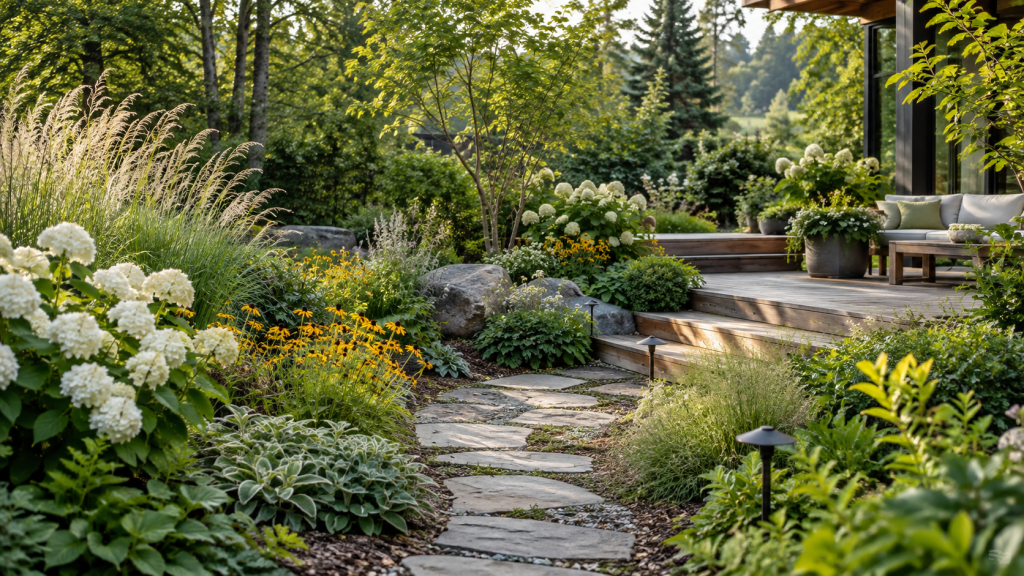
A path does not need to be perfectly straight. Large stepping stones, gravel, or warm-toned pavers can guide people naturally from the house to a seating area or hidden corner.
Layer heights for depth
Mix groundcover, medium shrubs, tall grasses, and one or two small trees. Different heights make even a narrow garden feel deeper and prevent the planting from looking flat.
Repeat materials from the home
Echo a color or material already used on the exterior, patio, or interior. Repeated stone, timber, metal, or terracotta details help the garden feel connected to the house.
Make a compact garden feel larger
Keep the palette restrained, use furniture with a light visual profile, and place taller planting around the perimeter. A clear center and fewer competing objects create a sense of space.
Add shade before extra decoration
A tree, pergola, shade sail, or adjustable umbrella can turn an attractive patio into a space you actually use. Prioritize comfort before adding decorative accessories.
Design for evening use
Combine subtle path lights, warm wall lighting, and a soft glow near seating. Keep fixtures discreet so the garden still feels natural during the day.
Use vertical space
Climbers, trellises, narrow planters, and wall-mounted pots bring greenery to small patios and balconies without taking up valuable floor area.
Mix texture, not too many colors
Stone, gravel, timber, woven furniture, and soft foliage add richness without visual noise. A limited color palette lets texture do the work.
Leave room for the garden to grow
Plant mature sizes in mind and avoid filling every gap on day one. Good spacing improves airflow, reduces future pruning, and lets the composition develop naturally.
Choose plants with structure and purpose
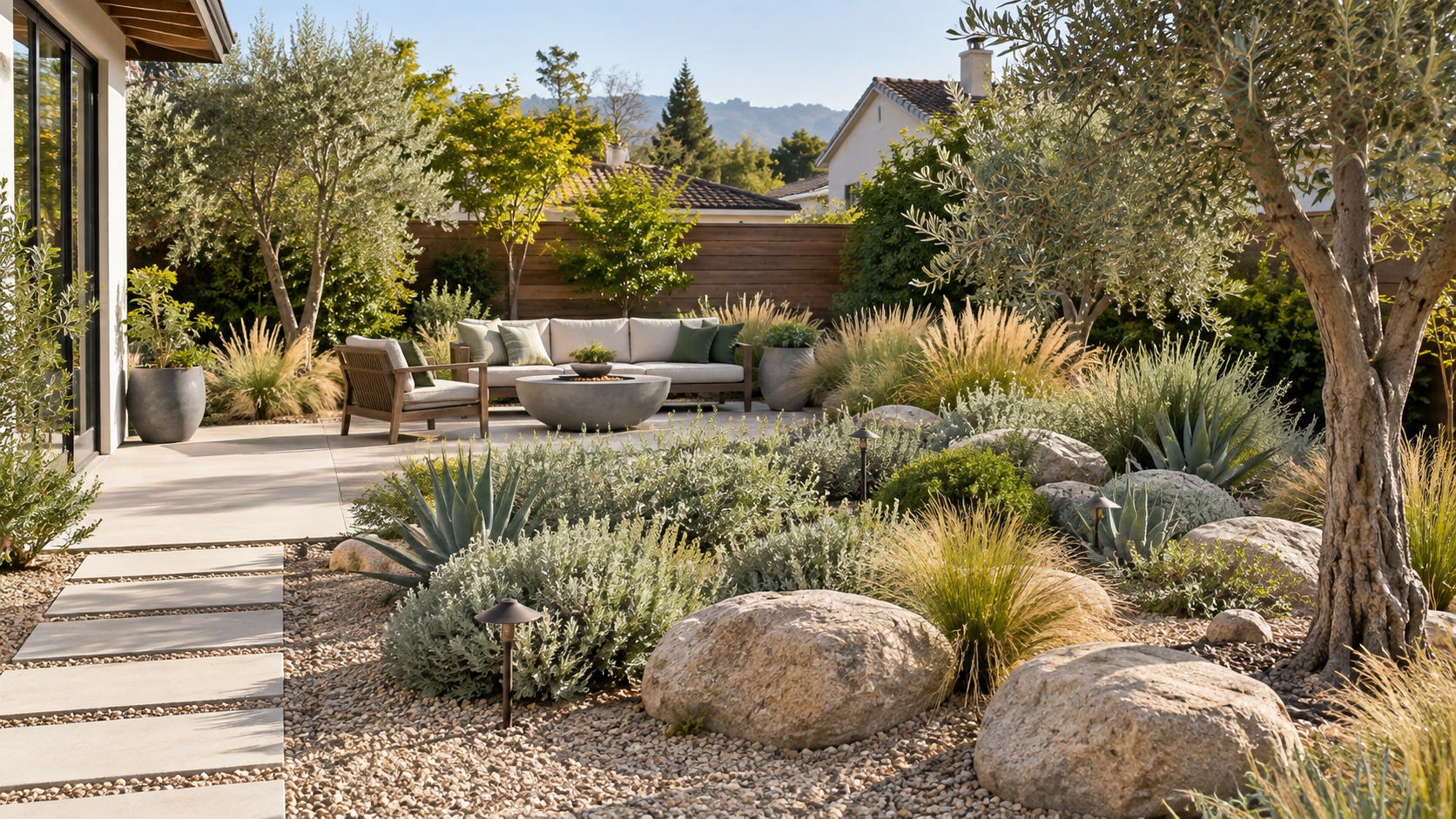
Beautiful planting is not only about selecting individual flowers. It is about combining forms that perform different jobs throughout the year. Evergreens provide a dependable framework, grasses add movement, flowering plants bring seasonal color, and herbs or edible plants can add fragrance and usefulness.
For a low-maintenance garden, group plants with similar water and light needs. This makes irrigation easier and avoids the common mistake of placing thirsty plants beside varieties that prefer dry soil. Before buying, check the mature width and height of each plant rather than judging it by the size of the pot.
- Choose a dominant green tone before adding flower colors.
- Repeat key plants in groups of three or five for visual rhythm.
- Keep enough open soil or mulch around new plants for growth.
- Place fragrance close to doors, paths, and seating areas.
- Use containers for seasonal color and easy rearrangement.
Plan the layout before buying anything
Measure the garden and mark the house doors, windows, existing trees, sunny areas, shaded areas, and drainage points. Then sketch the main zones: dining, lounging, planting, storage, and circulation. This quick plan prevents expensive purchases that do not fit the space.
Leave comfortable routes between the house and the garden. Outdoor furniture should not block doors, and the main path should remain easy to use when carrying food, watering plants, or moving chairs. If the garden is small, choose one flexible seating area rather than trying to create several miniature zones.
| Garden zone | Design priority | Useful detail |
|---|---|---|
| Dining area | Clear circulation and shade | Use a stable, easy-clean surface and leave space to pull chairs out. |
| Lounge area | Comfort and privacy | Position seating toward the best view and soften boundaries with planting. |
| Planting border | Structure and maintenance | Combine evergreen shapes with seasonal interest and accessible edges. |
| Small courtyard | Vertical impact | Use one tree, wall planting, and a restrained material palette. |
Use lighting and privacy to extend the garden
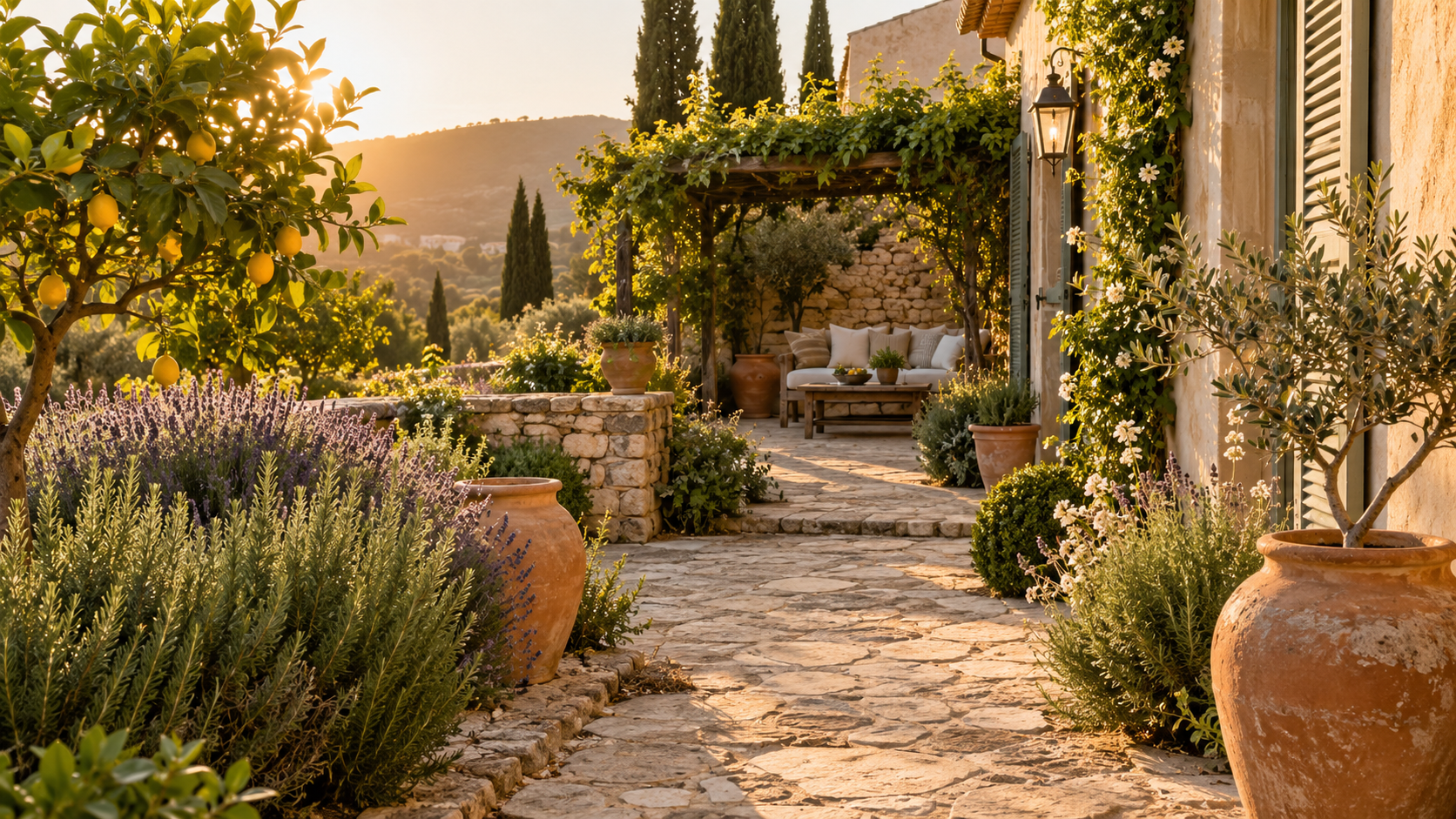
Outdoor lighting should reveal the garden rather than overpower it. Start with the practical points: steps, entrances, changes in level, and the main path. Then add a few softer accents near trees, walls, or seating. Warm light usually feels more relaxed than bright, cool light in a residential garden.
Privacy can be created with planting, trellis panels, slatted screens, or a carefully positioned small tree. The goal is not always to block every view. Often, filtering the sightline is enough to make a seating area feel more comfortable while keeping natural light and airflow.
Common garden planning mistakes to avoid
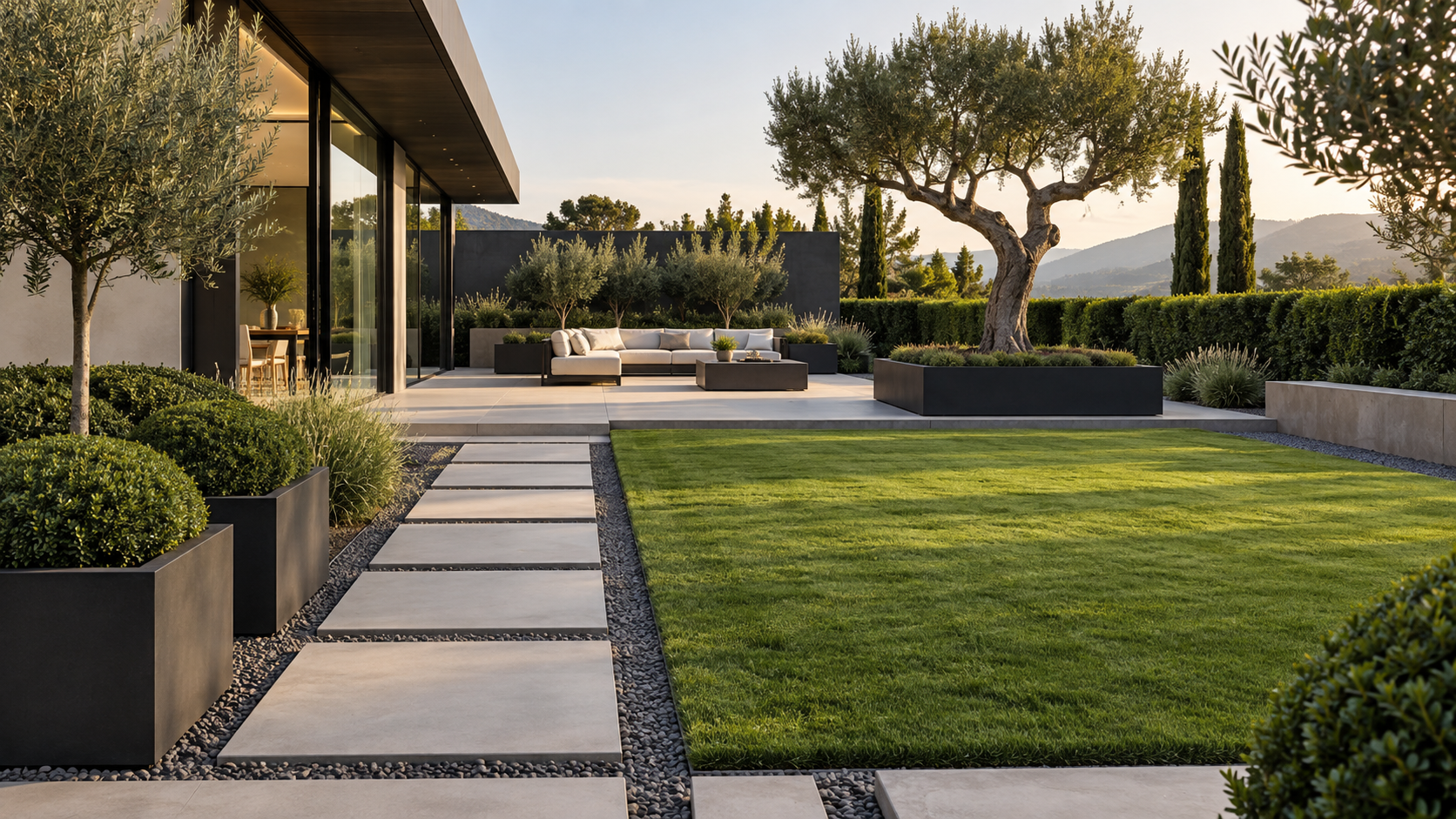
The most frequent problem is buying plants and accessories before deciding how the space will be used. The result is often a garden that looks busy but still lacks a comfortable place to sit. Start with the layout, then choose the details that support it.
Another mistake is using too many unrelated materials. Two or three complementary finishes are usually enough for a polished outdoor space. Finally, do not ignore maintenance. A design that requires more watering, pruning, and cleaning than you can realistically provide will quickly lose its appeal.
How to improve a garden on a realistic budget
You do not need to renovate everything at once. Begin with the changes that have the greatest visual and practical effect: clear clutter, refresh tired containers, define the seating area, and improve the path. Repainting a fence or adding one large planter can create more impact than buying many small decorations.
Invest in the pieces you use most, such as a comfortable chair, a durable table, or reliable outdoor lighting. Save money by propagating suitable plants, buying smaller specimens that have room to grow, and completing the garden in phases. A thoughtful plan is often more valuable than a large budget.
Garden design ideas: frequently asked questions
What is the easiest way to make a garden look more designed?
Define one seating area, repeat a small number of plants, and keep the materials consistent. Clear structure usually creates a stronger result than adding more decoration.
How can I make a small garden feel bigger?
Keep the center open, use vertical planting around the edges, choose furniture that fits the scale, and guide the eye with a simple path or repeated paving pattern.
Which garden style is easiest to maintain?
A well-planned low-maintenance garden with durable paving, grouped plants, mulch or gravel, and a simple irrigation routine is generally easier to care for than a densely mixed border.
Should the garden match the interior of the home?
It does not need to match exactly, but repeating one or two colors, materials, or shapes creates a smoother visual transition between indoor and outdoor spaces.