Bedroom Design Ideas for a Calm and Beautiful Home
Explore bedroom design ideas for calm colors, smart layouts, layered lighting, practical storage, and timeless comfort in any home.
CasaEloria • Bedrooms
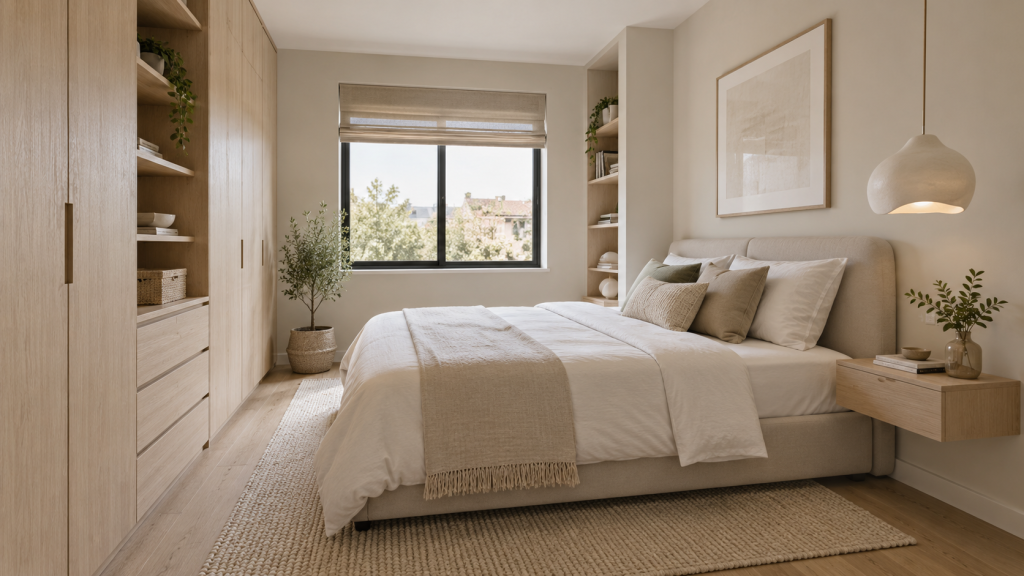
The most successful bedroom design ideas create a room that feels beautiful at first glance and comfortable at the end of a long day. The secret is not filling the space with decoration. It is choosing a calming palette, arranging furniture with care, and layering textures and light so the room supports real life.
Build a calm foundation
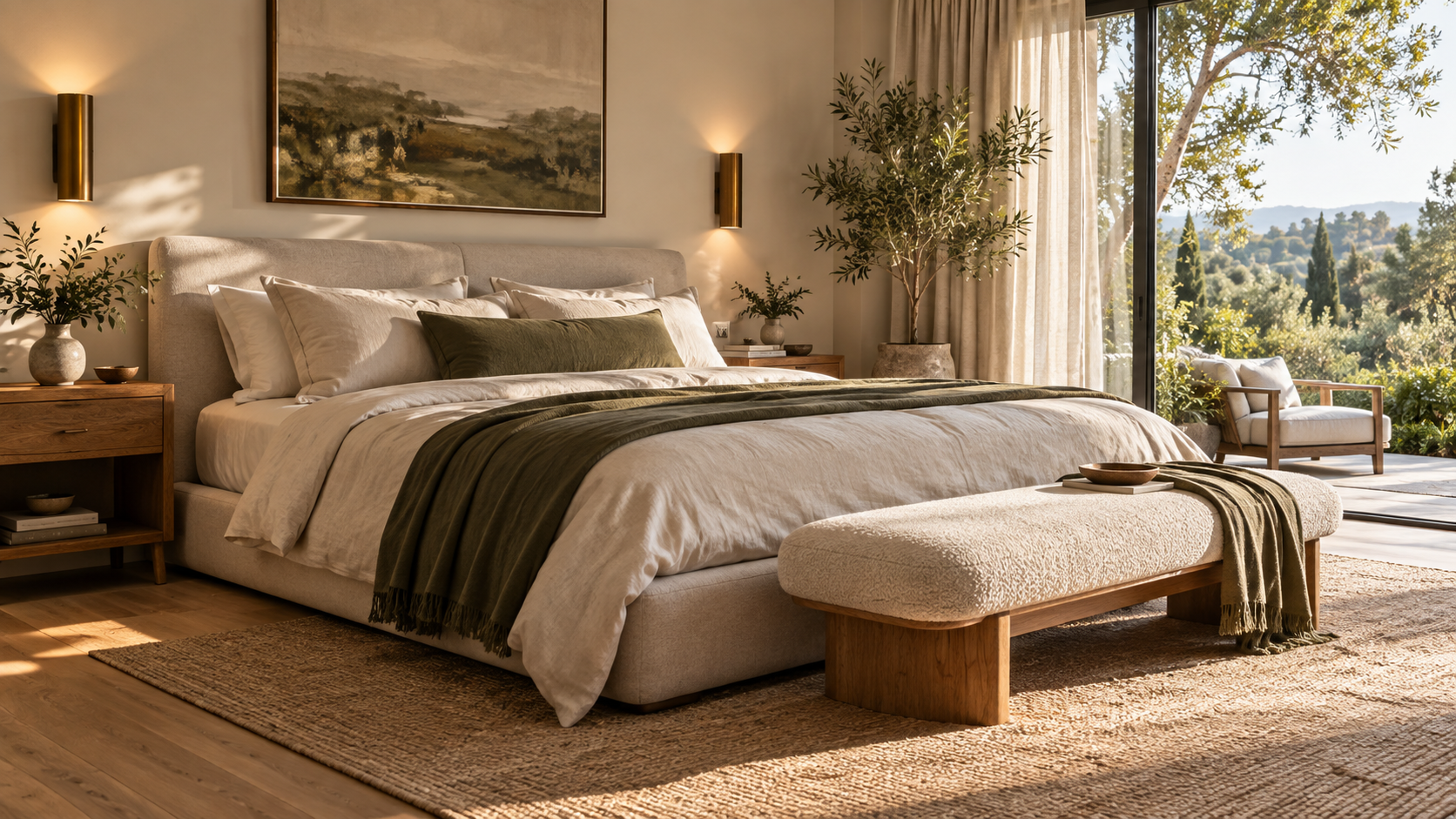
Begin with the elements that are hardest to change: the bed position, wall color, flooring, and main storage. A bedroom feels more restful when these larger decisions work together instead of competing for attention. Soft warm whites, mushroom, muted olive, pale taupe, and gentle blue are reliable starting points because they create depth without feeling visually loud.
Texture matters just as much as color. Linen bedding, a woven rug, timber furniture, plaster-effect walls, and softly upholstered surfaces add warmth while keeping the palette restrained. This is especially useful in a minimalist bedroom, where a small number of tactile materials can make the room feel complete.
Bedroom styles that feel timeless
A bedroom does not need to follow a strict design label. The strongest rooms usually borrow a few compatible qualities from different styles and adapt them to the architecture of the home.
Clean lines with comfort
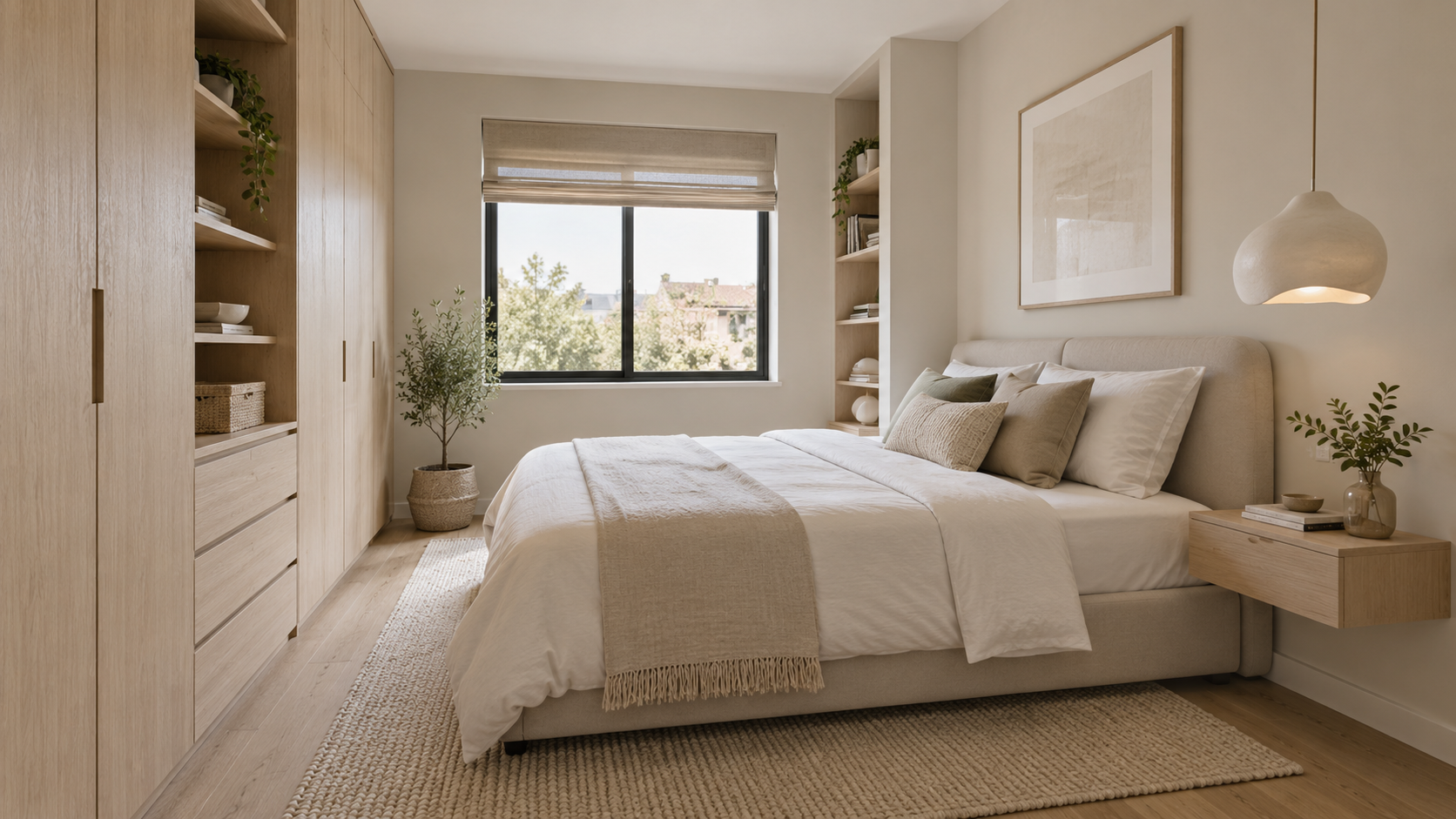
Pair an upholstered bed with simple wood furniture, rounded accessories, and one expressive artwork. Keep the shapes uncluttered, then use bedding and rugs to prevent the room from feeling cold.
Make every wall work
Built-in wardrobes, floating shelves, and slim bedside tables preserve floor space. A limited palette and full-height curtains can make a compact bedroom feel more generous.
Quiet natural balance
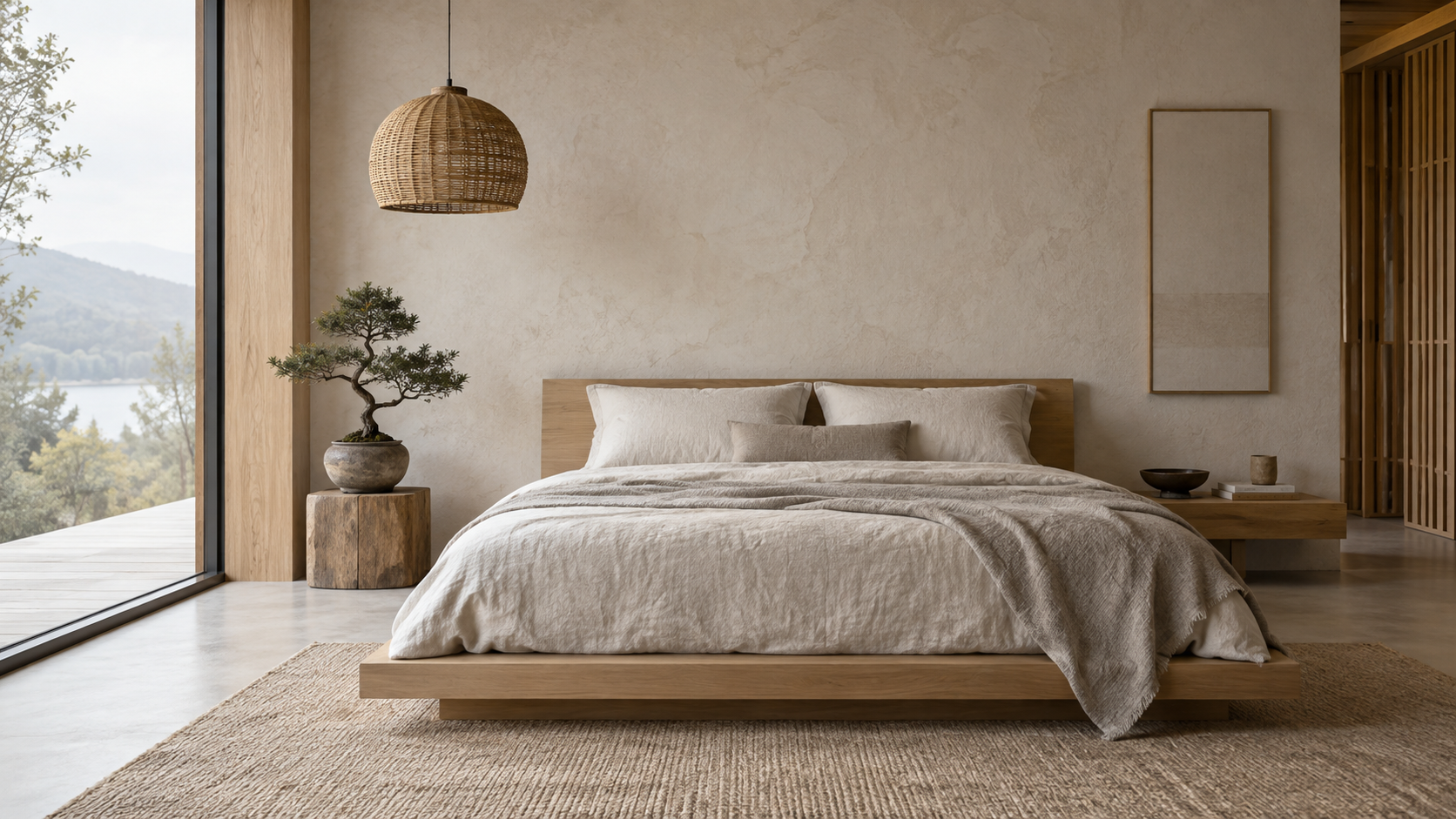
Use pale timber, a low bed, textured plaster, woven lighting, and only a few meaningful objects. The result feels considered because every piece has a visual or practical role.
Depth through darker color
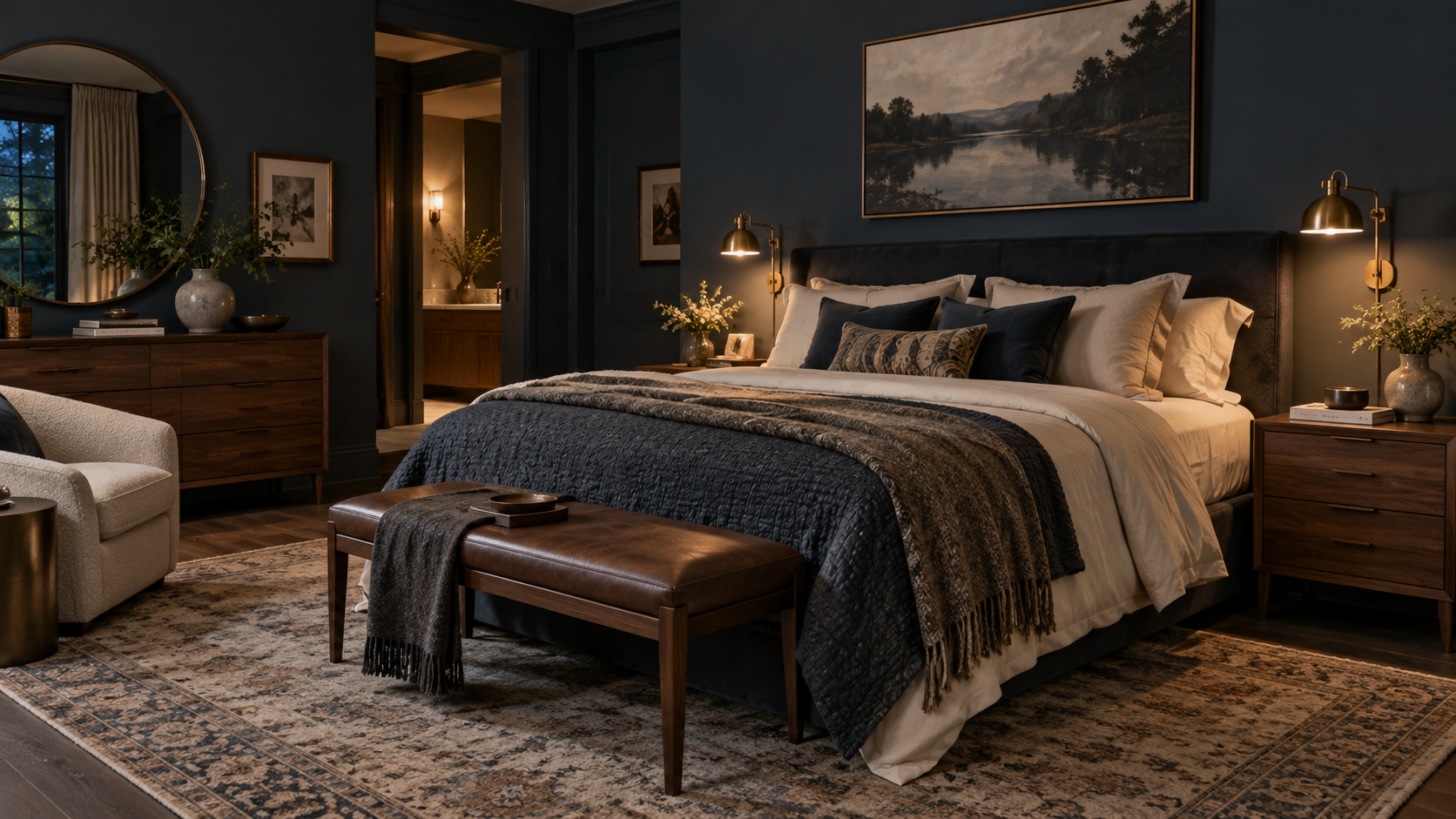
Charcoal blue, walnut, aged brass, and warm ivory create a sophisticated cocoon. Balance dark walls with layered lighting and lighter bedding so the space remains inviting.
Airy without clichés
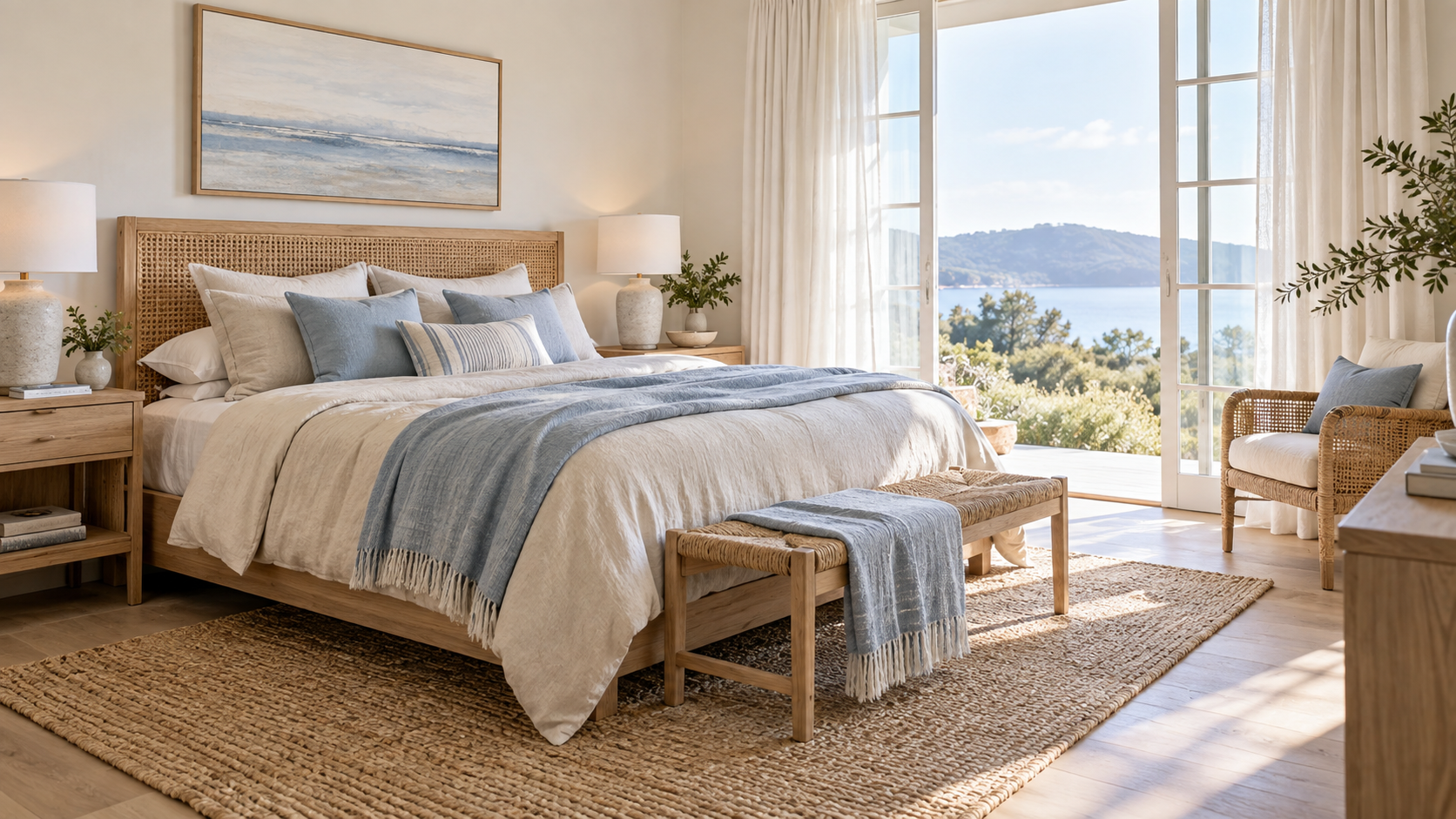
Combine sand, soft blue, white oak, woven textures, and natural linen. Avoid overusing nautical accessories; the feeling should come from light, proportion, and texture.
Comfort with character
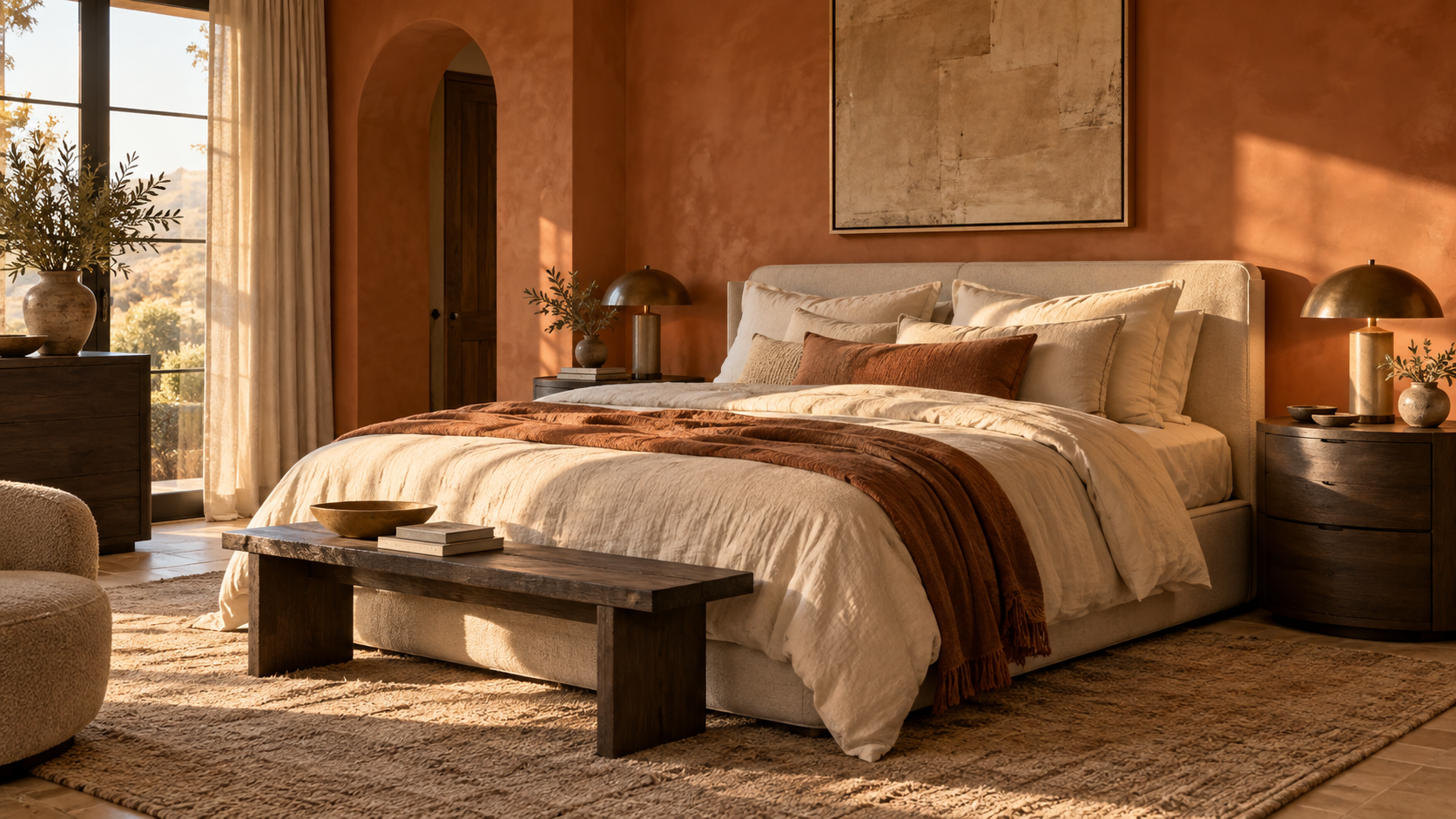
Terracotta, clay, caramel, and cream can make a bedroom feel intimate. Use the warmer shades on one wall, a throw, or a bench, then keep the larger surfaces quiet.
Plan furniture and storage around daily life
The bed is the visual anchor, but it should not be the only thing considered. Leave enough space to walk comfortably around it, open wardrobe doors, and reach the window or heating controls. In a smaller room, a bed with drawers, a wall-mounted bedside shelf, or a built-in wardrobe can provide useful storage without making the layout feel heavy.
Measure before buying. Note the width of the room, the position of doors and windows, and the exact opening path of every cupboard. A furniture plan made with masking tape on the floor can reveal whether a bedside table is too wide or whether a bench will make the walkway feel narrow.
- Keep the main walking route clear from the door to the bed.
- Choose bedside storage that matches the scale of the mattress.
- Use closed storage for visual calm and open shelves sparingly.
- Place a mirror where it reflects light, not clutter.
- Leave a little empty space so the room can breathe.
Layer bedroom lighting for different moments
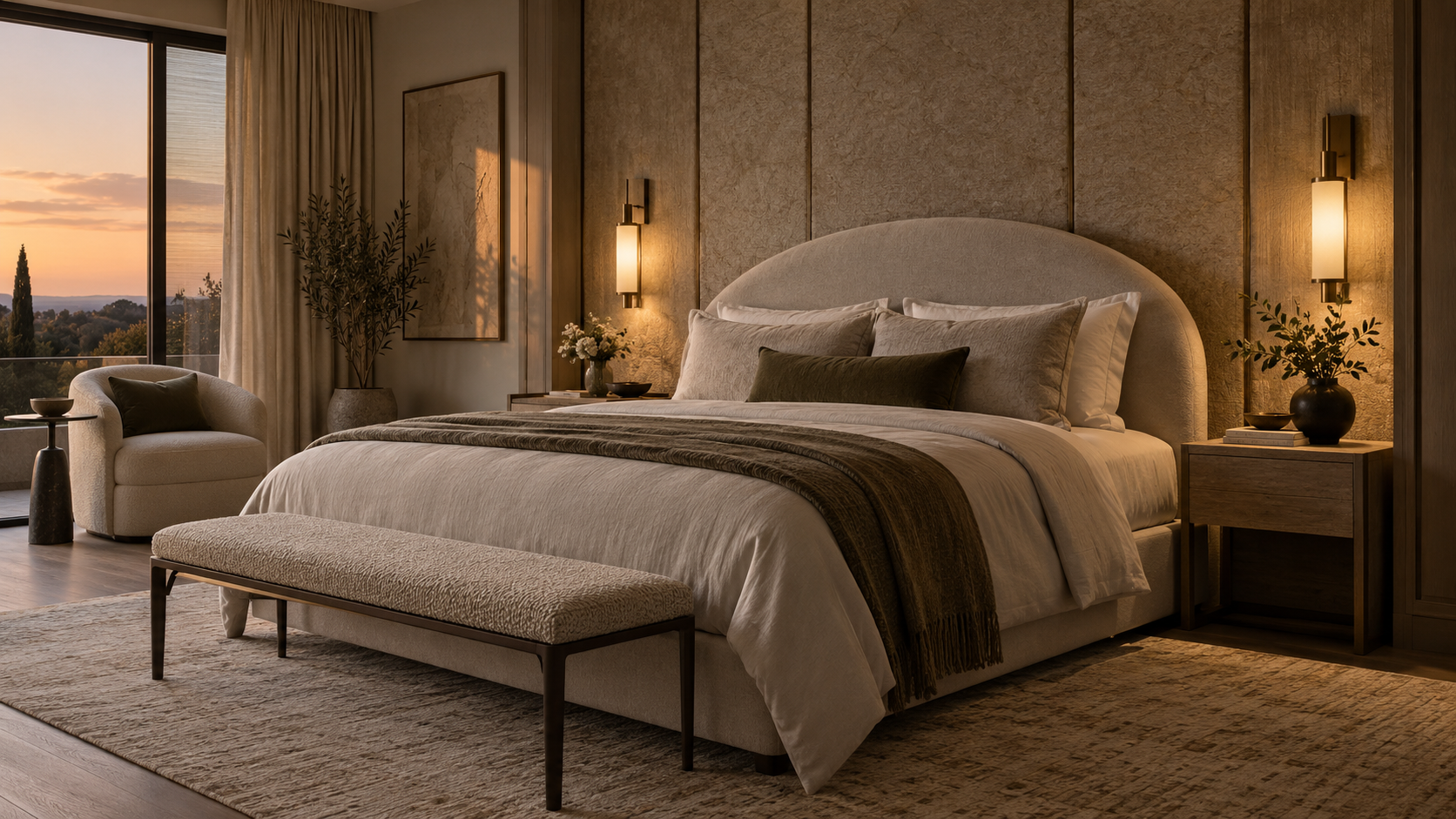
One ceiling fixture is rarely enough for a bedroom. Combine general lighting with bedside reading lights, a soft wall wash, and a small accent near artwork or storage. This gives you control over the mood without needing to change the entire room.
Warm bulbs are usually more relaxing in the evening, while daylight should be allowed to enter through light-filtering curtains or blinds. If the room has a darker palette, use several low-intensity sources instead of one bright fixture. The aim is a soft, even glow that makes the room feel comfortable from every angle.
Finish with thoughtful details
The final layer should reflect how you want the bedroom to feel, not simply add more objects. A framed print, a ceramic lamp, a plant suited to the available light, or a beautifully folded throw can be enough. Repetition helps: echo the tone of the wood in a picture frame, repeat a soft color in the cushions, or match the texture of the rug with the curtains.
Window treatments deserve special attention. Full-length curtains can add height and softness, while blackout lining may improve comfort in a bright room. In a small bedroom, keeping the curtains close to the wall color reduces visual breaks and makes the room feel more spacious.
Create comfort that lasts
A beautiful bedroom should remain easy to live with. Choose washable textiles where possible, leave enough room to clean around furniture, and avoid filling surfaces with items that need constant rearranging. Durable materials and flexible accessories allow the room to evolve without requiring a complete redesign.
If you are refreshing the room on a modest budget, start with the bedding, lighting, and window treatment. These changes are felt every day and can transform the atmosphere more effectively than buying many small accessories. A single well-chosen headboard or rug can also provide a strong foundation for future updates.
Bedroom design ideas: frequently asked questions
What is the best color for a relaxing bedroom?
There is no single best color, but soft warm neutrals, muted greens, gentle blues, and earthy taupes are easy to layer and usually create a calm atmosphere.
How can I make a small bedroom look larger?
Use furniture that fits the room, keep the center open, choose built-in or vertical storage, and use a restrained palette so the eye can move through the space.
How many light sources should a bedroom have?
A practical bedroom benefits from general lighting, bedside lighting, and at least one softer accent source. The exact number depends on the size and layout of the room.
How do I make a bedroom feel luxurious without overspending?
Focus on quality-looking bedding, warm layered lighting, full-length curtains, a well-sized rug, and fewer carefully chosen accessories rather than many decorative pieces.