Small Entryway Storage Ideas for a Calm and Organized Home
Discover practical small entryway storage ideas using slim shoe cabinets, benches, wall hooks, baskets, and renter-friendly solutions for a calmer home.
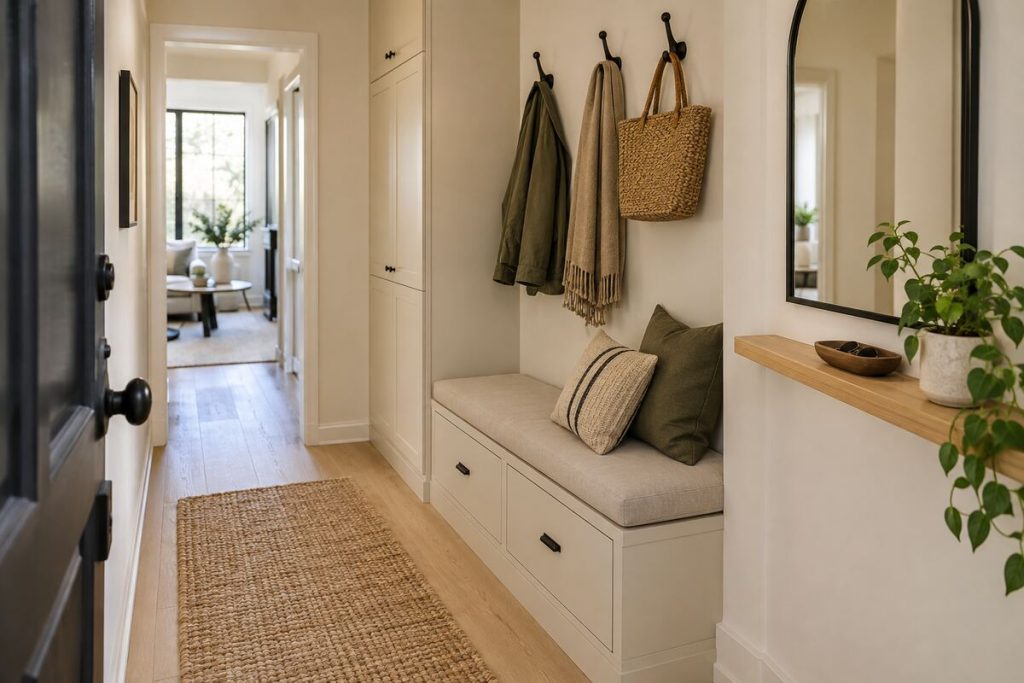
The entryway is one of the smallest areas in many homes, yet it has to manage some of the busiest moments of the day. Shoes arrive wet, bags are dropped in a hurry, keys disappear, and coats collect faster than expected. The best small entryway storage ideas do more than hide clutter: they create an easy routine for leaving and returning home.
A successful compact entrance needs three things—a clear path, a defined place for daily essentials, and enough visual calm to feel welcoming. You do not need a large mudroom or expensive custom cabinetry. With the right combination of closed storage, wall-mounted pieces, and carefully chosen accessories, even a narrow hallway can work beautifully.
Start With the Way You Actually Use the Door
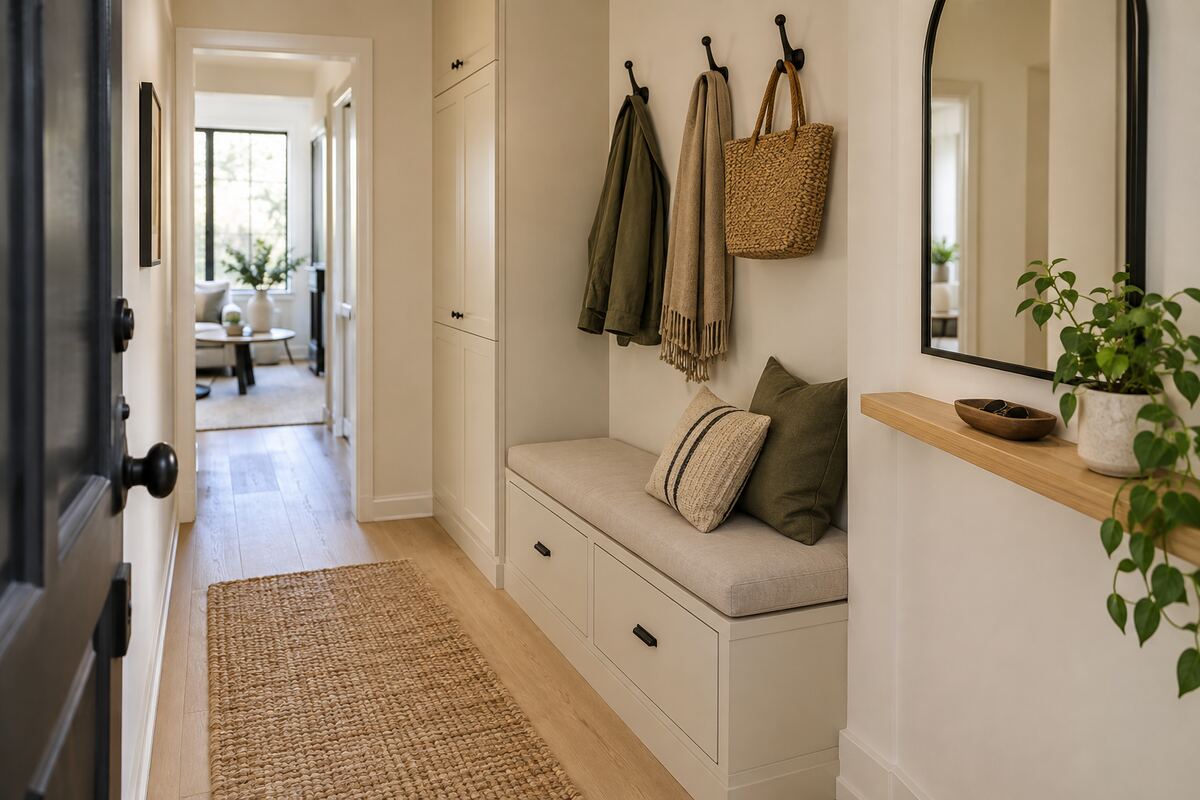
Before buying baskets or furniture, watch what happens when you enter the home. Where do you naturally put your keys? Which shoes are worn most often? Do bags end up on the floor because the hooks are too high or too far away? Storage works best when it follows existing behavior instead of trying to replace it with an unrealistic routine.
Make a short list of the objects that truly pass through the entrance every day. For most households, that includes keys, shoes, one or two coats, a handbag or backpack, mail, and perhaps a dog lead or umbrella. Seasonal equipment and rarely worn footwear should live elsewhere. A small entry becomes easier to organize when it is not expected to store the entire wardrobe.
Measure the narrowest point of the passage, including the swing of the door. Mark the dimensions of a possible cabinet or bench on the floor with removable tape. This simple test reveals whether the room will still feel comfortable when someone is sitting down, opening a drawer, or carrying shopping bags inside.
Use Vertical Storage to Protect Floor Space
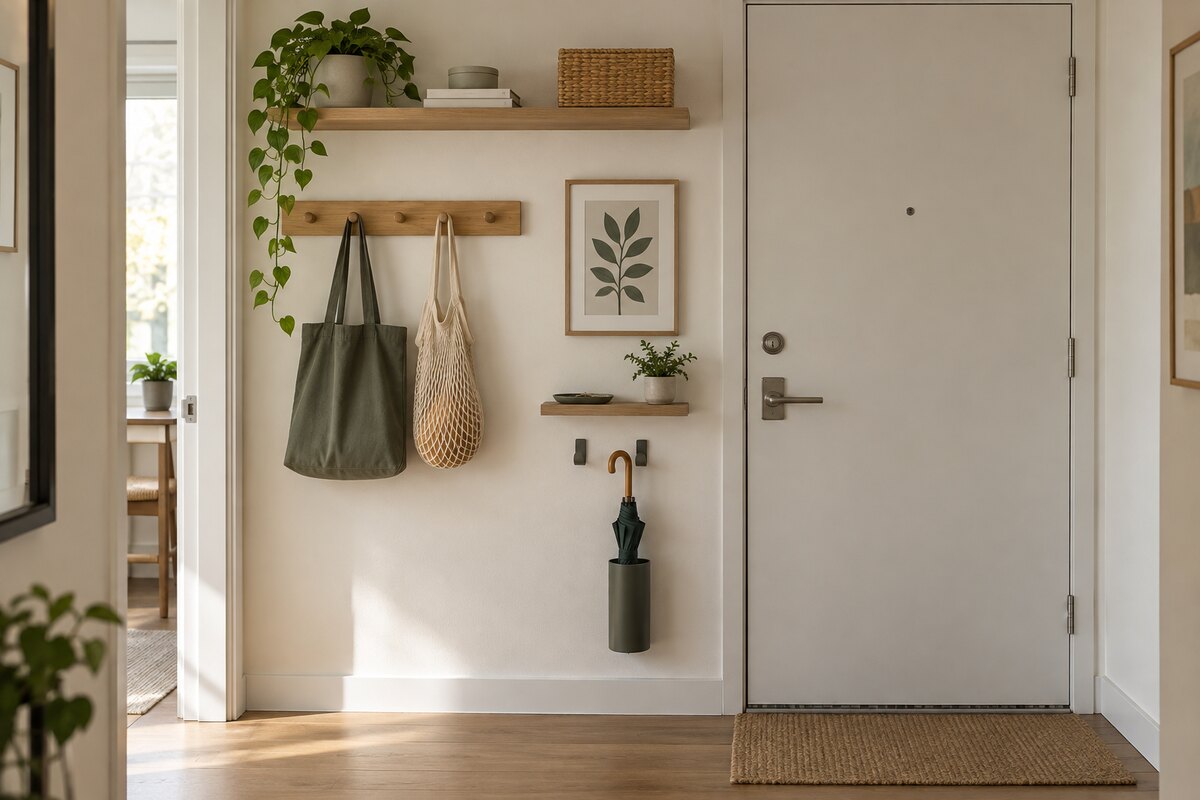
Walls are the most underused storage surface in a narrow entrance. A continuous peg rail is often more flexible than separate hooks because bags, scarves, hats, and baskets can move as your needs change. Install everyday hooks at a comfortable height, then reserve the space above for a floating shelf holding lighter or less frequently used pieces.
A high shelf is ideal for a lidded basket of seasonal accessories, but it should not become an open pile of unrelated objects. Limit the display to one basket and a small decorative element, such as a plant or framed print. This balance keeps the wall practical without making it visually heavy.
In a family home, add a lower row of hooks that children can reach themselves. Giving everyone an assigned position is more effective than expecting all coats and bags to fit on one crowded hook. Mount every rail into suitable wall fixings and respect the weight recommended by the manufacturer.
Choose a Bench That Does More Than Provide a Seat
A bench makes it easier to put on shoes and signals that the entry is a purposeful zone. In a small space, however, it should also provide storage. Drawers create the calmest appearance because they completely hide footwear and accessories. Open cubbies are faster to use, while baskets soften the look and contain smaller items.
Choose a shallow design that does not interrupt the walking route. A firm cushion in a washable fabric adds comfort without requiring several decorative pillows. If the entrance is extremely tight, a narrow stool that slides beneath a floating console can offer occasional seating without permanently occupying the passage.
Keep only the current season’s most-used shoes near the door. The bench should not become a long-term shoe archive. Rotating footwear every few months preserves space and makes cleaning the floor much easier.
Hide Shoes in a Slim Cabinet
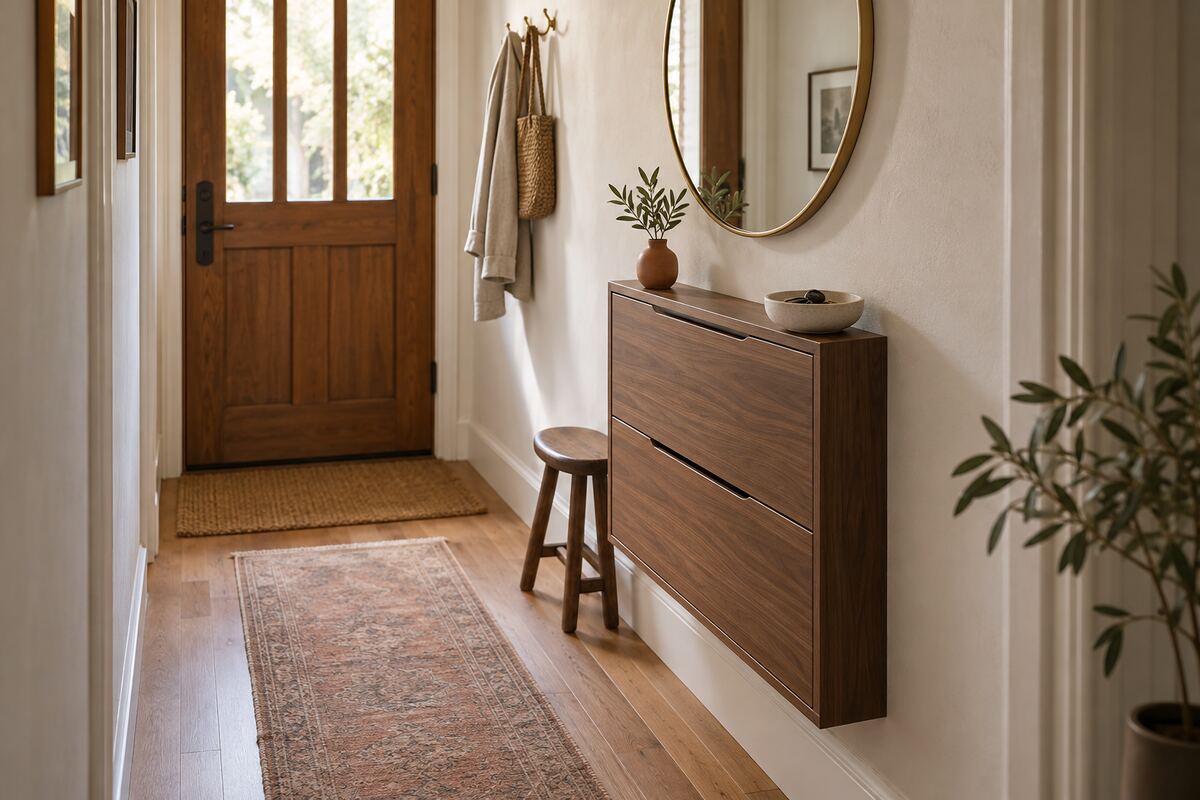
Shoes are often the main source of entryway clutter. A tilt-out cabinet stores them vertically, allowing the unit to remain much shallower than a conventional cupboard. Wall-mounted models also expose more floor, which makes a narrow hallway look lighter and allows a vacuum or mop to pass underneath.
Check the internal dimensions before purchasing; high-top shoes and larger sizes may not fit every compartment. Leave a washable boot tray near the door for wet or muddy footwear rather than placing it immediately inside closed furniture. Good organization should protect the cabinet as well as the floor.
The top of a slim cabinet can serve as a landing strip for keys, but keep it controlled. One ceramic bowl, a small vase, and perhaps a tray for outgoing mail are enough. A mirror above the cabinet adds depth and lets you check your appearance before leaving. For more ways to decorate tight areas without clutter, see our guide to small space decor accessories.
Create a Small Landing Zone for Keys and Mail
Loose everyday objects need a destination close to the door. A shallow floating ledge can hold a key bowl, wallet, and sunglasses while occupying only a few inches of depth. If several people use the entrance, divide a small tray into personal sections or give each person a compact wall pocket.
Paper is more difficult because it multiplies quickly. Use one vertical holder for items that require action and recycle unwanted mail immediately. Avoid storing documents permanently in the entryway. Once a week, move important papers to a desk or filing area and return the holder to empty.
If phones charge near the entrance, keep cables fixed to the back or underside of the shelf rather than hanging into the walkway. The surface should remain easy to wipe and simple to reset in less than a minute.
Build a Renter-Friendly Entryway Without Built-Ins
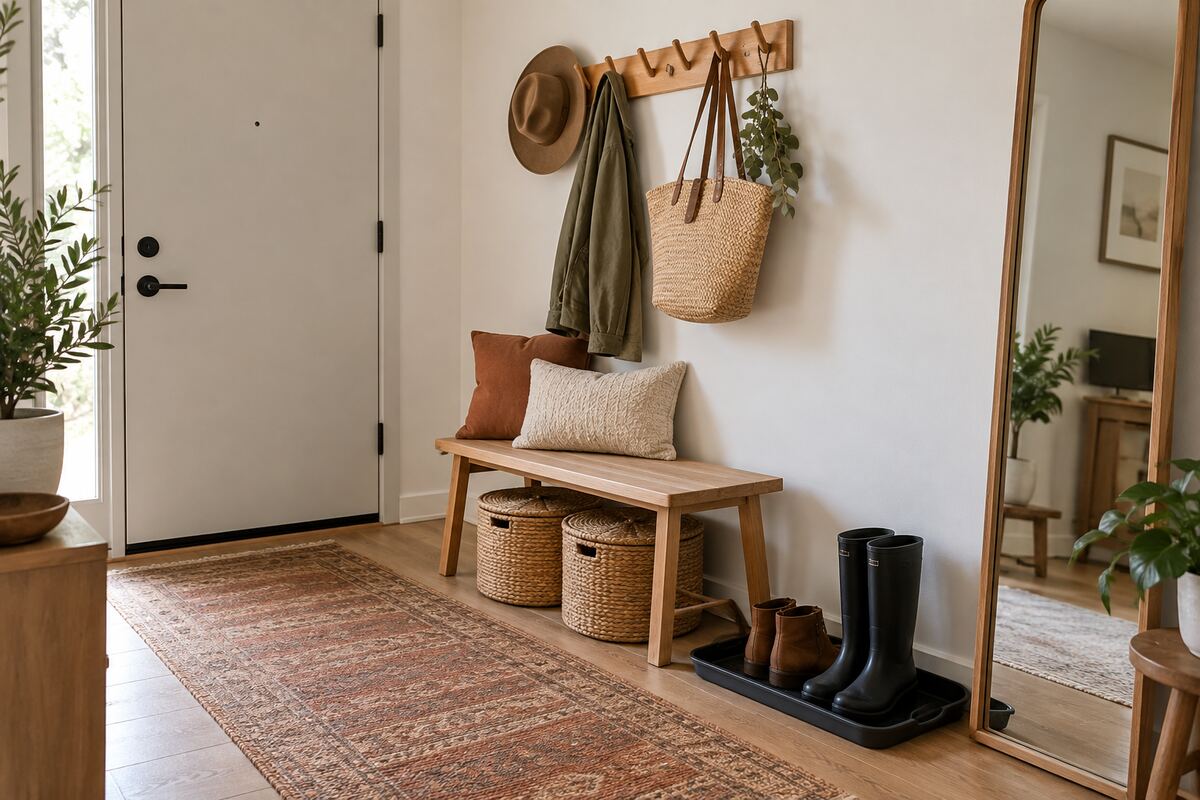
Renters can achieve an organized entrance with pieces that move to the next home. Begin with a narrow freestanding bench and matching lidded baskets. Add a leaning mirror where it cannot be knocked over, a durable runner, and a boot tray for wet weather. These elements define the entrance even when the apartment opens directly into the living room.
For wall storage, use only removable systems that are rated for the weight you intend to hang, or ask permission to install a properly anchored peg rail. Adhesive hooks can be useful for lightweight accessories, but they are not a safe substitute for permanent fixings when holding heavy coats or bags.
Choose adaptable furniture rather than pieces made for one exact location. A simple bench can later work at the foot of a bed, and baskets can move into a closet or living room. That flexibility makes a renter-friendly solution more economical over time.
Use Baskets to Contain Categories, Not Hide Chaos
Baskets are valuable because they soften hard cabinetry and conceal visually busy items. Their purpose should still be specific. One basket might hold hats and gloves, another reusable shopping bags, and another children’s outdoor accessories. Mixing unrelated objects in a deep basket only moves the clutter out of sight.
Lidded baskets create the calmest look on open shelves. Open baskets are faster for daily routines and work well inside cubbies. Leave enough clearance above each container so it slides out easily; if using it feels awkward, people will place objects beside it instead.
Natural woven textures suit many decorating styles, while washable fabric bins are lighter for children. Repeat one basket material or color throughout the entry so separate storage pieces read as one system.
Design a Family Drop Zone That Everyone Can Maintain
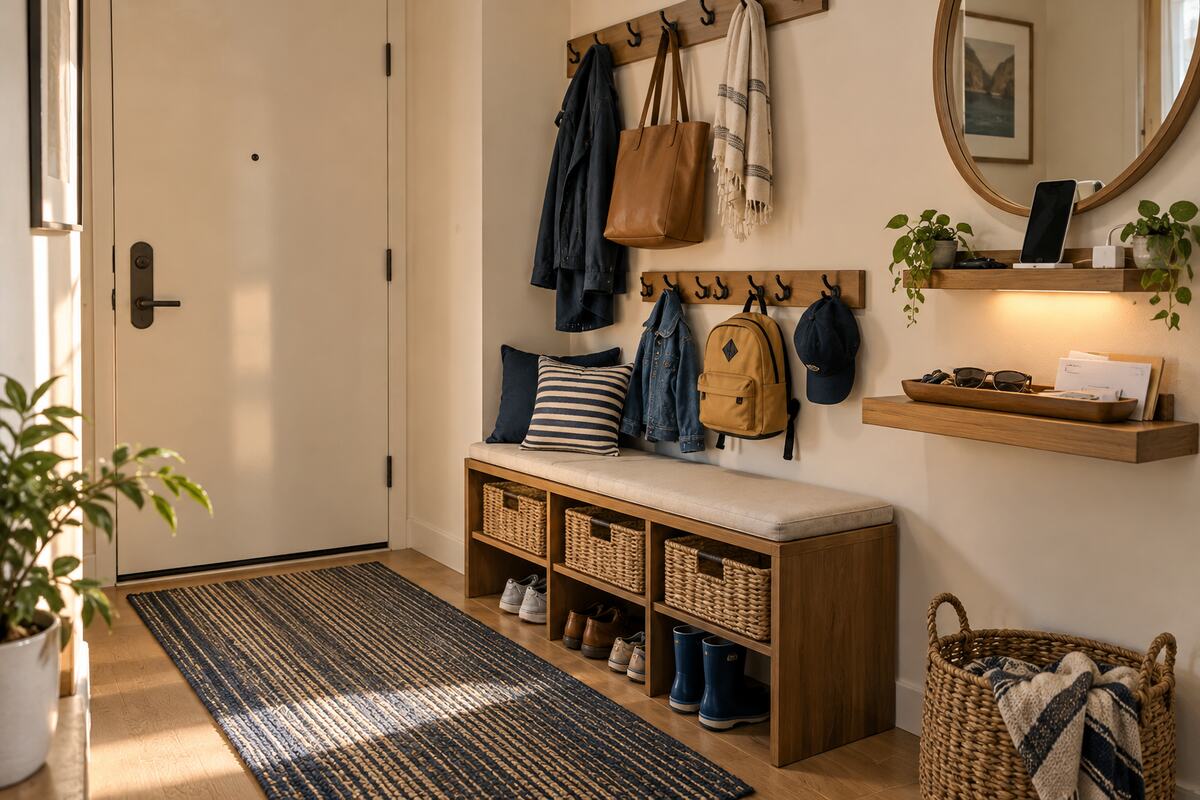
A family entrance needs clear zones rather than more storage. Give each person one hook and one basket or cubby. School bags should hang where children can reach them, while adult coats can occupy the higher rail. Frequently worn shoes belong in the lower compartments; everything else moves to bedroom closets.
Add a small tray for keys and outgoing items, plus a safe charging point if devices routinely enter and leave the home. Avoid placing a large noticeboard in a very narrow hallway, where paper can quickly become visual clutter. A compact weekly list or one pocket for forms is usually enough.
The system must be easy to reset. If cleaning the entry requires opening several boxes and moving decorative objects, it will not remain organized. Aim for a routine that takes each person less than a minute: hang the bag, place the shoes, empty the pockets, and move on.
Make the Entrance Feel Larger With Light and Repetition
Storage solves the practical problem, but visual choices determine whether the entrance feels cramped. A mirror positioned to reflect daylight can brighten the area, while a runner draws the eye along the hallway. Choose a rug that allows the door to open freely and can handle frequent cleaning.
Repeat materials already used in nearby rooms so the entry feels connected to the home. If the living area features pale oak and black metal, use the same combination for hooks, shelves, or mirror frames. This continuity is especially valuable in open-plan apartments where the entrance is visible from the main room.
Good lighting matters at night. A warm ceiling fixture provides general light, and a discreet wall light or LED beneath a shelf can illuminate the landing zone. Keep the palette relatively quiet and let one plant, textile, or piece of artwork provide personality.
Avoid the Storage Mistakes That Make an Entry Feel Smaller
The most common mistake is adding furniture before reducing belongings. A larger cabinet rarely fixes an overflowing collection; it often narrows the walkway and encourages more accumulation. Declutter first, then buy storage sized for the items that remain.
Avoid too many open hooks, small containers, and decorative signs. Every visible object adds information for the eye to process. Combine small items inside one tray, use closed storage for shoes, and leave part of each surface empty. These principles also appear in our broader guide to small space decorating ideas.
Finally, do not block switches, vents, radiators, or the full opening of the door. Storage must support safe movement through the home. Measure carefully and test the layout before fixing anything permanently.
Keep the Entryway Organized With a Simple Reset
Even a well-designed entrance needs a small maintenance habit. Return keys and bags to their places every evening, move mail once a week, and rotate seasonal footwear when the weather changes. Wipe the landing surface and shake out the runner regularly so the first view of the home stays fresh.
The goal is not a perfectly empty hallway. A successful small entryway contains the things you use, makes them easy to find, and still offers a calm welcome. When storage follows your routine and every item has a clear boundary, the entrance can feel generous even when its dimensions are modest.