Bedroom Closet Organization Ideas for a Calm and Functional Space
Create a calm, functional bedroom closet with practical ideas for hanging space, drawers, seasonal storage, shoes, lighting, and easy daily upkeep.
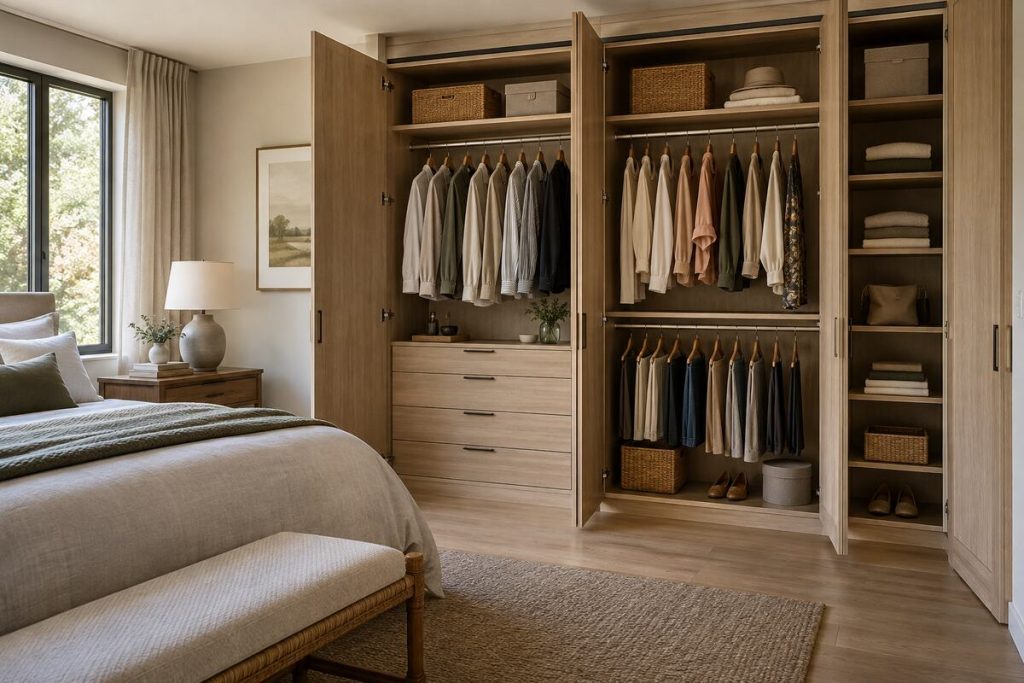
A well-organized bedroom closet does more than make clothes easier to find. It creates a calmer start to the day, protects the pieces you own, and prevents visual clutter from spilling into the rest of the room. The best bedroom closet organization ideas are not based on buying the most containers. They begin with understanding what you wear, how you get dressed, and which parts of the current closet slow you down.
Whether you have a compact reach-in closet or a generous built-in wardrobe, the same principle applies: frequently used items should be easy to see and reach, while occasional belongings can live higher or farther back. The following approach will help you build a closet that feels orderly, looks refined, and remains practical long after the initial tidy-up.
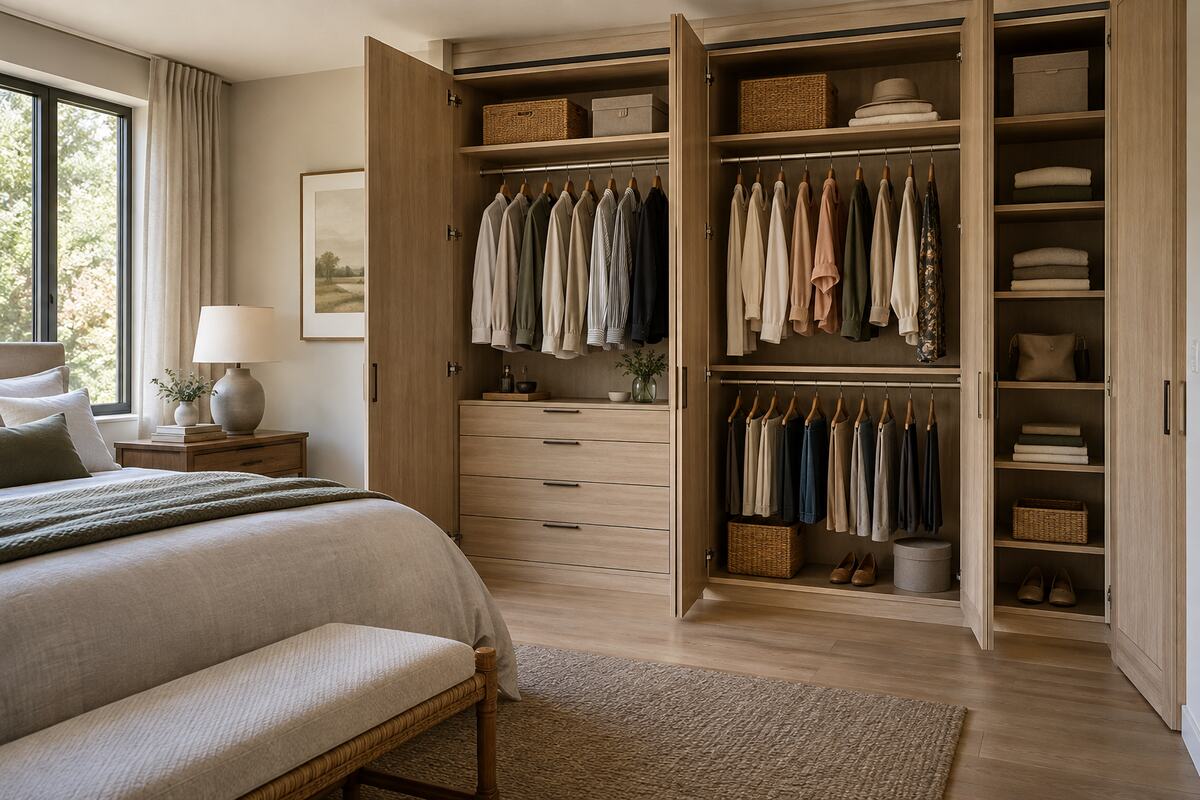
Audit the Closet Before Buying Organizers
Emptying the entire closet can feel dramatic, but it gives you an accurate picture of both your wardrobe and the available space. Work by category rather than pulling everything out at once: start with shirts, then trousers, dresses, shoes, and accessories. This keeps the process manageable and makes duplicates easier to spot.
Create four simple groups: keep, relocate, repair, and release. Keep pieces that fit, suit your current life, and are worn with reasonable frequency. Relocate items that belong elsewhere, such as travel equipment or household linens. Put anything needing a button, hem, or cleaning into a small repair basket with a deadline. Donate or responsibly recycle pieces that no longer serve you.
Do not judge each item only by whether you might wear it someday. Ask whether you would choose it over similar options you already own. This produces a wardrobe with more breathing room and makes every later organizing decision easier. A calmer closet also supports the restful feeling described in our guide to designing a calm and beautiful bedroom.
Measure the Space and Map the Categories
Before ordering shelves or baskets, measure the closet’s width, depth, and height. Note door openings, baseboards, outlets, lights, and any section that becomes difficult to reach when the doors are open. Measure the clear space beneath hanging clothes too; a short-shirt section may have enough room for drawers or shoes, while a dress section will not.
Next, estimate how much space each category genuinely needs. If most of your wardrobe consists of shirts and folded knitwear, one long rail and many shoe cubbies will be a poor match. Write down the approximate width required for short hanging, long hanging, folded clothes, shoes, bags, and small accessories. This simple inventory prevents attractive but inefficient layouts.
Assign the easiest-to-reach zone to the items used most often. Everyday tops, trousers, underwear, and current-season shoes belong between shoulder and knee height. Special-occasion clothing, spare bedding, and travel bags can occupy upper shelves. This is the closet equivalent of good kitchen planning: storage should follow the sequence of real routines.
Give a Small Reach-In Closet Better Structure
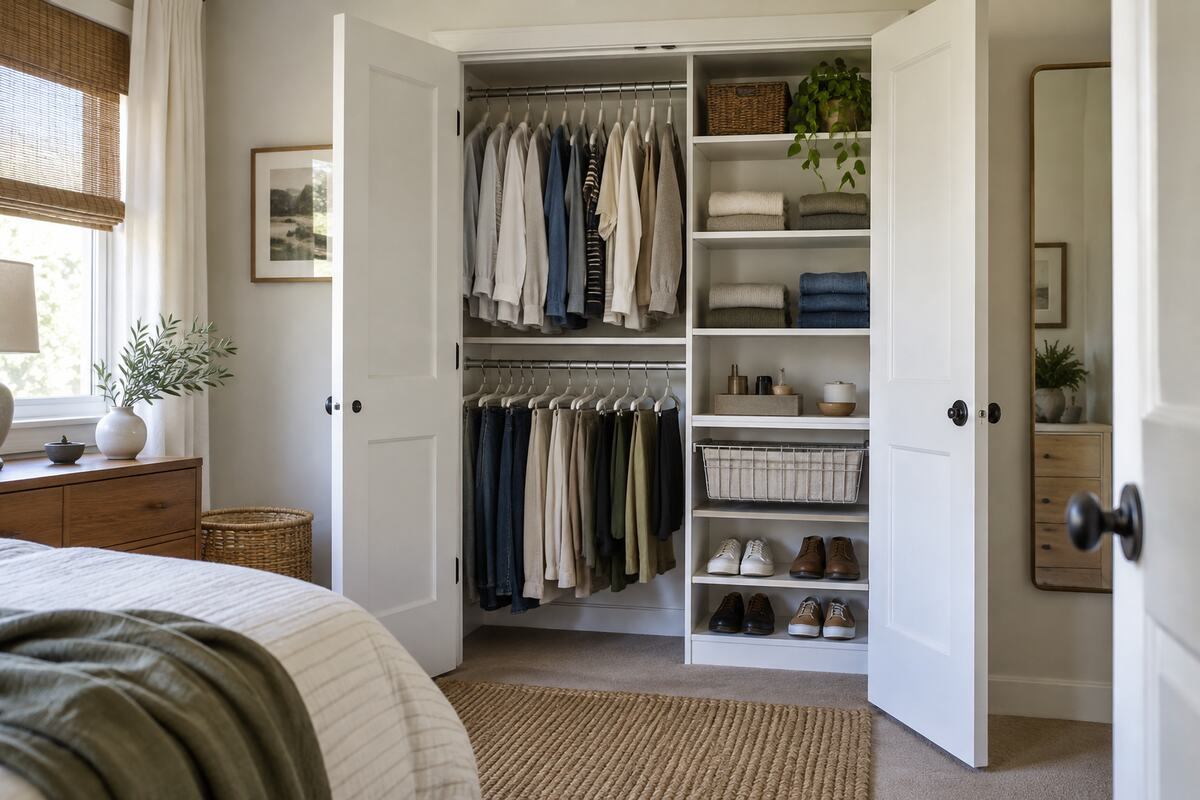
A small closet benefits from strong vertical organization. One continuous rail often leaves a large area of unused air below shirts and jackets. If your wardrobe contains plenty of shorter garments, add a second rail beneath part of the existing one. Keep a separate full-height section for dresses, coats, and long trousers.
A slim shelf tower can hold knitwear, denim, bags, or labeled baskets without consuming the entire closet. Adjustable shelves are especially useful because folded stacks, handbags, and boots all require different clearances. Keep stacks low enough that removing one garment does not topple the rest. Shelf dividers can stop sweaters and bags from drifting sideways.
Use the back of a hinged door for lightweight accessories, but avoid deep organizers that collide with clothes or prevent the door from closing. In a closet with sliding doors, prioritize the visible central zones and avoid placing daily items where one door panel always blocks them. These strategies pair well with broader small-space decorating ideas that make every surface earn its place.
Divide Hanging Space by Garment Length
Grouping hanging clothes by type and length makes the rail look cleaner and reveals usable space underneath. Arrange jackets together, then shirts, skirts, trousers, and long garments. Within each group, you can sort by color if it helps you assemble outfits, but category and length are usually more useful than a perfect rainbow.
Slim, consistent hangers reduce visual noise and often fit more comfortably on a rail. Choose hangers suited to the garment: broad or shaped hangers support structured jackets, while non-slip hangers help delicate tops stay in place. Leave enough space for clothing to move; tightly compressed fabrics are harder to browse and may wrinkle.
If the rail bows or brackets feel loose, solve that problem before adding more weight. Follow the manufacturer’s load guidance for modular components, and anchor new supports appropriately for the wall construction. A closet should be efficient, but it also needs to be safe and durable.
Use Drawers and Dividers for Small Items
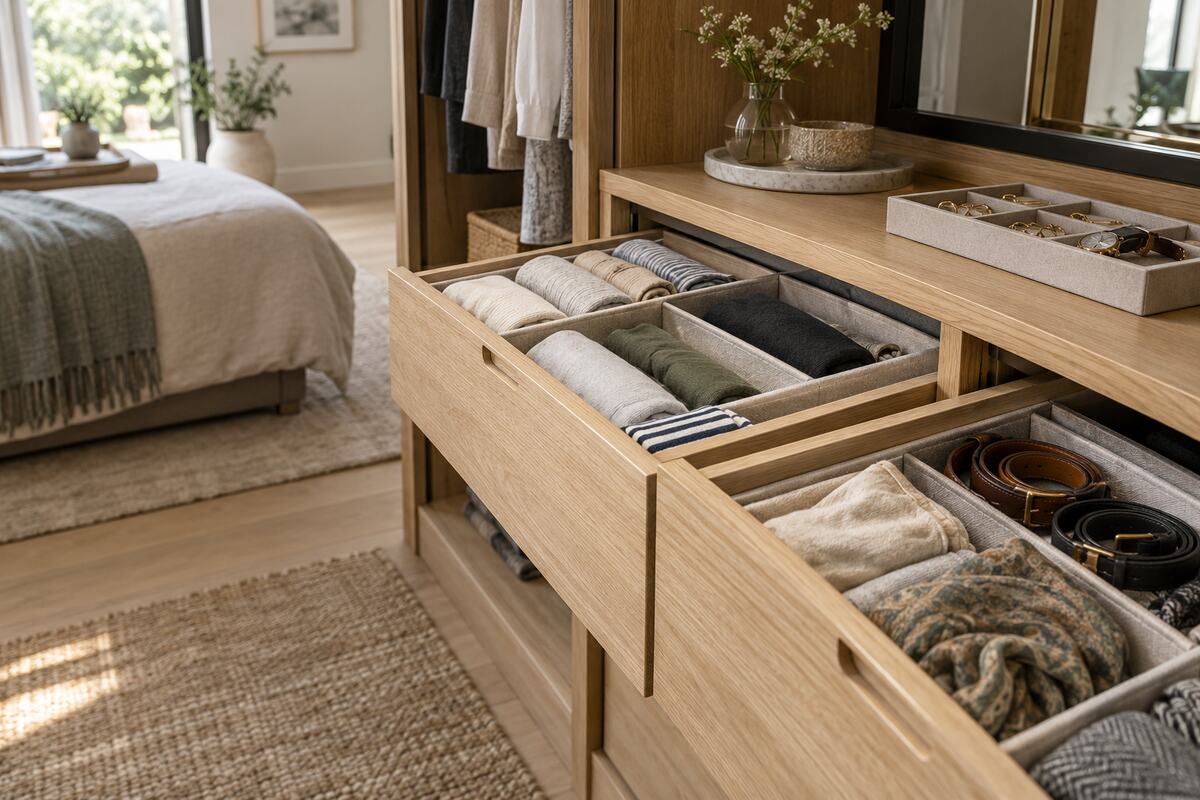
Drawers are valuable because they hide small items while keeping them close to the dressing area. However, a wide empty drawer quickly becomes a mixed layer of socks, belts, jewelry, and scarves. Use shallow trays or adjustable dividers to create boundaries that match the contents rather than forcing everything into identical compartments.
Fold soft items vertically when the fabric allows it, so each piece remains visible from above. This method works well for T-shirts, sleepwear, workout clothes, and casual tops. Avoid packing a drawer so tightly that you must lift out a row to reach something underneath. A little open space makes the system faster to use and easier to reset.
Place the most frequently opened drawers around waist height. Less-used items can go lower, while delicate jewelry benefits from a shallow, lined tray. Give every category a limit. When the sock compartment is comfortably full, for example, edit that category before expanding into a second drawer.
Reserve Upper Shelves for Seasonal Storage
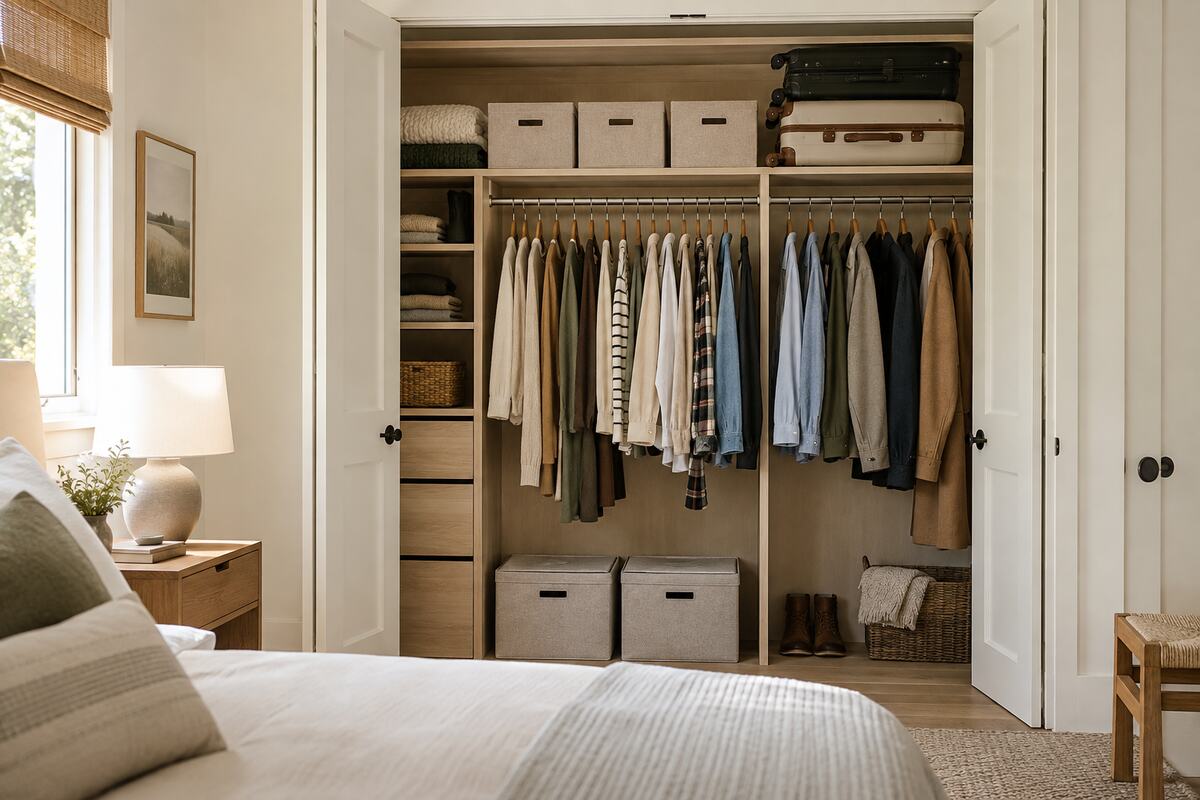
High shelves are ideal for lightweight items you do not need every week: out-of-season clothing, spare blankets, occasion bags, and travel accessories. Choose boxes that fit the shelf depth without hanging over the edge. Breathable fabric containers suit many clean textiles, while closed boxes provide more protection from dust. Make sure everything is fully dry before storing it.
Labels should be specific enough to save time. “Winter knitwear” or “beach accessories” is more useful than “miscellaneous.” If opaque containers are stacked, attach the label where it remains visible. Keep a stable step stool nearby instead of climbing on a chair, and avoid placing heavy suitcases where lifting them down would be awkward.
Rotate seasonal clothes as a small ritual rather than treating it as a major overhaul. When the weather changes, bring the next season to the accessible zone, check condition and fit, then clean and store what is leaving. This is also an easy moment to refresh the room using a few of our budget-friendly home makeover ideas.
Organize Shoes, Bags, and Accessories
Shoes are easiest to maintain when each pair has a defined position. A low shelf, adjustable rack, or shallow cubby keeps pairs together and off the floor. Place everyday footwear near the closet entrance and special-occasion pairs higher or farther back. Allow damp shoes to dry before returning them to an enclosed closet.
Store structured bags upright with gentle support inside so they keep their shape. Soft bags can be folded without crushing hardware or handles. Shelf dividers prevent handbags from leaning into one another, and small hooks work well for frequently used belts or necklaces if they do not snag nearby clothing.
Accessories become clutter when they are invisible or spread across too many locations. Keep categories together and display only pieces you actually enjoy seeing. A small tray for watches and daily jewelry is often more effective than a large organizer filled with rarely worn items.
Create a Practical Dressing Zone
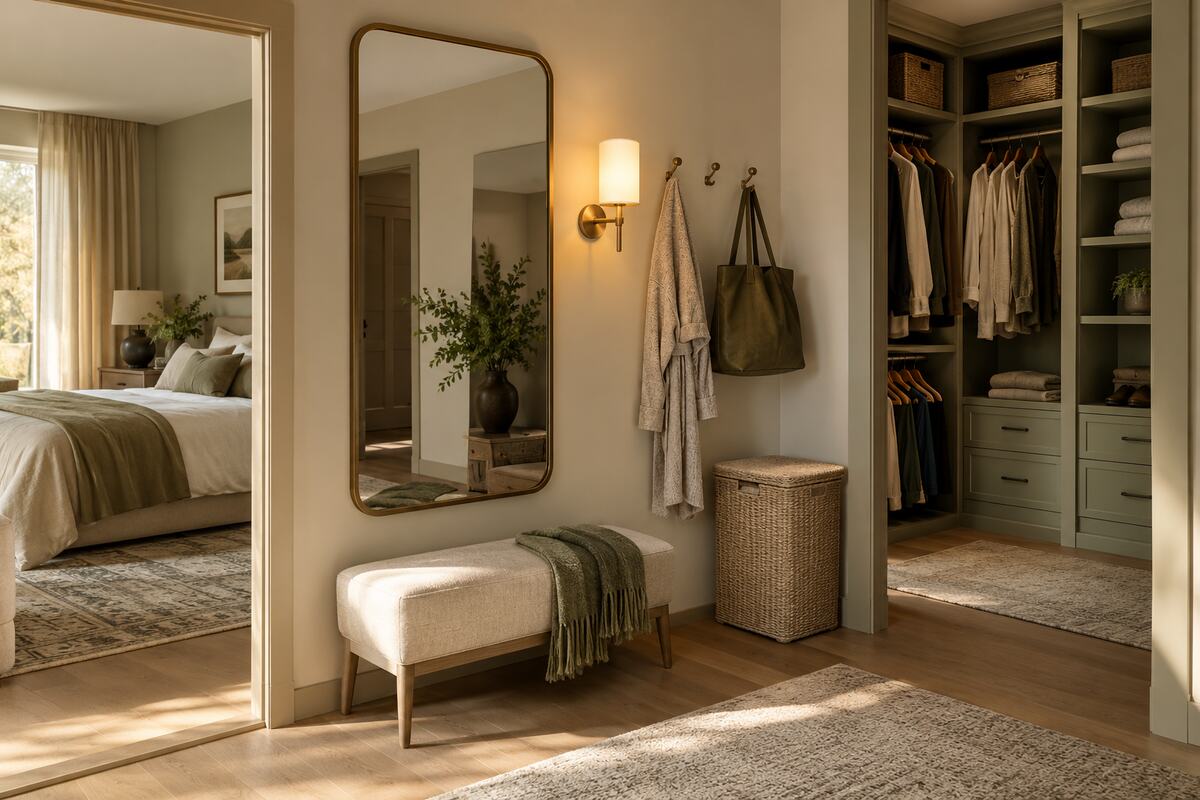
The area immediately beside the closet matters almost as much as the interior. A full-length mirror lets you check an outfit without walking across the room. If space permits, add a small bench or stool for putting on shoes. In a tight bedroom, choose a narrow seat that can tuck under a console or select an upholstered storage bench that serves more than one purpose.
Place a laundry hamper within a natural step of where you undress. This single decision prevents worn clothes from accumulating on a chair. Two or three hooks can hold tomorrow’s outfit, a robe, or a bag in use, but too many hooks can become permanent clutter. Keep them for items in active rotation.
Let the closet materials relate to the bedroom rather than feeling like a separate utility area. Repeating the room’s light wood, soft neutral textiles, or dark metal accents creates continuity. For more ways to make this transition feel inviting, see our warm bedroom design guide.
Improve Closet Lighting and Airflow
Good lighting helps you distinguish colors, spot stains, and use the entire closet. A ceiling fixture with a neutral, comfortable light is useful in a walk-in closet, while rechargeable motion lights can brighten shelves in a reach-in design. Keep portable lights clear of fabrics and follow the product’s installation instructions. Hardwired electrical work should be handled by a qualified professional.
Avoid blocking vents, and give recently worn garments time to air before placing them in tightly packed storage. Closets on exterior walls may need particular attention to humidity and condensation. Address any persistent moisture source instead of masking it with fragrance. Clean shelves and vacuum the floor during seasonal rotations so dust does not build up behind boxes.
Maintain the System With a Simple Routine
An organized closet lasts when returning an item is easier than leaving it out. Leave a few empty hangers grouped together, keep the hamper accessible, and avoid lids on containers used every day. Spend five minutes once a week returning stray pieces to their categories and removing empty dry-cleaning bags or receipts.
Once a month, check the small trouble spots: the chair beside the wardrobe, the floor under long clothes, and the shelf where bags collect. These areas reveal where the system does not match your habits. Rather than blaming yourself, adjust the storage. A basket near the chair or a hook near the mirror may solve the problem more effectively than another full reorganization.
The most common closet mistake is designing for an idealized wardrobe instead of the one you own. Too many identical bins can hide useful items, excessive color sorting can make categories harder to find, and filling every inch leaves no room for change. Build around your real clothes, protect a little open space, and let the layout evolve.
A Calm Closet Supports a Calmer Bedroom
Thoughtful bedroom closet organization is not about achieving a showroom-perfect wardrobe. It is about reducing small daily frustrations. When categories are clear, everyday clothes are within reach, seasonal items are protected, and the dressing area supports your routine, the entire bedroom feels more settled.
Start with an honest edit, measure before you buy, and improve one zone at a time. The result will be a closet that is easier to maintain, more pleasant to use, and flexible enough to serve you as your wardrobe and home change.