Kitchen Pantry Organization Ideas for an Efficient and Beautiful Space
Organize any kitchen pantry with practical zones, accessible shelves, pull-out storage, smart containers, food rotation, and simple weekly maintenance.
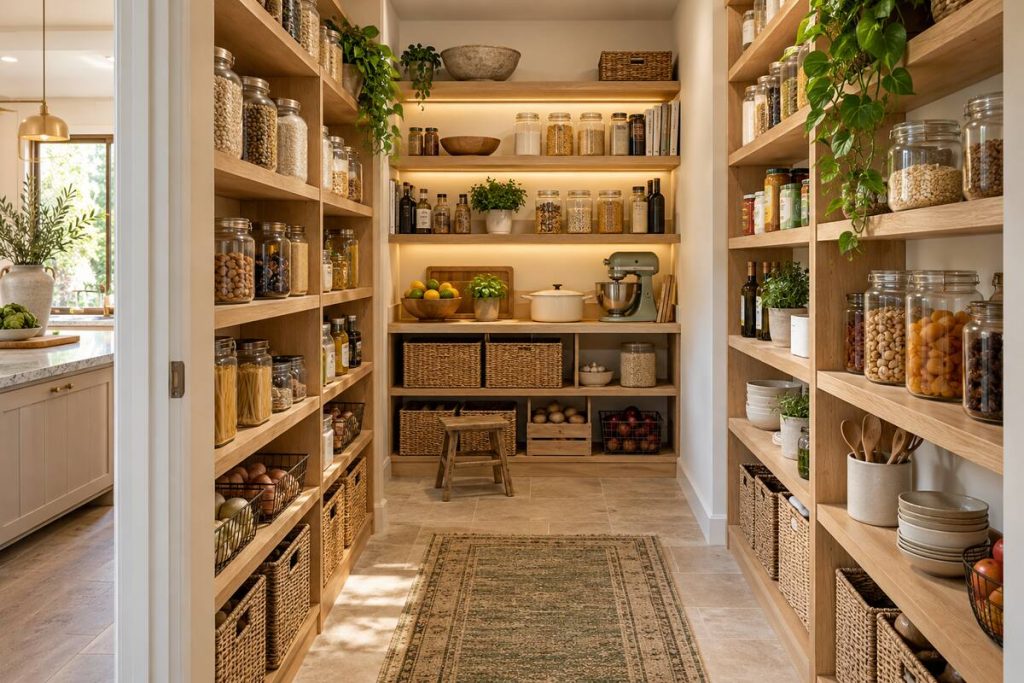
A well-organized pantry makes cooking faster, grocery shopping more accurate, and the kitchen easier to maintain. The strongest kitchen pantry organization ideas do not depend on matching containers or a large walk-in room. They begin with visibility, sensible zones, and storage that fits the food your household actually buys.
A pantry should help you see what is available, reach everyday items without moving several packages, and rotate food before it expires. That requires more than arranging products by color. Shelf depth, package height, family routines, and the weight of stored goods all affect whether a system will keep working after the first week. A practical plan can make a single cabinet as useful as a dedicated room.
Empty the Pantry and Edit Before Buying Organizers
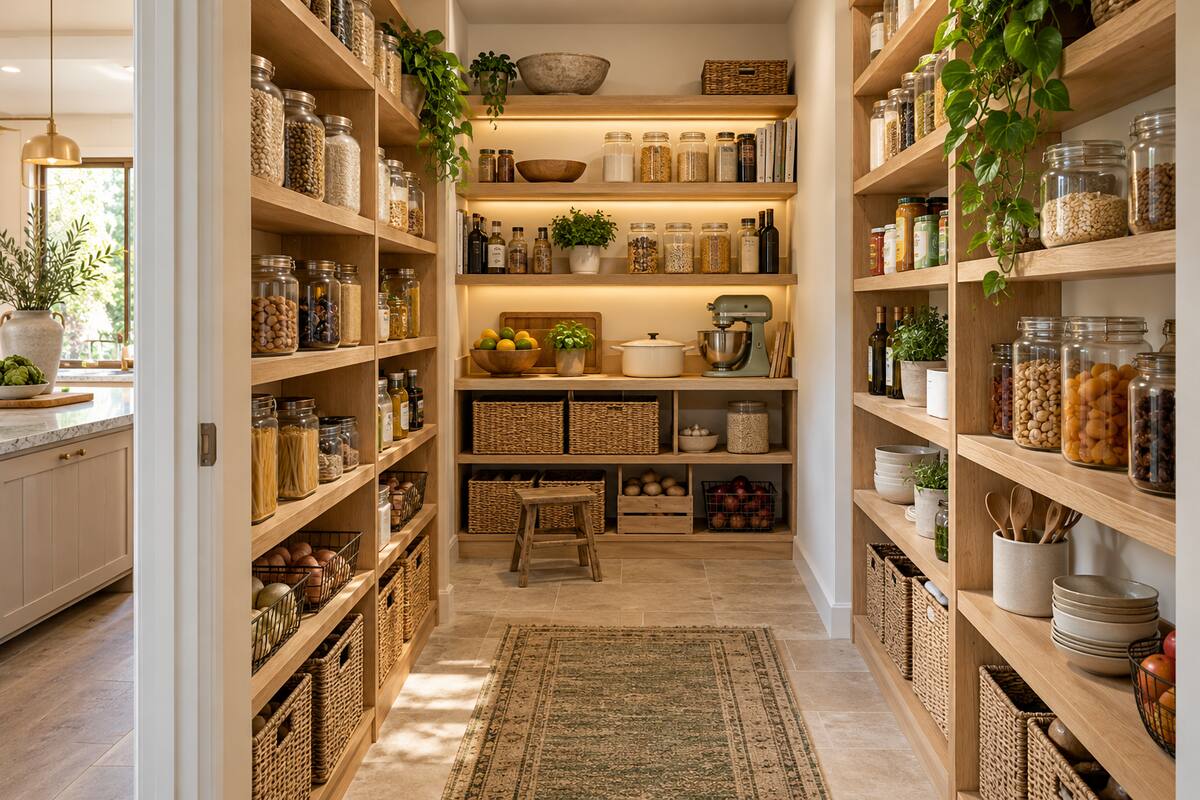
Remove everything so you can evaluate the space and the food separately. Check dates, packaging condition, and whether each item is still something your household uses. Follow local food-safety guidance when deciding what to discard. Do not keep leaking, swollen, damaged, or pest-affected packages simply to avoid waste.
Group the remaining food on a table or counter: breakfast, baking, canned goods, grains, snacks, sauces, drinks, and reserve stock. Duplicates become obvious when similar items sit together. This also reveals whether the pantry problem is insufficient space or too much backstock.
Clean shelves according to their material and let them dry fully. Inspect corners and packages for signs of pests or moisture. Measure the empty pantry before purchasing bins, risers, or drawer inserts. An attractive organizer that wastes several inches of shelf depth is not an improvement.
Measure Shelf Depth and the Door Swing
Record the width, height, and usable depth of every shelf. Note fixed shelf supports, hinges, trim, outlets, lighting, and pipes. In a reach-in pantry, confirm that baskets can pass through the door opening even if the interior is wider. Deep shelves may need pull-out bins, while shallow shelves work well for single rows of jars and cans.
Measure representative packages rather than assuming they are standard. Cereal boxes, oil bottles, appliances, and bulk bags require different clearances. Leave enough space above bins to lift them comfortably. If adjustable shelves are available, set their heights around real products instead of creating identical gaps.
Keep the floor and central walkway clear. Frequently used stools can have a designated safe position, but loose grocery bags and cartons create obstacles. The same attention to movement that improves a well-planned kitchen island also matters inside the pantry.
Create Zones That Match Daily Routines
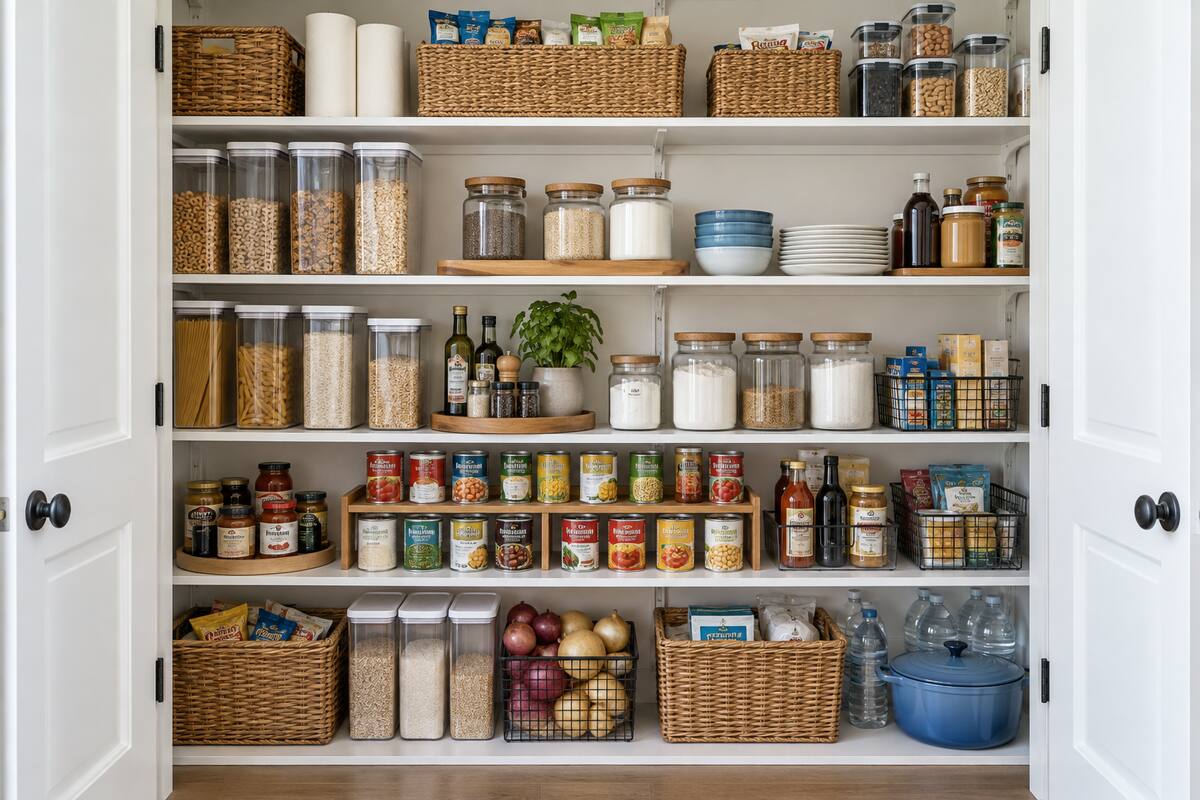
Assign each shelf area a purpose based on how food is used. Place cooking oils, grains, and sauces near one another if they are collected during meal preparation. Keep breakfast items together so cereal, oats, spreads, and tea can be found in one movement. A defined baking zone prevents small ingredients from disappearing between unrelated products.
Zones do not need signs to work. A consistent basket type, shelf position, or tray can establish a clear boundary. Use broad categories rather than creating a separate container for every ingredient. Systems with too many tiny sections take longer to restore after shopping.
Reserve one area for unopened duplicates. Backstock should not be mixed with the active package because it hides quantity and encourages opening two items at once. Before shopping, check this reserve zone so the household does not repeatedly buy what it already has.
Place Items According to Weight and Frequency
Everyday products belong between comfortable waist and eye height whenever possible. Occasional items can sit higher, while heavy bottles, bulk goods, and appliances are safer on lower shelves. Avoid storing glass or very heavy containers overhead. Follow shelf and cabinet weight limits, especially with canned goods and drinks.
Children’s approved snacks can occupy a reachable lower bin, while medicines, alcohol, cleaning products, choking hazards, and other restricted items require secure storage appropriate to the household. Food and household chemicals should not share a bin or shelf where leaks could cause contamination.
Use shelf risers for cans or short jars so back rows remain visible. A lazy Susan can improve access to sauces in a corner, but only when it turns freely without items falling. Choose organizers to solve a specific access problem rather than filling every shelf with hardware.
Make a Narrow Pantry Cabinet Work Harder
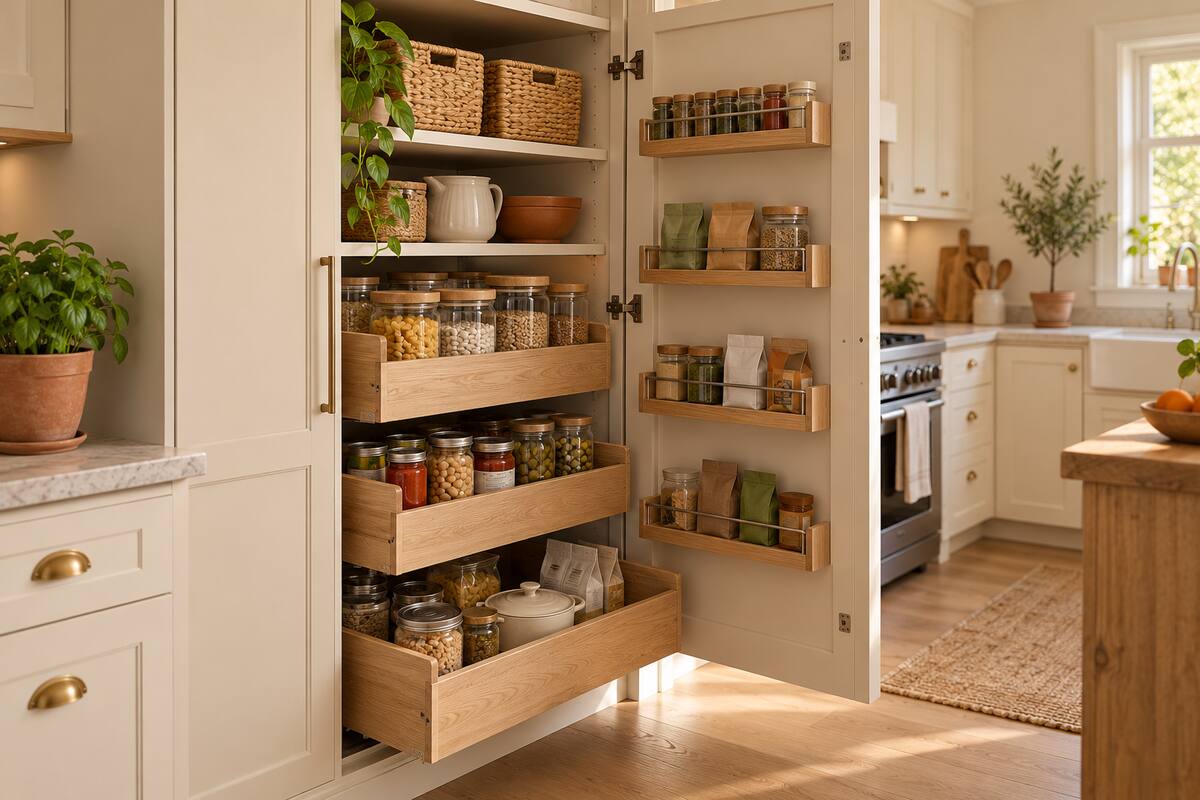
A tall pantry cabinet can hold a surprising amount when the full depth is accessible. Pull-out drawers or sturdy bins allow you to bring the back of the shelf forward. Give each drawer a broad category, and avoid stacking loose packages so high that they fall when the drawer opens.
Shallow door racks are useful for packets, spices, and small jars, provided the hinges and doors are designed for the added weight. Check that items clear the interior shelves when the door closes. Do not retrofit a heavy rack onto an unsuitable door without confirming the hardware capacity.
Use lightweight baskets on the highest shelf and keep their contents simple. A handle helps, but a step stool may still be necessary. Store the stool where it can stand fully open on a stable floor. Compact cabinetry and clear circulation also support the principles in our small-space decorating guide.
Choose Containers for Function, Not Appearance Alone
Decanting can improve visibility for ingredients purchased repeatedly in flexible bags, but it is not necessary for every product. Keep foods in original packaging when preparation instructions, allergen information, lot numbers, or dates are important. If you transfer an ingredient, retain essential information and avoid mixing a new batch into an old container before it is cleaned.
Select food-safe, airtight containers sized to the quantity you normally buy. Square and rectangular shapes use shelf space efficiently, while clear sides show remaining amounts. Glass is easy to see and clean but can be heavy; durable food-safe plastic may be more practical on high shelves or in homes with children.
Baskets work well for irregular packages that do not need an airtight seal. Choose open baskets for quick visibility and smooth, washable bins for foods that may spill. Leave a little empty capacity so groceries can be returned without rearranging the entire pantry.
Build a Baking Zone Around Complete Tasks
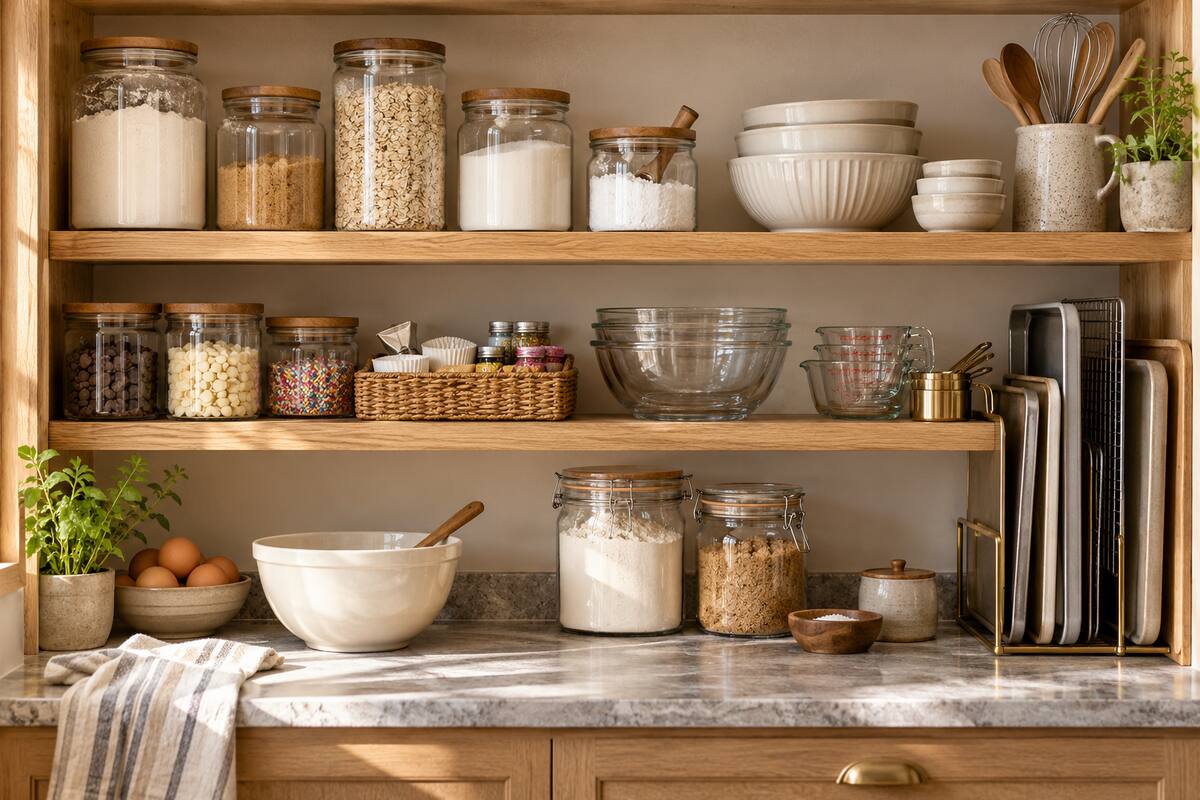
Store flour, sugar, oats, leavening, extracts, decorating supplies, and frequently used tools in one area. The objective is to gather most of a baking task from a single zone. Mixing bowls can sit near ingredients, while trays and cooling racks fit efficiently in vertical dividers when their weight is supported.
Small packets and decorating items can share a removable basket. Keep frequently used measuring tools visible or in a shallow drawer so they do not become buried behind large canisters. Wipe ingredient containers before returning them to the shelf to prevent sticky residue and pests.
If the pantry includes a counter, keep enough surface clear to set down a basket or small appliance. The materials and warmth of this zone can complement the welcoming approach in our warm modern kitchen ideas.
Set Up an Accessible Snack and Breakfast Station
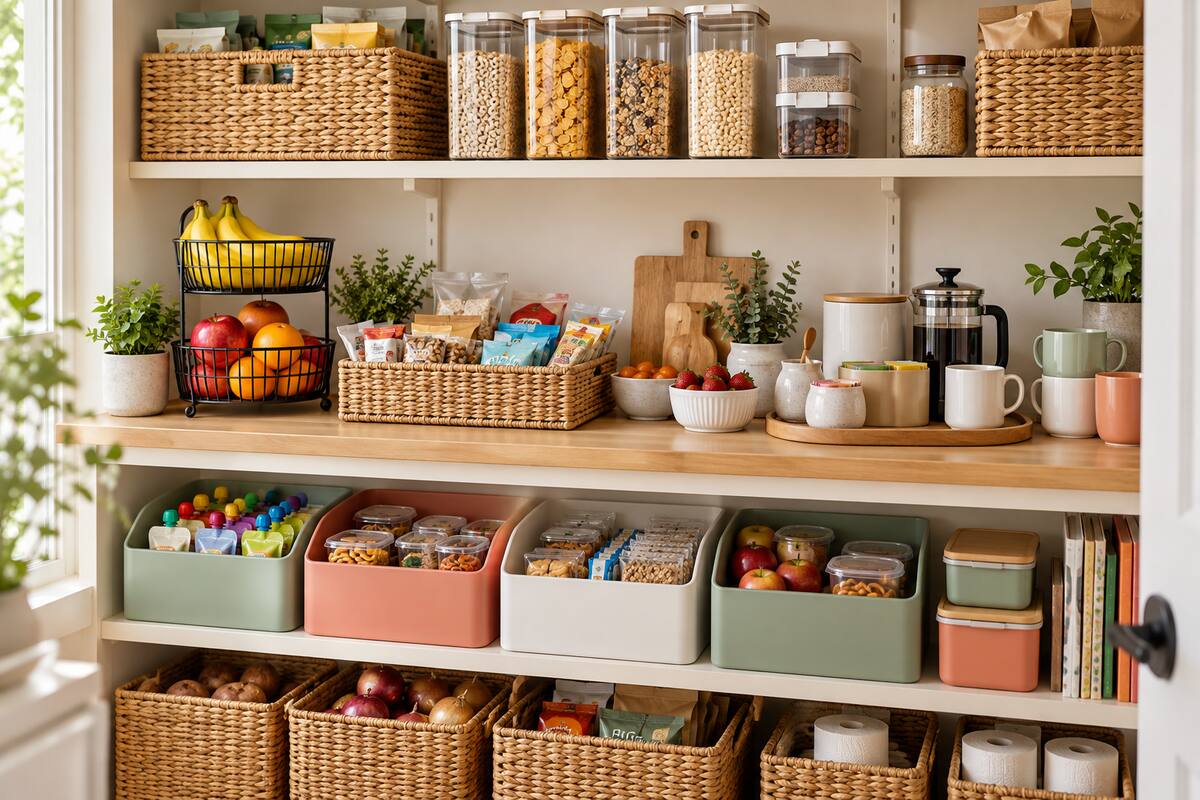
A breakfast station can hold cereal, oats, spreads, mugs, tea, and coffee supplies near one another. Use a tray for small drink-making items so it can be lifted out for cleaning. Keep heat-producing appliances in the kitchen where ventilation, clearances, and outlets are appropriate unless the pantry was specifically designed for them.
For families, assign an accessible bin to approved snacks and another to lunch-packing items. Choose unbreakable containers on low shelves. Fresh produce that is safe at room temperature needs airflow rather than a sealed decorative basket; refrigerate foods that require cold storage.
Keep the station edited. Too many open packages make it difficult to see what needs replacing. Refill only from the backstock zone and finish older products first. This simple boundary supports independence without letting one category spread across the pantry.
Rotate Food and Make Inventory Visible
Place newer purchases behind older matching products so the oldest suitable item is used first. Keep dates visible, and review the pantry before making a shopping list. A small designated area for foods to use soon can prevent them from being forgotten, but it should be checked regularly rather than becoming permanent overflow.
Buy in bulk only when the household can store and use the quantity safely. A discount is not useful if excess food blocks access or expires. Set a physical limit for each category, such as one basket or part of a shelf. When that space is full, use existing stock before adding more.
Labels can help with similar ingredients and dates, but they should be readable and easy to update. The system must still make sense without elaborate styling. Practical visibility is more valuable than a shelf that photographs beautifully but hides essential package information.
Improve Lighting, Ventilation, and Safety
Good lighting prevents duplicate purchases and helps reveal spills or damaged packages. Use approved fixtures that illuminate lower and upper shelves without heating food. Battery lights can be useful in a cabinet, but follow product guidance and check batteries regularly. Electrical work should be completed by a qualified professional where required.
Pantries should remain dry, clean, and appropriately ventilated. Do not pack goods against vents or heat sources. Keep food off a floor that may become wet, and address moisture or pest problems rather than hiding them with bins. Store fire extinguishers and emergency equipment according to local guidance, not behind deep stacks of food.
A functional pantry should also relate visually to the kitchen. Repeating one wood tone, basket material, or neutral color can create order without turning organization into decoration. For a broader refresh, our easy kitchen decorating ideas offer simple ways to connect both spaces.
Maintain the System With a Short Weekly Reset
Return food to its zone after shopping, remove empty packaging, wipe small spills, and move older products forward. A quick weekly reset is more effective than a complete reorganization every few months. If one category repeatedly overflows, adjust its boundary or buying habit instead of adding another bin automatically.
The best kitchen pantry organization ideas reduce decisions. Everyday items are visible, heavy goods sit safely, backstock has a limit, and each task has a logical home. When the system reflects real routines rather than an idealized display, the pantry remains efficient, calm, and beautiful long after the initial refresh.