Indoor Plant Styling Ideas for a Fresh and Beautiful Home
Style indoor plants with confidence using practical ideas for light, scale, planters, small spaces, kitchens, bedrooms, and easy long-term care.
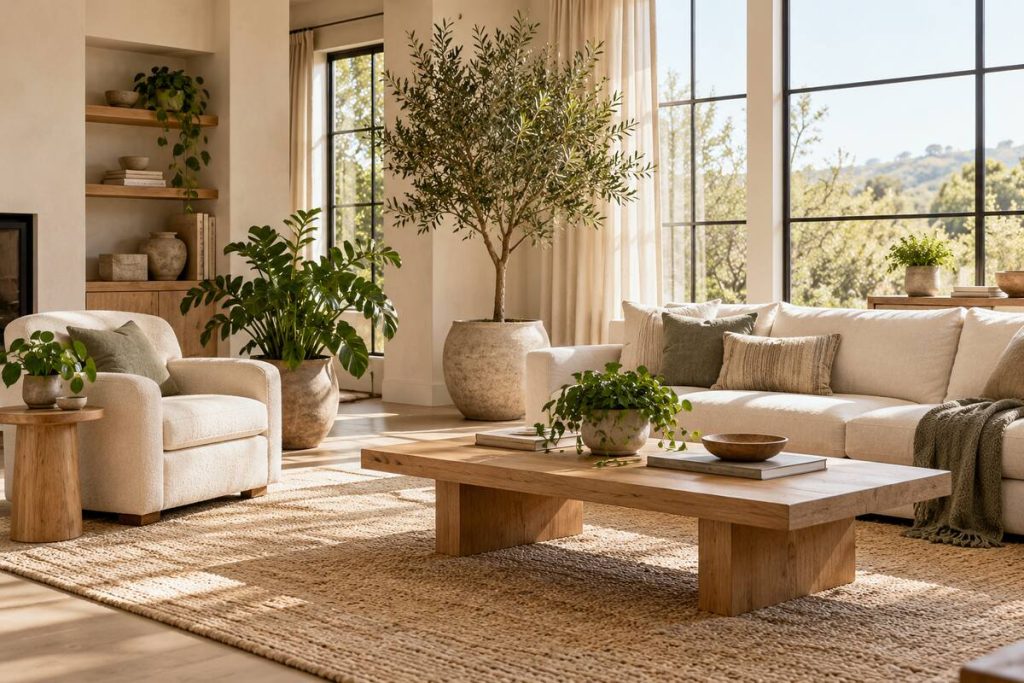
Indoor plants can make a home feel softer, more alive, and more connected to the natural world. Yet successful plant decor is not simply a matter of filling every empty surface with greenery. The most effective indoor plant styling ideas balance beauty with light, scale, circulation, and realistic care. A plant should look as though it belongs in the room while also having the conditions it needs to remain healthy.
That balance is easier to achieve when you treat plants as part of the design rather than as last-minute accessories. A tall specimen can soften a bare corner, a trailing plant can draw the eye upward, and a small herb collection can bring useful texture to a kitchen. The goal is not a perfect indoor jungle. It is a thoughtful layer of living color that supports the room’s function and your daily routine.
Begin With Light, Temperature, and Your Routine
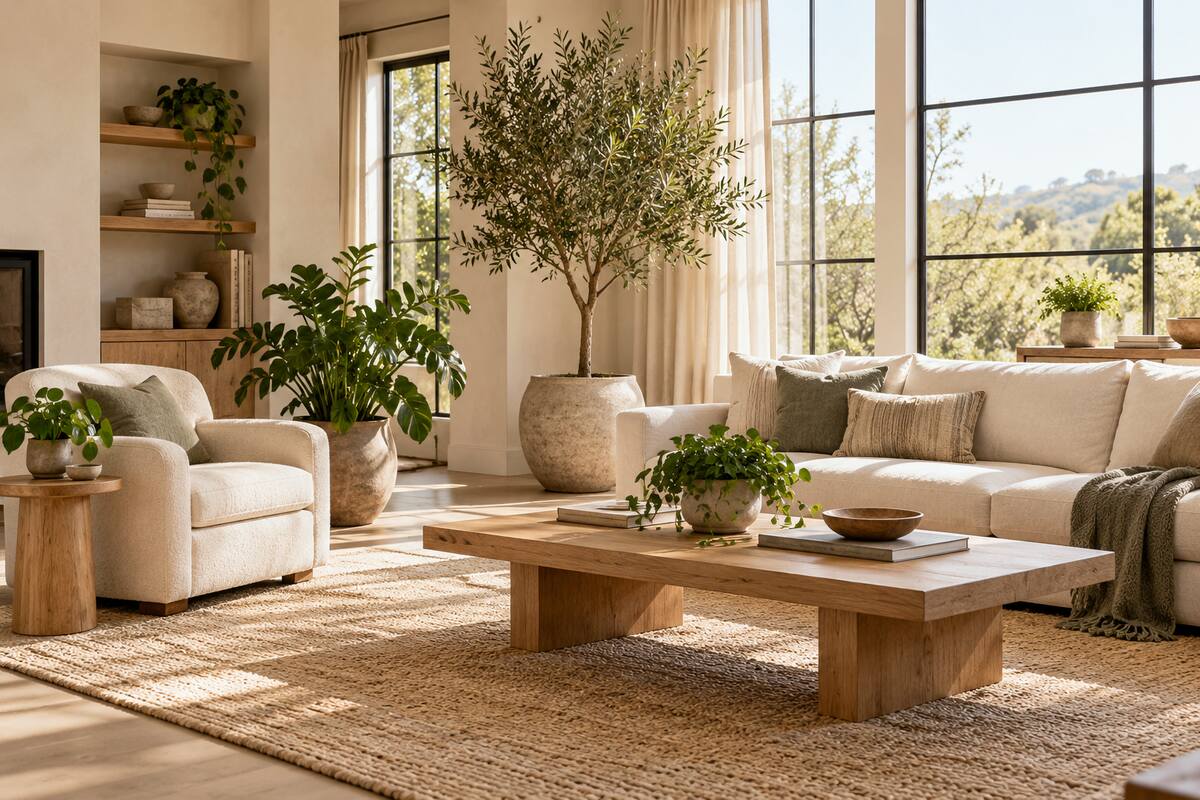
Before choosing a plant for a particular corner, observe the room at several times of day. A bright window does not always mean the same thing: direct afternoon sun can be intense, while light filtered through curtains or reflected from another building may be much gentler. Note how far the intended position sits from the glass and whether blinds are normally closed during working hours.
Choose a species according to the actual conditions, not the appearance you hope to create. Nursery labels and reputable care guides can help, but individual homes vary. Heating vents, air-conditioning, cold glass, and frequently opened exterior doors can create stressful pockets even inside an otherwise comfortable room. Move a plant if leaves repeatedly scorch, fade, or decline rather than treating its original position as permanent.
Your routine matters just as much as the light. If you travel often or tend to forget watering, start with a small collection of forgiving plants rather than many demanding varieties. Keep plants that need similar care together when practical, and place them where you can inspect the soil without moving furniture. Good styling should make maintenance easier, not hide it.
Use Plant Scale to Shape the Room
Plants influence how we read a room. One large floor plant can give an empty corner purpose, visually connect low furniture with a high ceiling, or soften the hard line of a cabinet. In many living rooms, a single substantial plant is calmer and more effective than a scattered collection of small pots.
Match the mature size of the plant to the available space. A young tree that fits perfectly beside the sofa may eventually need greater clearance from walls and curtains. Leave enough room for leaves to develop without brushing a walkway. The planter must also feel stable and proportionate; a top-heavy plant in a narrow, lightweight pot can be both visually awkward and unsafe.
Use medium plants to bridge the gap between floor level and tabletops, then add only a few small accents. This layered approach creates depth without visual noise. It works especially well with the comfortable furniture arrangements in our guide to living room design ideas.
Create an Entryway Plant Vignette
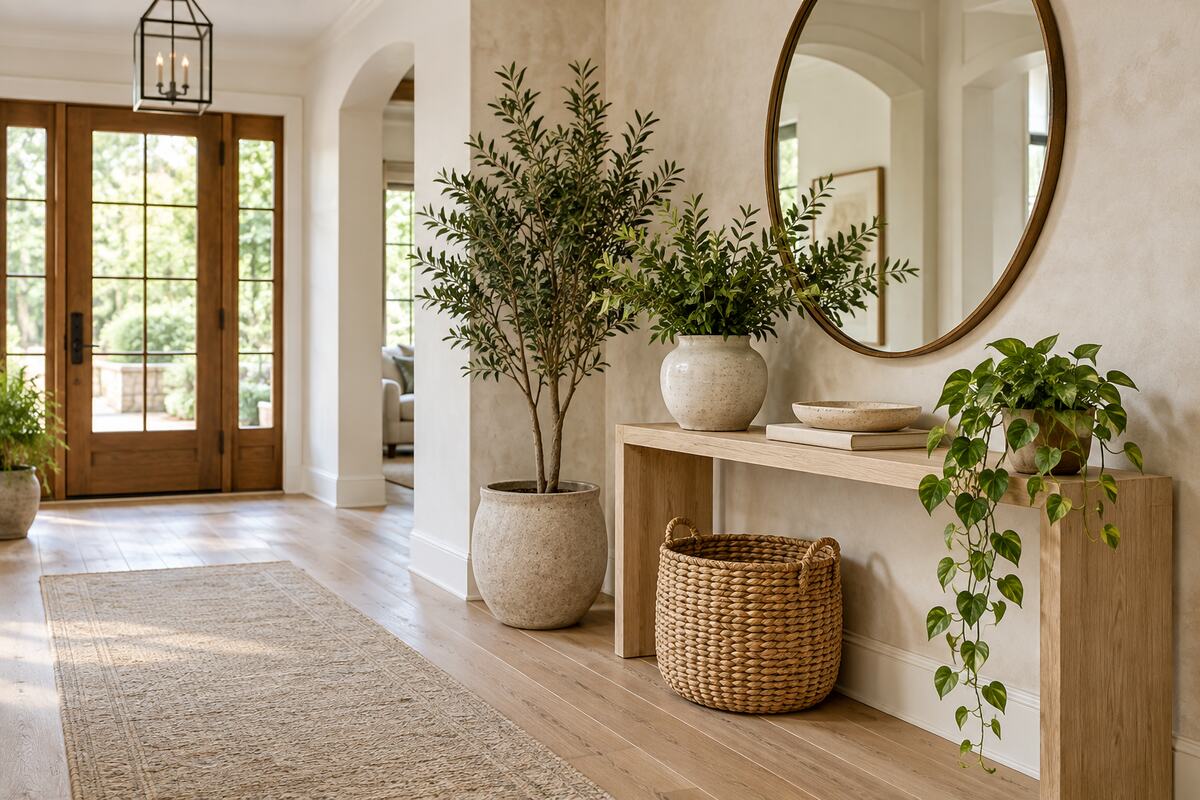
An entryway benefits from a clear focal point because it is usually seen in passing. If the space receives suitable light, pair a floor plant with one smaller plant on a console. The change in height creates a natural visual triangle, while a mirror can reflect light and make the greenery feel more present without adding another pot.
Keep the walking route open. Leaves should not brush everyone who enters, and baskets or planters should not narrow the path. A tray for keys, one lamp or decorative object, and a plant are often enough for the console surface. Leave negative space so that each element remains visible.
Repeat one material or color from the surrounding room to make the arrangement feel connected. For example, choose a warm ceramic planter that echoes a nearby lamp base, or a woven basket that relates to the rug. If the entry receives very little natural light, use preserved branches or another nonliving natural element rather than placing a real plant in unsuitable conditions.
Build Upward in a Small Space
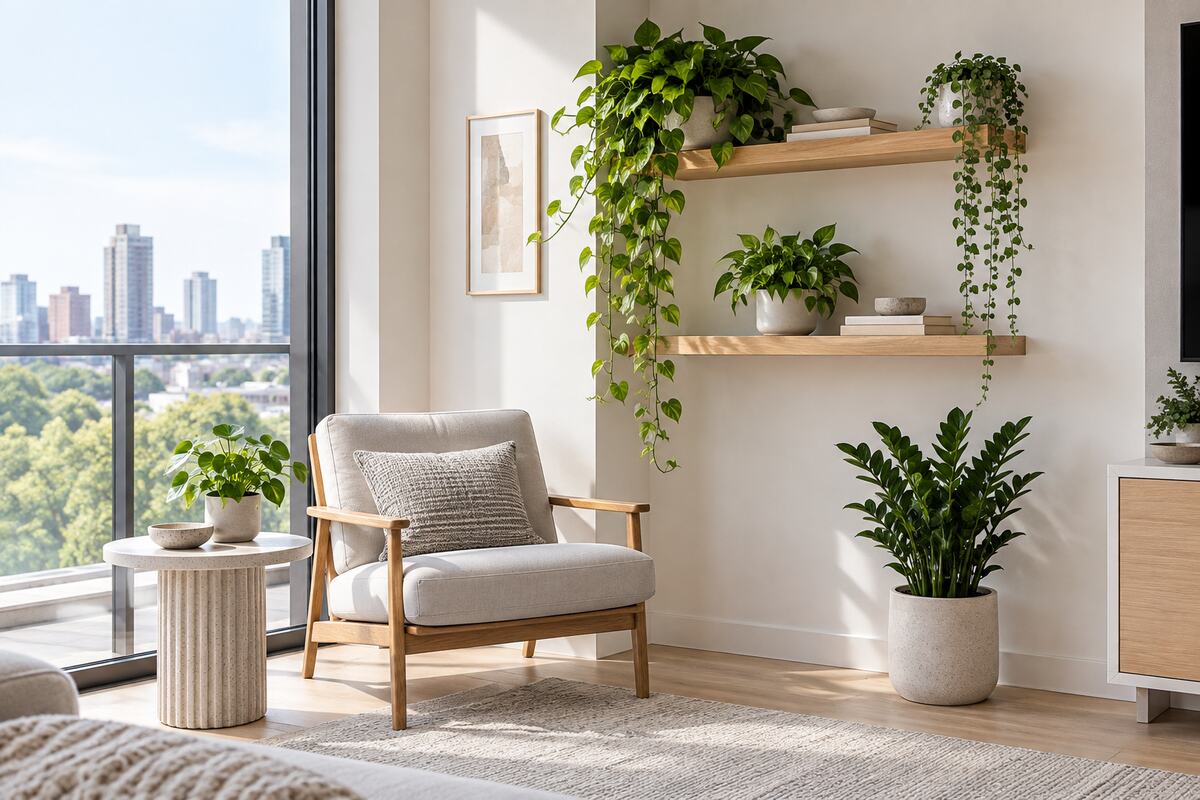
When floor space is limited, use vertical surfaces with discipline. A narrow shelf, wall-mounted ledge, or secure plant stand can introduce several levels of greenery without crowding the room. Place trailing plants higher, compact upright varieties at eye level, and one grounded plant below to connect the composition to the floor.
Avoid filling every shelf. Alternate plants with books, ceramics, or open space so leaves have room to grow and the display remains readable. Confirm that the shelf and its fixings can safely support the combined weight of pots, wet soil, and water. Use saucers or waterproof liners to protect wood and painted surfaces.
Keep the arrangement shallow near a sofa or desk so it does not project into circulation. This approach complements the techniques in our small-space decorating guide, where vertical emphasis and clear pathways help compact rooms feel more generous.
Coordinate Planters Without Making Them Identical
Planters are part of the room’s material palette. A collection feels cohesive when the containers share one or two qualities, such as warm earthy color, matte texture, or simple silhouettes. They do not need to match exactly. In fact, slight variation in shape and height often looks more collected and natural.
For a calm interior, limit the visible palette to a few materials: perhaps off-white ceramic, terracotta, and one woven basket. Use a decorative cachepot around a practical nursery pot if drainage is needed, but never allow the inner pot to stand in excess water. Protect delicate floors and furniture with stable trays that extend beyond the base.
Consider the foliage as color and texture. Broad glossy leaves create a different mood from fine, airy foliage or sculptural upright leaves. Repeat a leaf shape only when you want rhythm; contrast forms when a grouping needs more energy. The same principle applies to other decor accessories for smaller rooms: a limited palette allows texture to add interest without clutter.
Group Plants With Deliberate Rhythm
A group of plants is strongest when the heights, leaf shapes, and container sizes are clearly different. Start with the tallest plant slightly behind the others, place a medium rounded form beside it, and use a low or trailing plant to complete the arrangement. The eye should be able to move through the group rather than meet a straight row of identical pots.
Odd-numbered groupings can be useful, but they are not a rule. Two well-scaled plants can frame a window beautifully, while four small herbs may make perfect sense in a kitchen. The more important idea is hierarchy: one element should lead, supporting elements should be quieter, and enough space should remain around the collection.
View the group from the doorway and from the seat used most often. A composition that looks balanced close up can seem crowded from across the room. Rotate pots occasionally if the plant responds well to it and if growth begins leaning strongly toward the light.
Make Kitchen Greenery Useful and Uncluttered
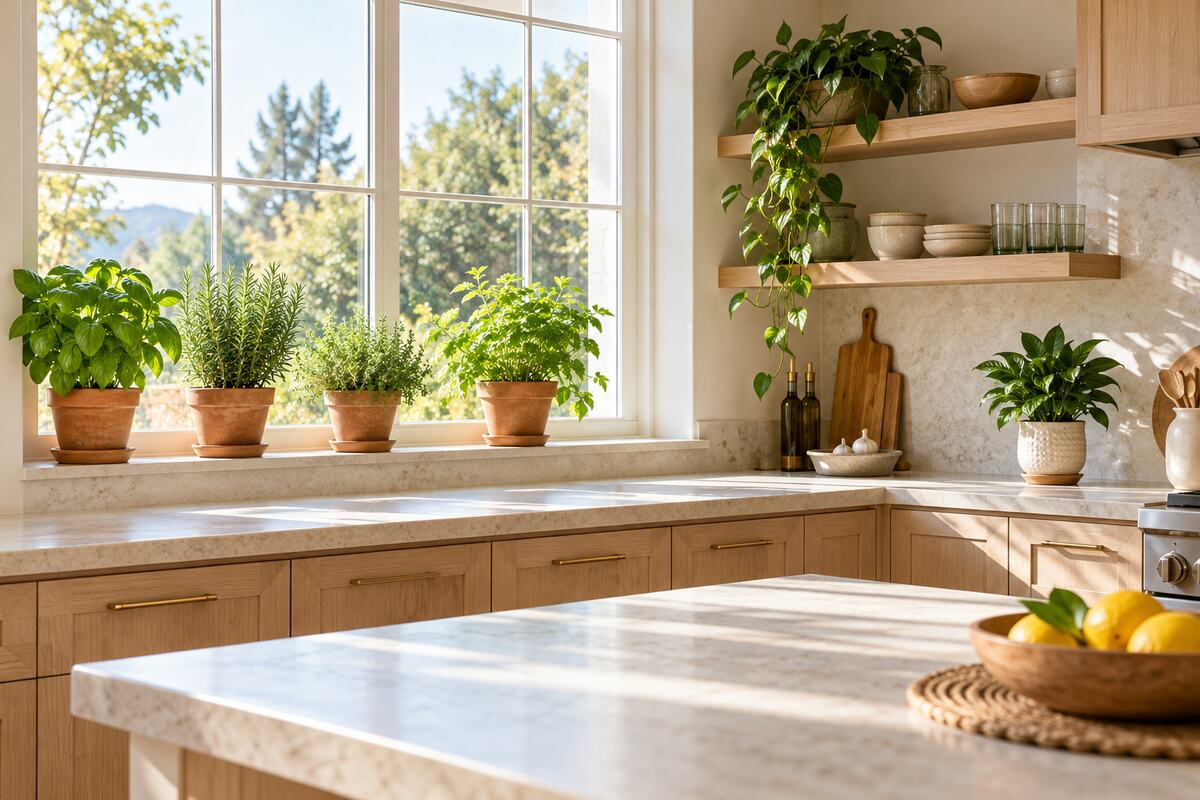
A bright kitchen window can support culinary herbs while adding fresh color to the room. Keep frequently used herbs within comfortable reach, and choose containers that are easy to lift for watering and drainage. Grouping pots on a tray protects the sill and allows the collection to be moved for cleaning.
Do not sacrifice working space for decoration. Keep plants away from open flames, intense heat, and areas where leaves will be splashed with grease or cleaning products. A trailing plant on a well-lit open shelf can soften cabinetry, but it should not hang into food-preparation zones or block a cabinet door.
Repeat the terracotta or ceramic color elsewhere in a small way, such as a fruit bowl or utensil holder. This makes the plants feel integrated with the kitchen design. For a broader approach to warmth and natural materials, explore our warm modern kitchen ideas.
Keep Bedroom Plant Styling Restful
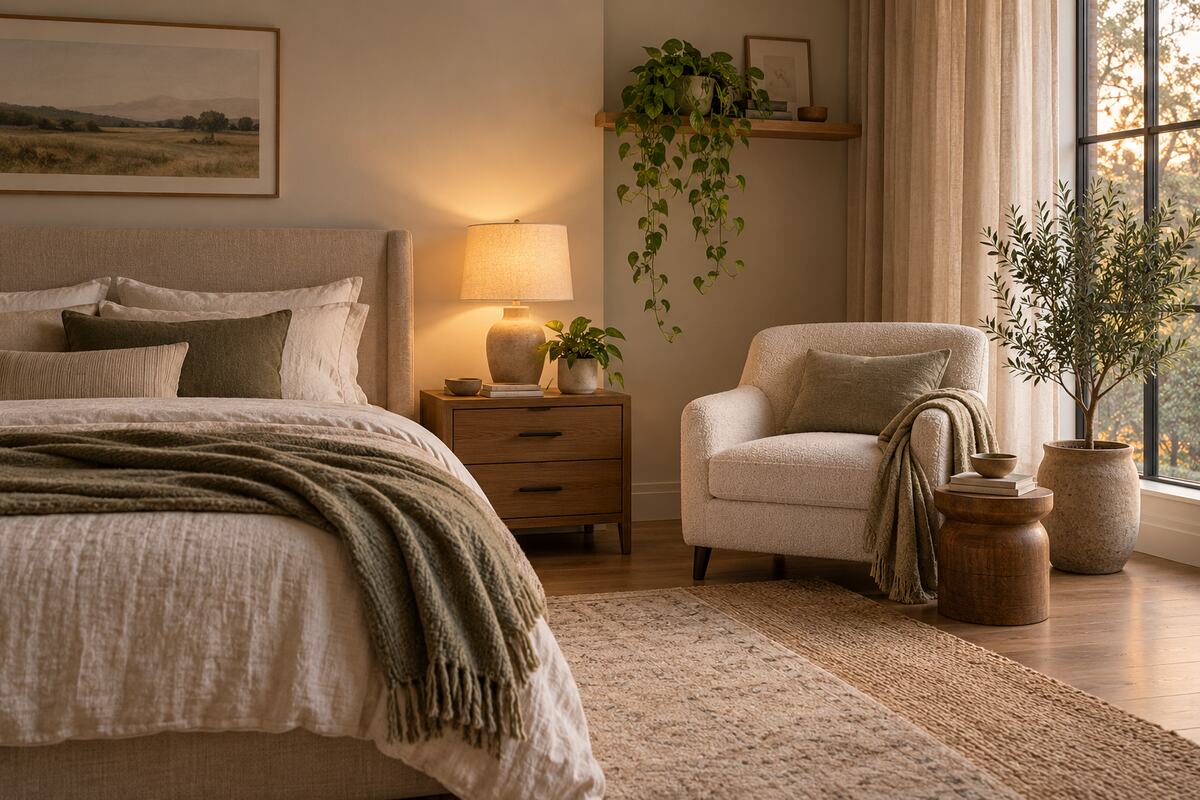
In a bedroom, restraint usually creates the most peaceful result. One medium plant near a suitable window and one small plant on a nightstand or dresser may be enough. Avoid turning every surface into a plant stand, especially if the room already contains layered bedding, artwork, and decorative lighting.
Choose stable containers and keep damp pots away from bedding, books, and upholstered furniture. Do not place a plant where leaves will touch your face as you sleep or where watering requires reaching over the bed. If a trailing plant sits on a high shelf, make sure the shelf is secure and the pot can be removed safely for care.
Echo the bedroom’s textiles through subtle planter colors rather than adding strong contrast. Cream, clay, muted green, and natural wood tend to feel quiet and cohesive. These choices also fit naturally with our ideas for a warm and timeless bedroom.
Style Tables and Shelves Without Blocking Daily Life
Small plants can bring charm to coffee tables, desks, bookshelves, and bedside surfaces, but they should not interfere with how the furniture is used. On a coffee table, place a compact plant on a tray with one or two related objects. The tray creates a clear boundary and makes everything easy to move when more surface area is needed.
On bookshelves, give foliage space rather than squeezing it between books. Keep leaves clear of hot lamps and electronics, and place moisture-sensitive objects on another shelf. A plant with a simple silhouette can act as a visual pause between denser stacks of books or framed photographs.
Desks require particular restraint. One healthy plant in a stable pot is more useful than several small containers competing with work materials. Position it outside the main reach zone and make sure it does not shade the screen or force cables into awkward paths.
Plan for Maintenance, Pets, and Long-Term Growth
Indoor plant styling stays attractive when care tools have a discreet home. Keep a small watering can, cloth, and pruner together in a cabinet or basket nearby. Wipe dusty leaves gently when appropriate for the species, remove dead material, and clean trays before mineral marks become difficult to manage.
Check plant toxicity before bringing a species into a home with pets or young children. Reliable veterinary and horticultural resources can help you choose safer placements or alternatives. Even a nontoxic plant can create a problem if a pet digs in soil or knocks over a heavy planter, so stability and access still matter.
Remember that plants change. Roots fill pots, stems reach toward light, and leaves may eventually overlap furniture. Reassess the composition during seasonal care. Move a plant to a larger position when it outgrows its role, and resist solving every empty corner with another purchase.
A Fresh Home Comes From Thoughtful Placement
The best indoor plant styling ideas begin with observation. Match plants to real light, use scale to give the room structure, coordinate containers with existing materials, and leave enough space for both people and leaves. A few well-chosen plants will usually create more impact than a large collection without a clear plan.
Start with one room and one meaningful position. When that plant is thriving and the placement feels natural, add another layer only if the space needs it. This patient approach produces a home that feels fresh, composed, and genuinely easy to live in.